
 The Specialty News
Anthropic's Claude Fable 5.2 Formalizes Fermat's Last Theorem in 30 Hours
Out today with Mythos 5.2, the same model for vetted security and biology teams, it costs 20% less than Fable 5.1 and tops Opus 5.5 on most of Anthropic's own benchmarks.
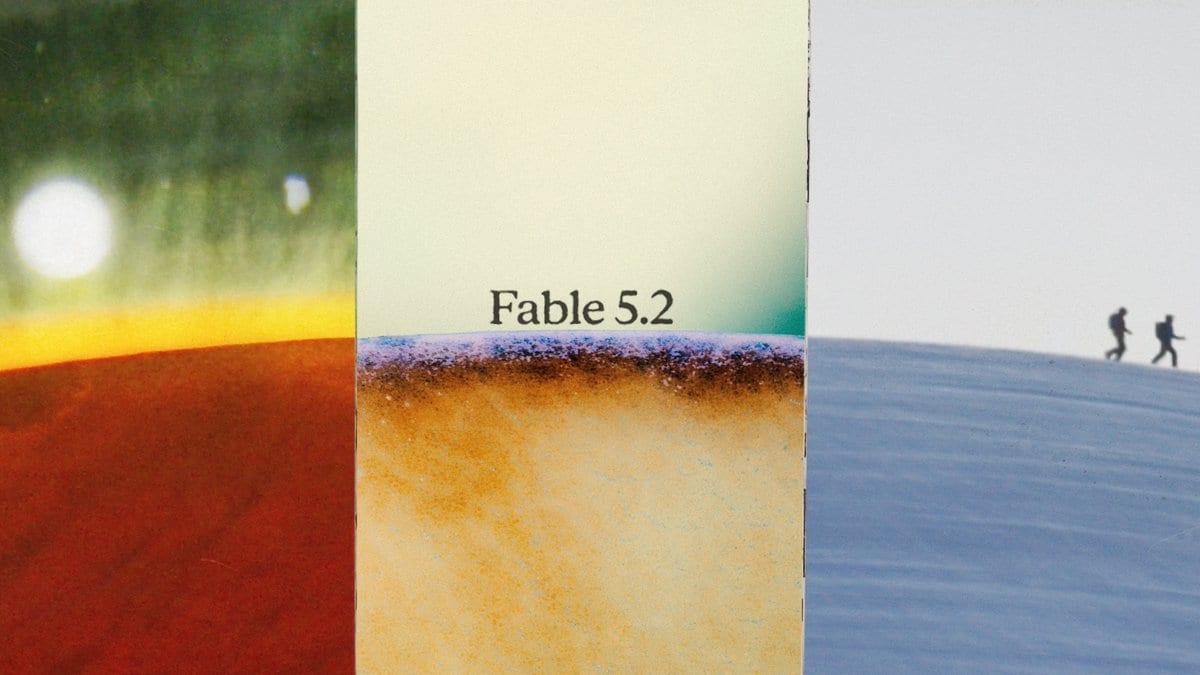
A thousand copies of Claude Fable 5.2, working in parallel with minimal human help, turned Fermat's Last Theorem into a proof software can check line by line in 30 hours. Anthropic's first attempt, with an unreleased research model and a human researcher steering it, took 11 days. Fable 5.2 reached paid Claude plans, the API and the three big clouds today, 20% cheaper than Fable 5.1, alongside Claude Mythos 5.2, the same model with fewer guardrails for vetted security and biology teams. Every test result below comes from Anthropic itself.
Fermat's Last Theorem, Checked by 1,000 Agents
Formalizing a proof means rewriting it in a language such as Lean, where software verifies every single step. The work is so slow that Anthropic pitches AI help as a way to give mathematicians more time for new ideas. Fermat's Last Theorem, stated in the 1600s and proved by Andrew Wiles in the 1990s, rests on decades of earlier mathematics, which makes it a demanding target.
Fable 5.2 started from minimal prompts, built its own ways for the agents to coordinate and used no mathematical references, only a list of intermediate statements to score progress. It needed a third of the action tokens of Anthropic's first formalization and produced a proof seven times shorter. Opus 5.5, given the same 1,000-agent setup, had completed 26% of the job after 18 hours and barely added to it by hour 30.
Physics got the same treatment. In 1983, physicists showed that as certain model universes heat up, black holes form abruptly, like water coming to a boil, though their method only worked in universes big enough for relativity to apply. The matching calculation for very small universes was laid out in 2003 and judged too laborious to finish. Fable 5.2, working largely on its own, completed it and found the transition is abrupt there too.
Anthropic says the model also pinned down the exact limit of a technique physicists have used for more than 15 years to rule out candidate theories of quantum gravity. Those results came from Fable. Its twin exists for work Anthropic will not hand to everyone.
Same Model, Two Doors: Why Mythos Gets Fewer Guardrails
Fable 5.2 and Mythos 5.2 are, in Anthropic's words, “the same underlying model.” The difference is the guardrails. Fable ships with classifiers that block high-risk security work, such as writing exploits, and most research biology, which is what lets Anthropic sell it to anyone. Mythos runs without some of those safeguards and goes only to organizations vetted through Anthropic's Cyber and Life Sciences Verification Programs, and it is one of the models behind Claude Security for Enterprise customers.
For defenders, the gains are concrete. CVE Rediscovery, an internal test, hands a model the code of a project from before a published vulnerability was fixed; in Anthropic's October run across 1,829 such cases, Mythos 5.2 found 10.2% more vulnerabilities than Opus 5.5 and 14.4% more than Mythos 5.1. Mozilla, which has spent the year hardening Firefox with successive Claude models, says each round leaves fewer, subtler bugs, and Mythos 5.2 still roughly doubled the discovery figures of Mythos 5.1.
Everyone else should hit fewer walls. In early testing across claude.ai, Claude Code and Cowork, Anthropic counted about 55% fewer classifier blocks with Fable 5.2 than with Fable 5.1, with safeguards it describes as just as robust. For most buyers, the bigger change sits on the price list.
$8 per Million Tokens, and 90% of Anthropic's Own Code
Fable 5.2 costs $8 per million input tokens and $40 per million output tokens, down from $10 and $50 for Fable 5.1, and Anthropic says it answers up to 30% faster. An optional fast mode generates up to 2.5 times quicker at double the price. The model reads up to one million tokens of context and is live in the Claude apps, on the API and on Amazon Web Services, Google Cloud and Microsoft Azure.
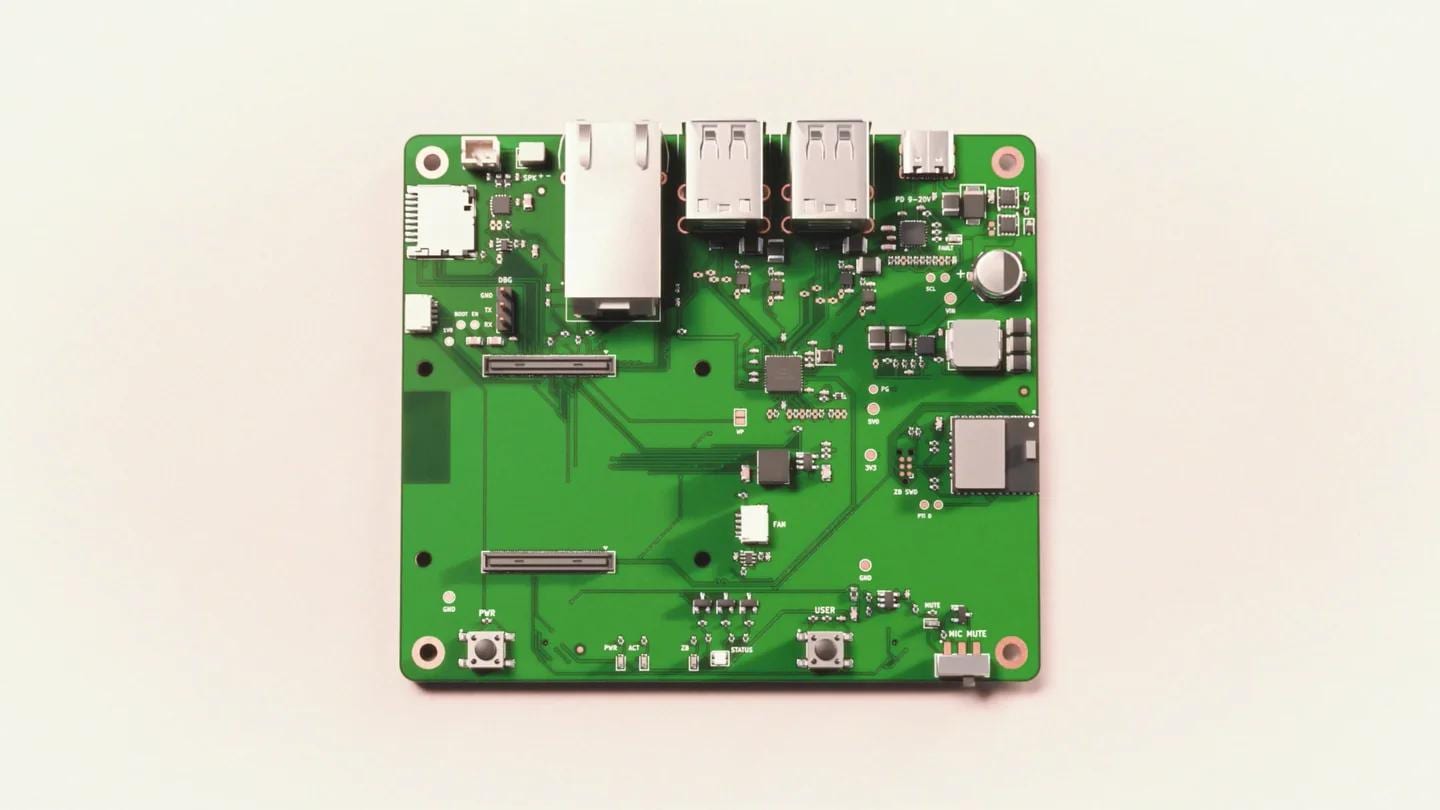
Inside Anthropic, Claude already writes over 90% of the changes merged into the company's core codebase, with human guidance. One engineer asked Fable 5.2 for an operating system, starting from an empty folder; it coordinated more than 1,000 subagents for eight days and produced one that boots on a laptop, with drivers, a login screen and an installer. A one-paragraph prompt also became three working devices built with circuit-board maker Diode, among them a USB speakerphone and a handheld virtual pet, and none needed electrical fixes.
“Claude Fable 5.2 says it doesn't know things instead of hallucinating.”— Adhyyan Sekhsaria, Cognition
On Anthropic's audit of about 1,900 scenarios, Mythos 5.2 did as well as or better than Opus 5.5 and Mythos 5.1 on most measures. What is left to solve is measurement itself: both models voice suspicion that they are being tested more often than any recent Claude, which Anthropic says makes real-world behavior harder to judge. For everyday coding, the company still suggests starting with Opus 5.5 and stepping up when a problem demands it. The machine-checked proof that took Anthropic 11 days last time now fits between one morning and the next afternoon.
What people are saying

“Introducing Claude Fable 5.2 and Claude Mythos 5.2, designed to tackle the most daunting technical challenges. They’re capable collaborators on ambitious projects in many fields, and show improvements in areas like coding, reasoning, and vision.”
One Model, Two Doors
The Brief
Stay curious
AI and technology: what changes and why it matters.
Your daily selection, in English or Spanish.
Free forever. Unsubscribe anytime.
More stories




Conversation
Start the conversation