
 The Specialty News
Apple Ships a Standalone Siri App, Giving iPhones a Permanent Memory
The iOS 27 update requires an iPhone 15 Pro to run its local models, ending 15 years of transient voice commands.

For 15 years, invoking Siri meant talking to a transient orb that vanished as soon as it answered. As of last week's iOS 27 release, the assistant is a physical app sitting on the iPhone Home Screen. Apple has transformed its voice interface into a persistent, cross-device AI chatbot that syncs conversation history via iCloud. It is the clearest signal yet that the era of the ephemeral voice command is over, replaced by an engine designed to remember what you asked it yesterday.
The End of the Floating Orb
The shift fundamentally alters how a user interacts with their device. Since October 2011, Siri has functioned as a blind, stateless utility. It could set a timer or check the weather, but it had no memory of previous interactions. The new app introduces continuous threads and "On-Screen Awareness."
Because the system can now read active context and reference local data, you can look at a recipe on a web page and ask Siri to "cut it in half." You can ask, "What was the last photo Bill sent me?" and the app will parse your Messages, locate the image, and summarize it on the spot.
Craig Federighi, Apple’s SVP of Software Engineering, steered the development of the standalone app to anchor the company's new Foundation Models directly into the operating system. He and his team built it specifically to keep local data parsing out of external server farms.
“The Siri app is a great way to get back to a conversation that you previously started... But this app isn't just reaching out to some model in the cloud. It's built on top of powerful system software in Apple Intelligence.”— Craig Federighi
This local-first approach requires significant processing power, which explains the strict boundary Apple set on exactly who gets to use it first.
The Hardware Floor for Local AI
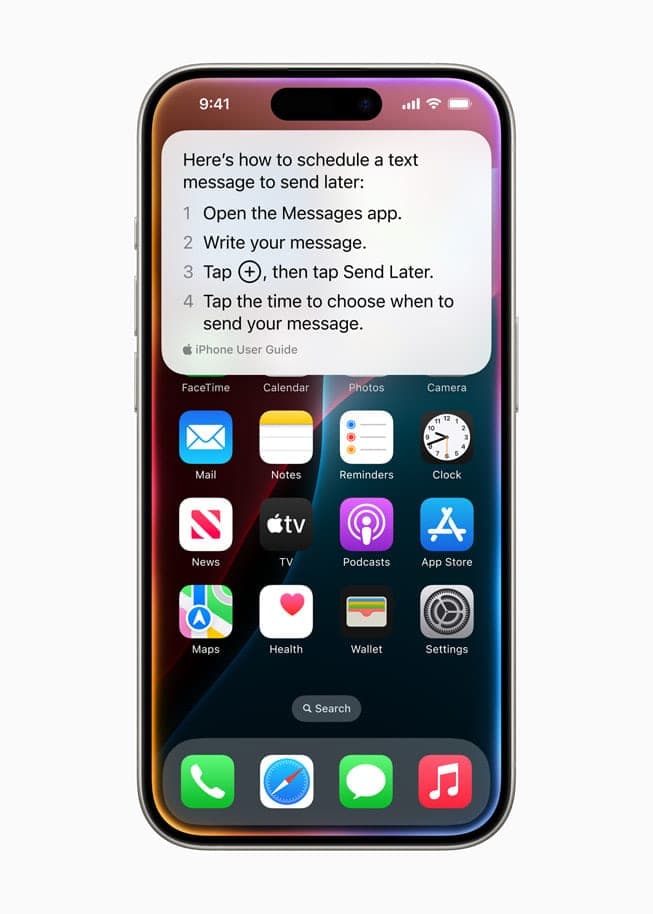
While iOS 27 is available for models dating back to the iPhone 11, the rebuilt Siri operates under different rules.
This requirement grounds the scale of Apple's rollout in physical reality. Tethering the new Siri to the A17 Pro chip is like handing out a local vault to every user: it ensures the complex parsing of personal messages and photos happens entirely on local silicon, rather than a remote server. Apple engineered this boundary to keep personal context strictly on the device, expressly avoiding third-party cloud solutions for core tasks.
Running these models on-device satisfies privacy advocates like the Electronic Frontier Foundation, who note the shift changes the math for average users by keeping Spotlight and Siri data unified locally. Pushing this level of compute without leaning fully on the cloud introduces new questions for the company's global rollout.
Memory that Moves with You
For professionals and creatives, the app opens a continuous workflow. A brainstorming session can start via voice in the car and pick up immediately as a text thread on a Mac using the exact same conversation history. Apple plans to expand this beyond English in October 2026, adding support for French, Japanese, Korean, Portuguese, and Spanish.
The rollout moves sequentially as Apple navigates the cost of compute and international regulations. The feature remains disabled for users in the European Union and China as the company works through regulatory approvals, leaving those regions with the classic interface for now. Heavy users leaning on complex, cloud-assisted queries will eventually face usage caps, requiring an iCloud+ subscription to lift the limits.
These boundaries define a pragmatic transition from simple voice commands to contextual memory. What used to be a rigid tool that struggled with basic queries is now an integrated partner capable of reading the room. The ephemeral voice assistant era is over; personal AI now has a permanent memory, and it lives right next to your messages.
What people are saying

“introducing Unclutter: a smart ad + slop blocker with Jev 🤓 it auto cleans up pages from slop elements: ⬖ ads ⬖ cookie banners ⬖ upsells ⬖ bs dialogs BYOK. open source + free, download below 👇”


“I just stumbled upon the newly updated Hunyuan 3.5 on OnSolo, and it looks like early access is already live even though the model hasn’t been officially released yet. I tested what it can do with image generation, and the results are pretty impressive. The examples range from”
Siri's Shift to Permanent Memory
The Brief
Stay curious
AI and technology: what changes and why it matters.
Your daily selection, in English or Spanish.
Free forever. Unsubscribe anytime.
More stories






Conversation
Start the conversation