
 The Specialty News
xAI Trains the 2.5-Trillion-Parameter Grok 4.8 in C++, Opening the Door to Cheaper Inference
The bare-metal software stack replaces standard AI training tools, allowing developers to run agentic models without the usual latency penalty.
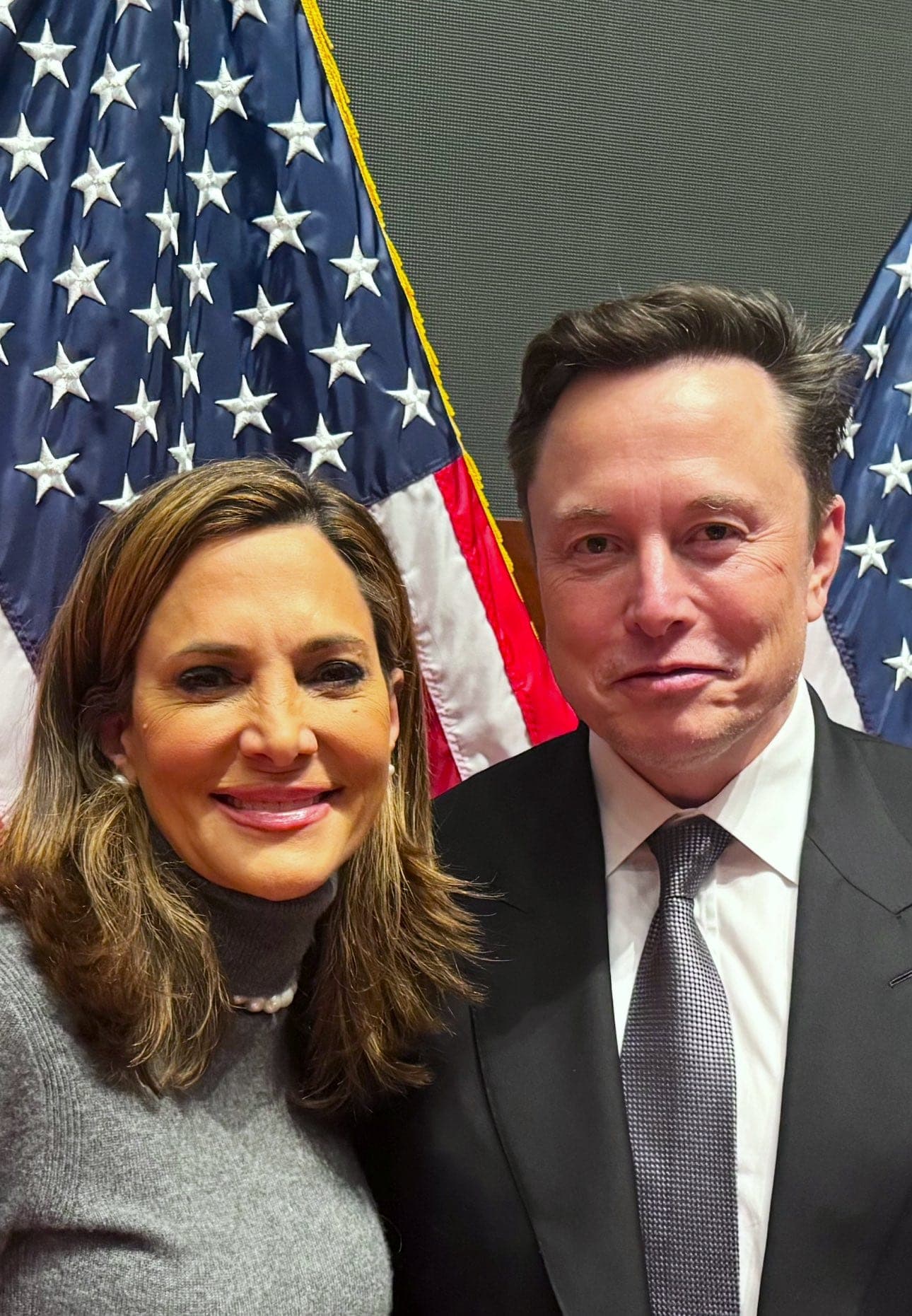
Just hours after publicly endorsing an essay urging the AI industry to hit the brakes, Elon Musk calmly announced that his team was slamming the accelerator. Over a September weekend, Musk revealed that xAI is wrapping up pretraining on Grok 4.8, a 2.5-trillion-parameter model. The scale is notable, but the technical breakthrough lies in how it was built. xAI threw out the industry standard software playbook, writing an entirely new training stack in C++ to talk directly to NVIDIA hardware.
Throwing Out the Python Playbook
Most AI development relies on established Python frameworks like PyTorch. The language is highly flexible and benefits from a collaborative global ecosystem, but it inherently acts as a translator. It adds software overhead, translating human-readable code into instructions before they ever reach the GPUs. xAI decided to eliminate the translator entirely. By mapping their software exactly to NVIDIA GB300 hardware, the engineering team removed the abstraction layers that typically slow down model training and response times. The goal is bare-metal efficiency.
To put that scale into perspective, 2.5 trillion parameters is roughly 67 percent larger than xAI’s current leading model, Grok 4.6. It is the equivalent of taking a sprawling modern metropolis and bolting an entirely new city onto its edges, requiring perfect synchronization across millions of new pathways. Building this at the hardware level is an enormous engineering risk. If the C++ stack works, the industry will have to rethink how it builds models, but raw compute is only the first phase of the journey.
The Reinforcement Reality
Getting 2.5 trillion parameters to absorb the internet is an achievement in sheer math and compute scale. However, making those parameters actually listen to a user requires Reinforcement Learning. This is the exact phase Grok 4.8 is just entering.
“Grok 4.8, which is a 2.5T model trained with our new C++ software stack, will finish training this week and start RL.”— Elon Musk
This announcement arrived with a dose of irony. Just hours earlier, Musk had publicly agreed with Anthropic CEO Dario Amodei, who published an essay warning of recursive self-improvement and calling for an industry-wide slowdown. Yet xAI’s proprietary C++ stack now has to prove it can handle the unglamorous, complex debugging required to tune a model of this size at high speed. Grok 4.7, the 2.1-trillion-parameter predecessor, recently missed its shipping target because the team needed more time to fix multimodal behaviors like image processing. The delay of Grok 4.7 shows that model alignment remains the hardest hurdle in AI, but solving the compute bottleneck opens up entirely new economics.
Speeding Up the Frontier
If xAI successfully ships models built on this bare-metal stack, the benefits cascade directly to developers. Musk has noted that this direct-to-hardware approach could double inference speeds. For software engineers building AI agents, this means the ability to run frontier-class coding models without the prohibitive latency and compute costs that currently limit complex applications. A developer trying to automate thousands of code reviews could suddenly afford to run the task locally or via API without breaking the bank.
The broader industry will be watching the release of Grok 4.8 closely. xAI still needs to prove it can reliably ship the models it has already announced. But the technical pivot alone is a clear signal of where the field is heading. The xAI approach proves that the next leap in capability does not require waiting for next-generation silicon. Major performance gains can still be squeezed out of software engineering by stripping away the friction in how we talk to the chips we already have.
What people are saying

“@techdevnotes Grok 4.8, which is a 2.5T model trained with our new C++ software stack, will finish training this week and start RL”
“@itslueul Grok 4.7 should be roughly on par with Opus 5.0, not 5.1. Better in some ways, worse in others. We need to fix multimodal performance. Grok 4.8 will be a noticeable improvement. Grok 4.9 is probably Astra/Fable class. Grok 5 maybe better than anything. We shall see.”

“Cuando Elon dice “esta semana termina el entrenamiento y arranca el RL”, históricamente tarda entre 3 y 6 semanas en salir. A veces más. Por ejemplo, el Grok 4.5 (1.5T): el 25 de mayo dijo “ya terminó el entrenamiento, en unos días RL, 2-3 semanas para soltarlo”. Y salió entre”
xAI's C++ Pivot Doubles AI Speed
The Brief
Stay curious
AI and technology: what changes and why it matters.
Your daily selection, in English or Spanish.
Free forever. Unsubscribe anytime.
More stories




Conversation
Start the conversation