
 The Specialty News
Amazon Saw Cairn AI Agents Find a Zero-Day in 11 Minutes
A server left open let Amazon read the whole run, from the operator's three-word goal to root access on a medical imaging app whose maintainers now have a fix lined up.
Eleven minutes. That is how long autonomous AI agents needed to go from mapping an unfamiliar medical imaging app to writing files anywhere on its server, through a flaw nobody had reported before. Amazon knows because the operator left the agents' control server open to the internet, prompts and all. On November 20, Amazon security chief CJ Moses published what his team read there, and the maintainers of the vulnerable tool have already issued an advisory with a fix lined up.
A Three-Word Goal and an Open Server
On September 10, Amazon Threat Intelligence came across a server running Cairn, an open-source framework that coordinates AI agents to test computer systems for weaknesses. It had no password. Anyone on the internet could see its project settings, the operator's prompts and every answer the AI gave back.
Those records showed a campaign of about 48 hours, starting September 8, aimed at IP addresses tied to universities in East Asia outside mainland China. The prompts were written in Simplified Chinese and the scripts ran on China Standard Time, which is why Amazon attributes the activity, with moderate confidence, to a Chinese-nexus actor.
The instructions were short. The operator handed the agents a list of addresses and variations of one goal: “obtain shell access”, meaning control of a machine's command line. From there, Amazon writes, the agents planned, executed and adjusted their approach as they learned, without the operator choosing each next step.
Cairn was built for the other side. Its makers designed it as a research engine for defenders, and the plain-language simplicity that helps them also made it easy to point at someone else's network. What the agents did with that freedom is one of the most detailed records yet of how such a campaign actually runs.
148 Failed Moves, Then One Upload Field
Most of the work failed. Against a university's Redis database, left reachable without authentication, the agents ran 148 sequential actions over roughly 16 hours, working through known techniques for taking over the server. They also tried Log4Shell, mapped an internal Docker network through a weakness in a neighbouring Qdrant service and sprayed passwords at PostgreSQL and SSH. None of it worked.
A second operation lasted more than six hours. The agents built a list of about 80 real usernames from faculty directories, lab websites, archived pages and academic papers, then tested more than 30,000 username and password combinations against a university GPU server and other campus systems. They never found a working login.
Then the agents reached a server running an open-source medical imaging AI tool. They identified its framework, mapped its API and found an upload endpoint with a filename parameter. They tested it for path traversal, a trick that puts “../” in a file name to climb out of the folder an app is supposed to write in. It worked.
In a later session the agents wrote a small program into sitecustomize.py, a file Python loads every time it starts, then called the app's training endpoint to launch a fresh Python process. That gave them a remote shell running as root. Amazon assesses with high confidence that the flaw was a true zero-day, since no fix, issue, advisory or database entry existed for it. Which tool was it, and who is closing the hole?
A Critical Advisory and a Lesson in the Logs
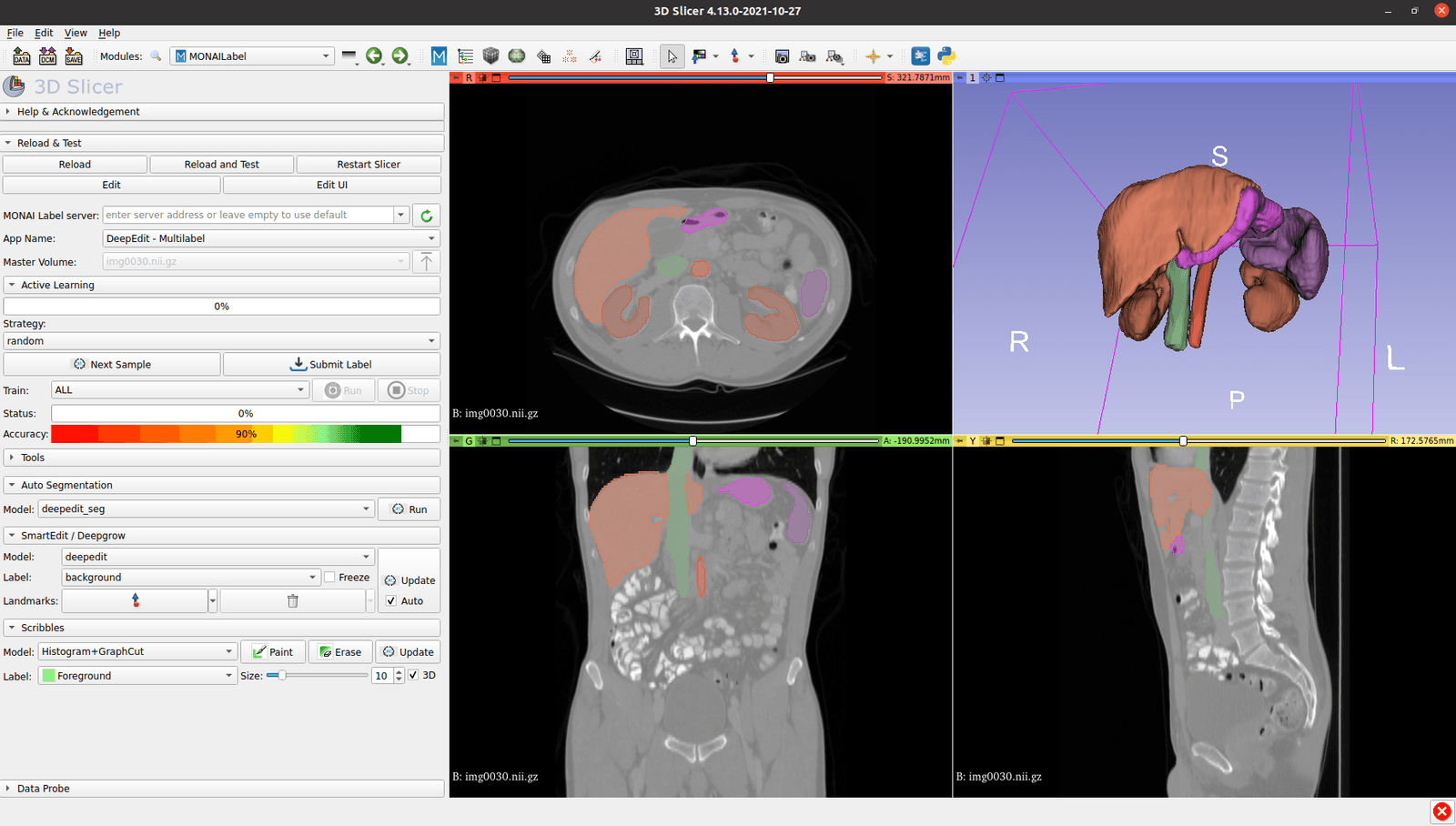
The tool is MONAI Label, an open-source app that researchers use to label organs and tumours on medical scans. Its maintainers published a security advisory on November 18, rated Critical, covering versions up to 0.8.5 and crediting Amazon's security team with the report, with the fix lined up for the next release. Until then, the advisory tells users to switch on authentication, keep the server off untrusted networks and run it without root privileges.
The operator also used the flaw to get into a second university, Amazon infers, and pointed the agents at other machines inside it. Neither university was an AWS customer, so Amazon worked through a government partner to warn them. Gambit Security, one of the first firms to document Cairn in the wild, has tracked a separate, financially motivated group using it against online retailers.
“An agent that discovers and exploits a zero-day in minutes completes its activity faster than many security operations centers can manually triage an alert.”— CJ Moses
Moses, who led intrusion analysis at the FBI's Cyber Division before joining Amazon in 2007, draws a practical conclusion: let high-confidence detections trigger automated responses, with people overseeing outcomes instead of reviewing every action. The most useful lesson sits in the logs themselves. Agents that never tire also write down every move, and this time one open server handed defenders the whole playbook, from a three-word goal to an 11-minute exploit.
From Three Words to Root
The Brief
Stay curious
AI and technology: what changes and why it matters.
Your daily selection, in English or Spanish.
Free forever. Unsubscribe anytime.
More stories






Conversation
Start the conversation