
 The Specialty News
Tesla Ships FSD v15 and Claims 25x Better Handling of Critical Moments
Reality View draws the car's next moves live on screen, and Musk says a tap on any point sends the car there; wide release is due in December.
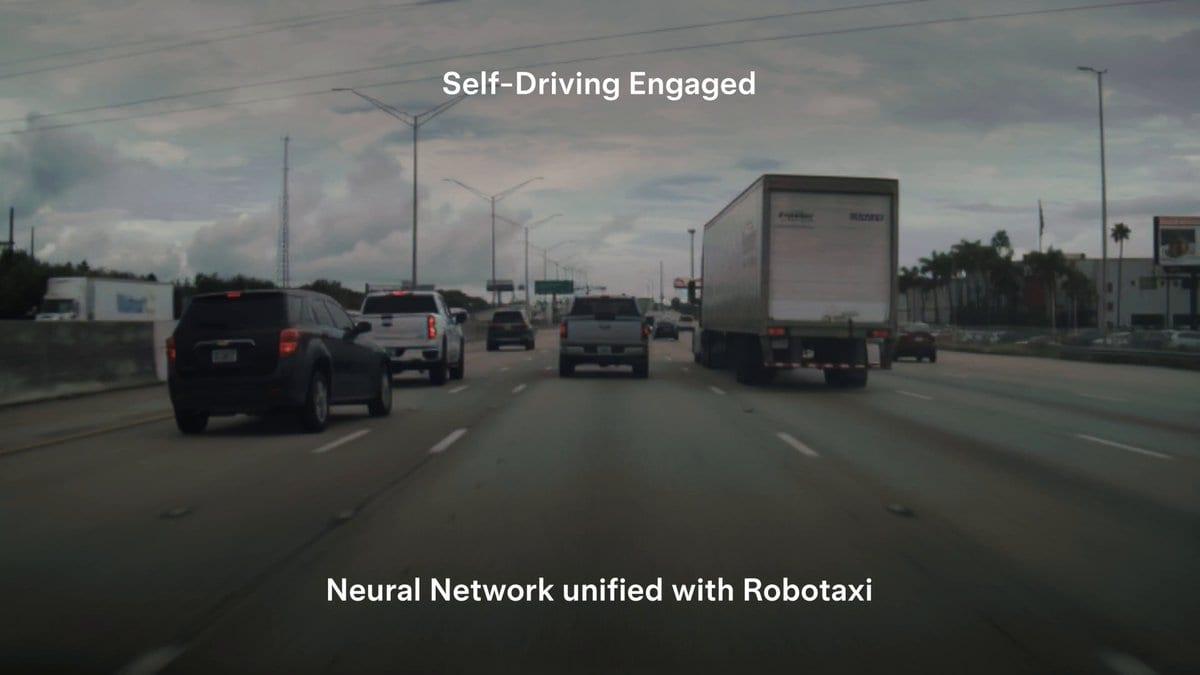
On Saturday evening a first wave of Tesla owners got a new picture on their center screens: a live, generated view of the street around them, seen from a virtual camera, with the car's next turn drawn into the scene. That is Tesla Reality View, the headline feature of Full Self-Driving (Supervised) v15, which began rolling out on November 21. Tesla says the release improves its critical intervention rate by 25x, and drivers get a clearer look at what the car plans to do before it does it.
A Screen That Shows the Car's Plan
Tesla's release notes describe Reality View as a “real-time generative driving visualization” that streams the scene from an arbitrary virtual camera. It folds the separate signals the old display showed into a single end-to-end picture, and upcoming navigation turns now appear inside that picture instead of on a separate map.
Elon Musk put it in gamer terms on X a few hours after the launch.
“In FSD V15, the Tesla AI computer re-renders reality with chevrons in the sky for turns like a video game.”— Elon Musk
In the same post he said drivers can tap any point on the view to make the car go there. Tesla's own announcement says the view lets you “see & control” what FSD is planning. Drivers can also pick a full-screen visualization, a map or a split view, or switch to a quiet mode for a calmer cabin, and turn signals now fade out after a few clicks.
The picture is the part people will share. The number Tesla chose to lead with sits underneath it.
Where the 25x Comes From
The gain comes from an upgraded vision encoder, the part of the network that turns camera footage into an understanding of the road. Tesla now shares that encoder between FSD, its Robotaxi service and the Optimus humanoid robot, so one set of eyes serves all three.
That figure is Tesla's own metric, measured on cases it selected, not crash data, and the company has not published an independent comparison with human drivers. It is still a meaningful signal: critical interventions are the moments when a supervising driver has to take over, and cutting them is the road from supervised driving to a car that drives itself.
The rest of the release reads like a list of everyday frictions removed. v15 spots road signs, small animals, debris, chains, potholes and deep standing water better. It slows for speed cameras, and if a driver cancels that twice at the same camera, the car remembers the spot. The start and end of each trip now follow routes learned from the fleet's preferences, parking picks draw on each driver's history, and attention monitoring keeps working with hats and sunglasses. A new Bike Rack Mode lets FSD run with a hitch accessory fitted; the car pulls over near the destination instead of reversing.
All of it depends on one thing: the computer behind the dashboard.
Who Gets It First
v15 runs only on cars with Tesla's AI4 computer. Owners of older HW3 cars stay on a separate, cut-down v14 Lite branch. Software build 2026.38.6.11 carries FSD (Supervised) v15.0.1, and the first wave is small: Tesla has not said how many cars got it or in which regions.
“FSD v15 releasing to the first wave of customers today!!” Tesla's AI chief Ashok Elluswamy wrote on Saturday. The software already had road miles behind it: Elluswamy said earlier that Tesla's Robotaxi fleet was running early v15 builds. Musk said the wide release follows next month, with Tesla's Holiday Update.
Later v15 releases will extend the fleet-learned navigation from the start and end of a trip to the whole route. For now, the change drivers will notice first is simpler: the car shows its next move in a picture anyone can read, and a tap is enough to send it somewhere else.
What people are saying

“FSD v15 now starting to roll out – upgrading every part of the end-to-end driving network Safety 25x better handling of safety critical cases Tesla Reality View Adds a live visualization of the drive that lets you see & control what FSD is planning to do Navigation for start”

“In FSD V15, the Tesla AI computer re-renders reality with chevrons in the sky for turns like a video game. You can tap any point on the reality revisualizer to make your car go there.”
What v15 Changes on the Road
The Brief
Stay curious
AI and technology: what changes and why it matters.
Your daily selection, in English or Spanish.
Free forever. Unsubscribe anytime.
More stories
Conversation
Start the conversation