
 The Specialty News
Nvidia's RTX Spark Desktops Fit 1 Petaflop of AI in 1.15 Liters
ASUS, Dell and MSI now sell 20-core Windows mini PCs with up to 128GB of memory, from $4,399, built to run large AI models at home.
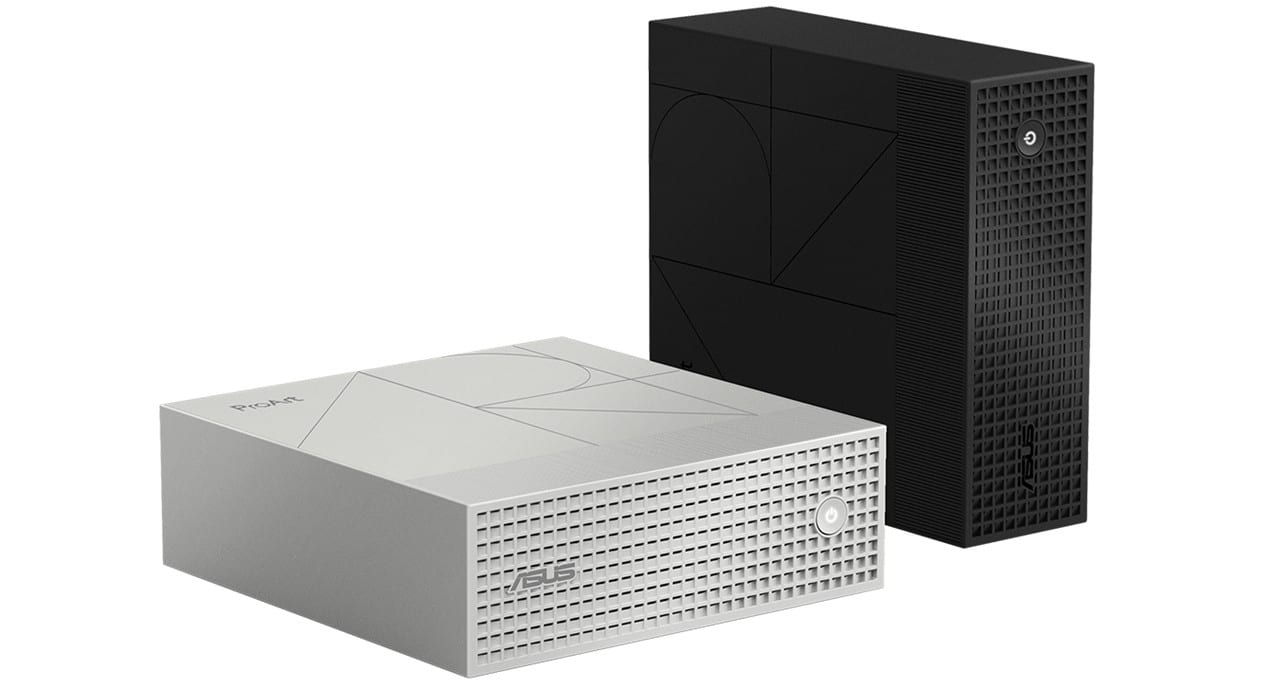
The ASUS ProArt GR1X measures 15 centimeters on a side, stands 5 centimeters tall and weighs 1.48 kilograms, and the chip inside is rated at up to 1 petaflop of AI performance. On November 18 it went on sale alongside RTX Spark desktops from Dell and MSI, the first Windows mini PCs built around Nvidia's own 20-core processor. For developers and creators who run AI models all day, they offer a machine on the desk in place of a cloud bill that grows with every token.
What Fits Inside 1.15 Liters
Every RTX Spark desktop pairs a 20-core Nvidia Grace CPU with a Blackwell RTX GPU carrying 6,144 CUDA cores, and both draw on up to 128GB of unified memory. Unified means the processor and the graphics chip share one pool, so a large model does not have to squeeze into the smaller memory of a separate graphics card. Ten-gigabit Ethernet moves model files and project folders to network storage.
Nvidia lists three headline jobs for the hardware: running 120-billion-parameter language models locally, rendering 3D scenes larger than 90GB in real time and editing 4:2:2 video in real time. The 120-billion figure comes with a qualifier ASUS spells out in its own guidance: it assumes compressed models and the 128GB version. StorageReview's 64GB review unit handled models up to the 27-billion-parameter class.
The ASUS box measures 150 by 150 by 51 millimeters, a footprint smaller than a hardcover book, and its cooler is built to sustain 140 watts. The more telling detail is what Nvidia expects owners to leave running on it overnight.
A PC That Keeps Working While You Travel
Nvidia pitches these desktops as machines that never clock off. Running supported models locally keeps code and files on the PC and avoids per-token API charges for those tasks, which matters most for AI agents that loop through thousands of small steps.
“A dedicated desktop can keep agents and scheduled tasks running while a laptop travels or handles other work.”— Nvidia
The software is ready on day one. Developers get native CUDA and Linux tools through the Windows Subsystem for Linux, can set up agents with Hermes Agent or Nvidia's NemoClaw blueprints and can fine-tune models with Unsloth. Nvidia Switchyard, now built into Hermes, routes each task on its own: everyday work stays on the device, while harder reasoning goes to a cloud model.
Creative tools came along too. Adobe Illustrator and InDesign now ship native Windows on Arm versions, with Illustrator running up to 30% faster than its emulated version. Substance 3D Painter 12.2 runs natively on Arm for the first time, in public beta, and Blender 5.3 adds DLSS 4.5 Ray Reconstruction for near-final lighting in its live preview. All of which leaves the question of price.
Who a $4,399 Box Is For
Nvidia told StorageReview that RTX Spark desktops start at $4,399. The ASUS ProArt GR1X with 64GB and a 1TB drive costs $4,499 at the ASUS eShop, and Best Buy lists a 2TB version at $4,999.99. ASUS sells it through its eShop, Best Buy, Micro Center, Central Computers and Amazon, though on launch day the eShop showed it as out of stock and Best Buy as coming soon.
The fair comparison is the RTX Spark laptops already on sale. StorageReview puts the GR1X about $300 below the 64GB Dell XPS 16 Creator Edition with the same memory and storage. The desktop gives up the screen, keyboard and battery, and gains lower temperatures, higher sustained output and a second SSD slot.
More boxes are on the way: mini PCs from Acer, GIGABYTE and HP, plus Microsoft's Surface RTX Spark Dev Box. For a developer whose agents work through the night, the cloud bill now has a rival that fits behind the monitor.
Same Chip, $300 Less as a Box
The Brief
Stay curious
AI and technology: what changes and why it matters.
Your daily selection, in English or Spanish.
Free forever. Unsubscribe anytime.
More stories




Conversation
Start the conversation