
 The Specialty News
Google Books Blue Origin to Launch Rack-Sized AI Satellites in 2029
New Glenn will carry Project Suncatcher satellites, each with roughly a data-center rack of computing, into an orbit where solar panels yield up to 8x more than on Earth.
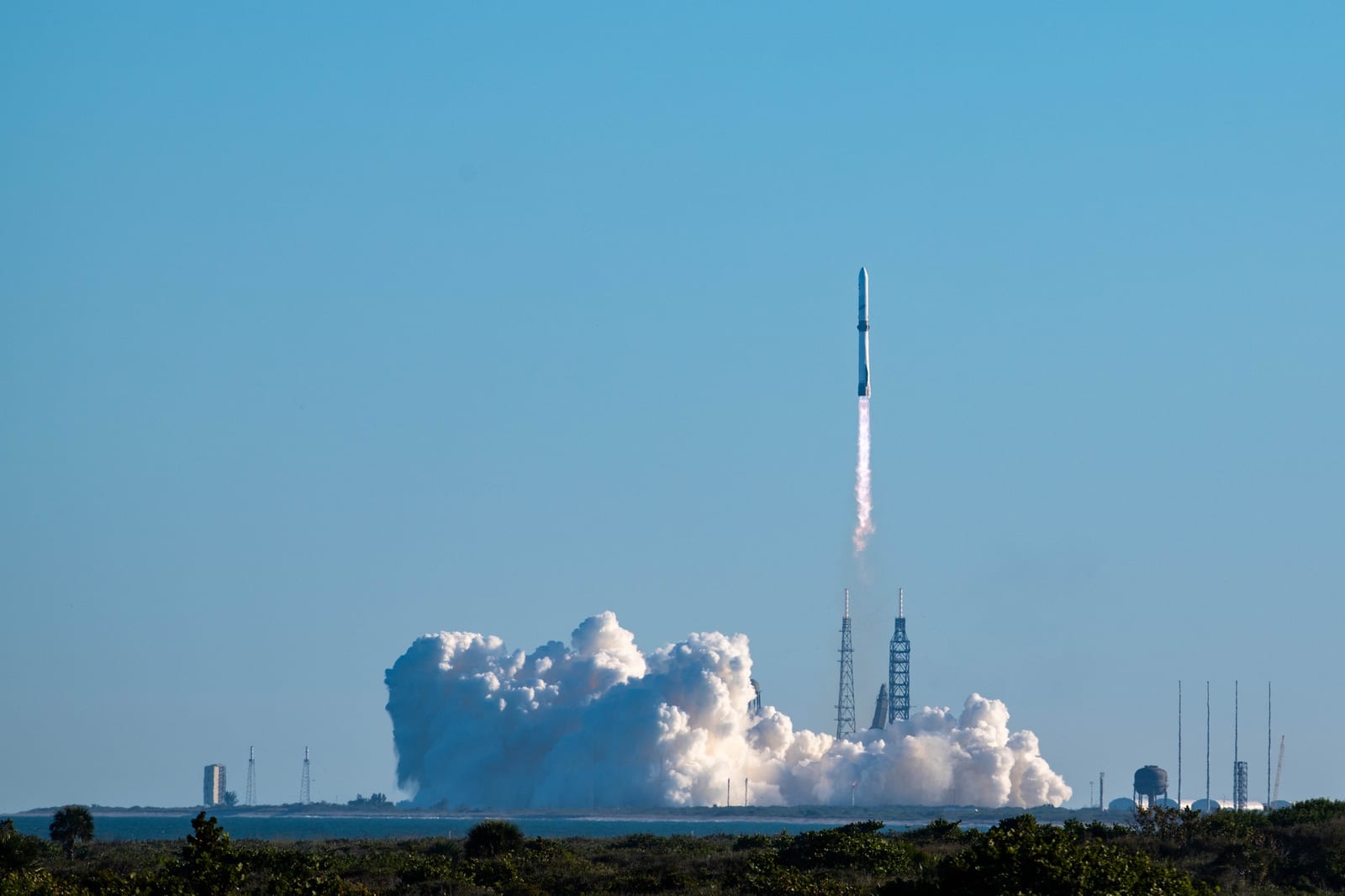
Sometime in the first three months of 2029, a New Glenn rocket is due to lift off from Florida carrying Google satellites that each hold roughly the computing capacity of a data-center rack. Google announced the launch deal with Blue Origin on November 19: the first dedicated heavy-lift mission for Project Suncatcher, its long-term bet that AI chips can run in orbit on near-constant sunlight. A prototype circling Earth since October is already telling the team how its chips cope up there.
A Data-Center Rack in Every Satellite
The announcement, written by Travis Beals, who leads the project as senior director of Google's Paradigms of Intelligence group, is short on hardware detail and clear on intent. New Glenn will place the satellites in a sun-synchronous orbit, a path that keeps them riding the line between day and night so their solar panels almost never go dark. Each one carries about the computing capacity of a single rack in a data center, and Google called the launch a crucial milestone on the project's long-term roadmap.
The rocket is built for loads like this. New Glenn can lift 45 metric tons to low Earth orbit, according to the US Space Force, and Google's pick makes it the first heavy-lift ride booked for Suncatcher. Google said the dedicated launch builds on its work with other satellite and launch partners. Neither company gave a price.
Why put computers up there at all? The answer sits in the numbers Google published a year earlier.
Eight Times the Sunlight, Tougher Chips Than Expected
In November 2025, Google laid out the idea. In the right orbit, a solar panel can be up to eight times more productive than on the ground, and it produces power almost continuously.
The design study modelled an illustrative cluster of 81 satellites flying 650 kilometers up, all within a kilometer of each other and as close as 100 to 200 meters, linked by lasers aiming for tens of terabits per second. A bench prototype of those links already moved 800 gigabits per second in each direction.
The chips surprised the engineers. Google put its Trillium TPU in a 67 MeV proton beam to mimic years of space radiation. Its most sensitive part, the high-bandwidth memory, began showing irregularities only after a dose nearly three times what a shielded five-year mission would absorb, and no chip failed outright up to 15 krad. The real test was always going to happen in orbit.
The Prototype Already Up There
On October 1, 2026, Google's first prototype satellite, built with Planet, reached orbit on SpaceX's Transporter-18 rideshare. The team confirmed contact, said it was operating as expected, and is now gathering data on how TPUs handle the stress of launch, radiation and extremes of heat and cold.
“Some things can only be tested in space.”— Travis Beals, Google
What is left to solve is mostly heat and cost. Without air, chips have to shed their heat by radiating it, and the economics hang on launch prices. Google's study estimated that if those fall below $200 per kilogram by the mid-2030s, computing in orbit could be roughly comparable in energy cost to a data center on the ground. A rocket that carries 45 tons at a time is the kind of ride that math depends on.
For anyone who needs more AI computing than a power grid can feed, the 2029 launch is the first real look at a data center that plugs straight into the sun.
Google's Road to Space AI
The Brief
Stay curious
AI and technology: what changes and why it matters.
Your daily selection, in English or Spanish.
Free forever. Unsubscribe anytime.
More stories



Conversation
Start the conversation