
 The Specialty News
Signal Keeps Siri AI and Gemini From Reading Your Chats
On iOS 27 the app now blocks screenshots by default, and on Android it switches on Screen security the moment an AI assistant tries to read the screen.

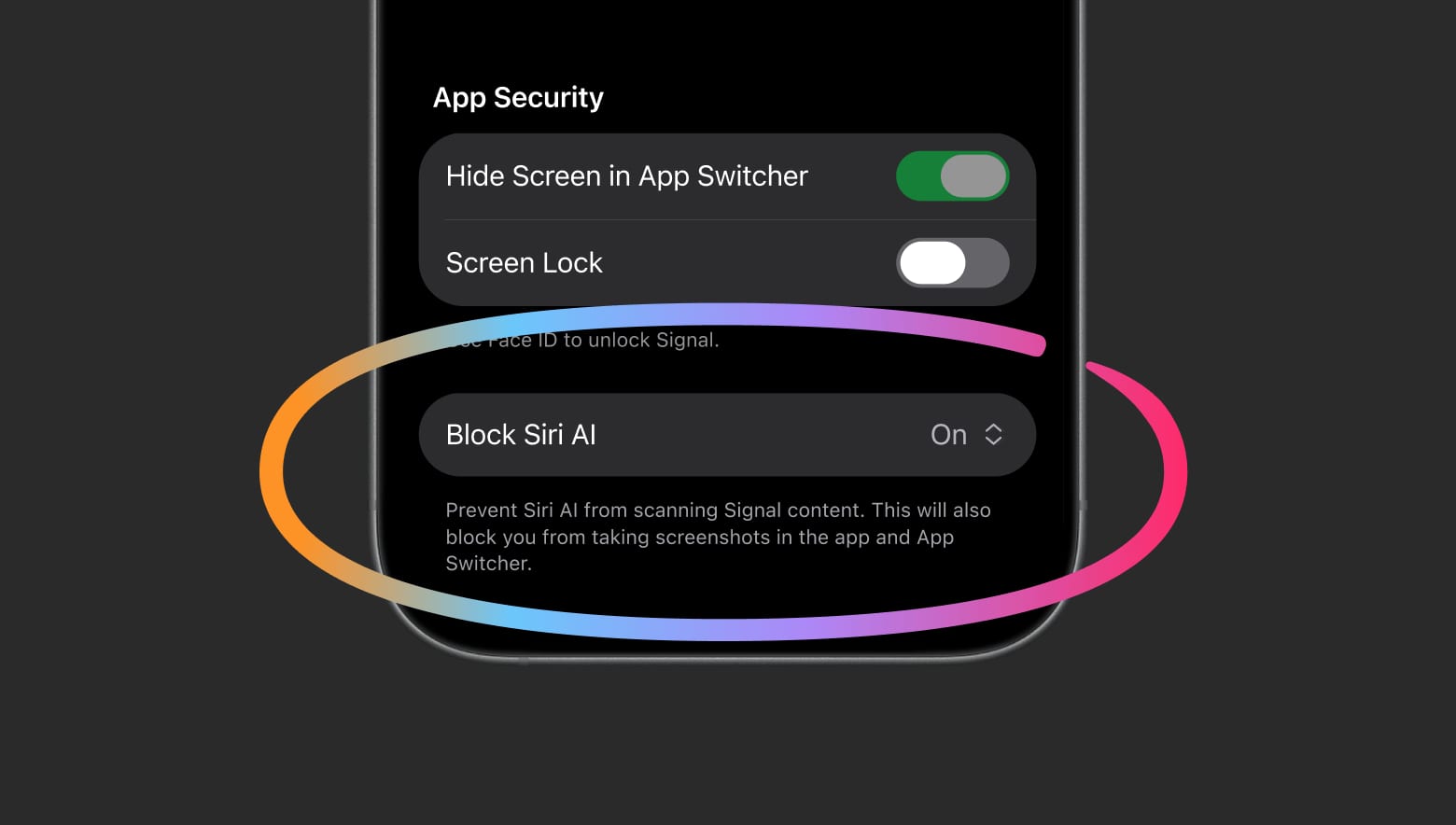
A new switch sits in Signal's settings on the iPhone: Block Siri AI, set to On. On Friday Signal president Meredith Whittaker announced that the app will stop the AI agents built into iOS 27 and Android from capturing what is on its screen, the same move it made against Microsoft's Recall on Windows 11 last year. For the many millions of people who use Signal, it means a message stays between the people in the chat, even when the phone itself has an assistant that reads everything.
One Switch Called Block Siri AI
The change is small on screen and large in effect. On iOS 27, Signal now prevents screenshots inside the app. The setting's own description spells out the trade: it keeps Siri AI from scanning Signal content, and it also stops you from taking screenshots in the app and in the App Switcher.
Android needed a different trick. Phone makers ship many versions of the system, and on a lot of them Signal cannot tell when a screenshot was attempted. So instead of making screenshots silently stop working, Signal watches for an AI assistant trying to read the screen, and when it sees one, it turns on its Screen security setting by itself.
Windows 11 already had this treatment. In 2025 Signal used screenshot blocking by default to keep Recall, the Microsoft feature that photographs the screen every few seconds, away from its messages.
Anyone who wants screenshots back can switch the protection off in Signal's settings. The company is plain about what that costs: their messages, and their contacts' messages, become readable to the assistant again. Which raises the obvious question of why a screenshot matters so much to an app built on encryption.
Why the Screen Became the Weak Spot
Signal's promise has rested on two things for over a decade: an open source code base and an encryption protocol that has been formally verified, meaning mathematically checked, and probed by some of the best security researchers in the world. None of that changes on Friday.
What changed is the phone around the app. Apple and Google are building agents deep into their operating systems, Gemini Intelligence with Google Gemini on Android and Onscreen Awareness with Siri AI on iOS and macOS. To answer questions and run errands for you, these agents scan whatever is on your screen. When a Signal chat is open, that scan copies messages out of the app, and from there they can land in whatever local database or remote server the agent is using.
“Privacy is our mission; it's why we exist, and we do everything we can to protect it.”— Meredith Whittaker
Third-party agents raise the same issue by another route. Whittaker names Meta's Muse, which can reach app data through accessibility permissions that were designed to help people with disabilities use their phones. Blocking screenshots covers the screen. The bigger fix has to come from the companies that make the operating systems.
Two Fixes Signal Wants From Apple, Google and Microsoft
Whittaker is candid that the remedy is incomplete. It does not cover every Android phone, and it does not stop an agent from reading files already stored on the device. It does not reach the Mac either: Signal says it cannot reliably block screenshots on macOS, so it suggests adding Signal to the Excluded Apps list in System Settings, under Siri.
The rest of the fix needs the platform owners, and Signal has a short list. First, an easy, well-documented way for any app to opt out of AI data access, covering screen reading, files, notifications and system APIs, without breaking the app. Second, clear documentation of how these agents read and process data. Signal says it spent months on forensic work across Android and iOS just to learn what the assistants were doing.
There are early signs of movement. Whittaker writes that Google and Apple are engaging with Signal on how their systems should treat privacy-sensitive apps, and that she hopes to share more soon. The beneficiaries go well beyond Signal's users: every banking, health and messaging app faces the same question as assistants learn to read screens. Signal has written the first answer, and it fits in one switch: an assistant can read almost anything on your phone except the chat you chose to keep private.
Signal Closes the Screen Gap
The Brief
Stay curious
AI and technology: what changes and why it matters.
Your daily selection, in English or Spanish.
Free forever. Unsubscribe anytime.
More stories



Conversation
Start the conversation