
 The Specialty News
AI-Aided Proof Says Navier-Stokes Blows Up With No Outside Force
A 79-page paper backed by 600,000 lines of Lean code claims the unforced version of the $1 million Millennium Prize problem.
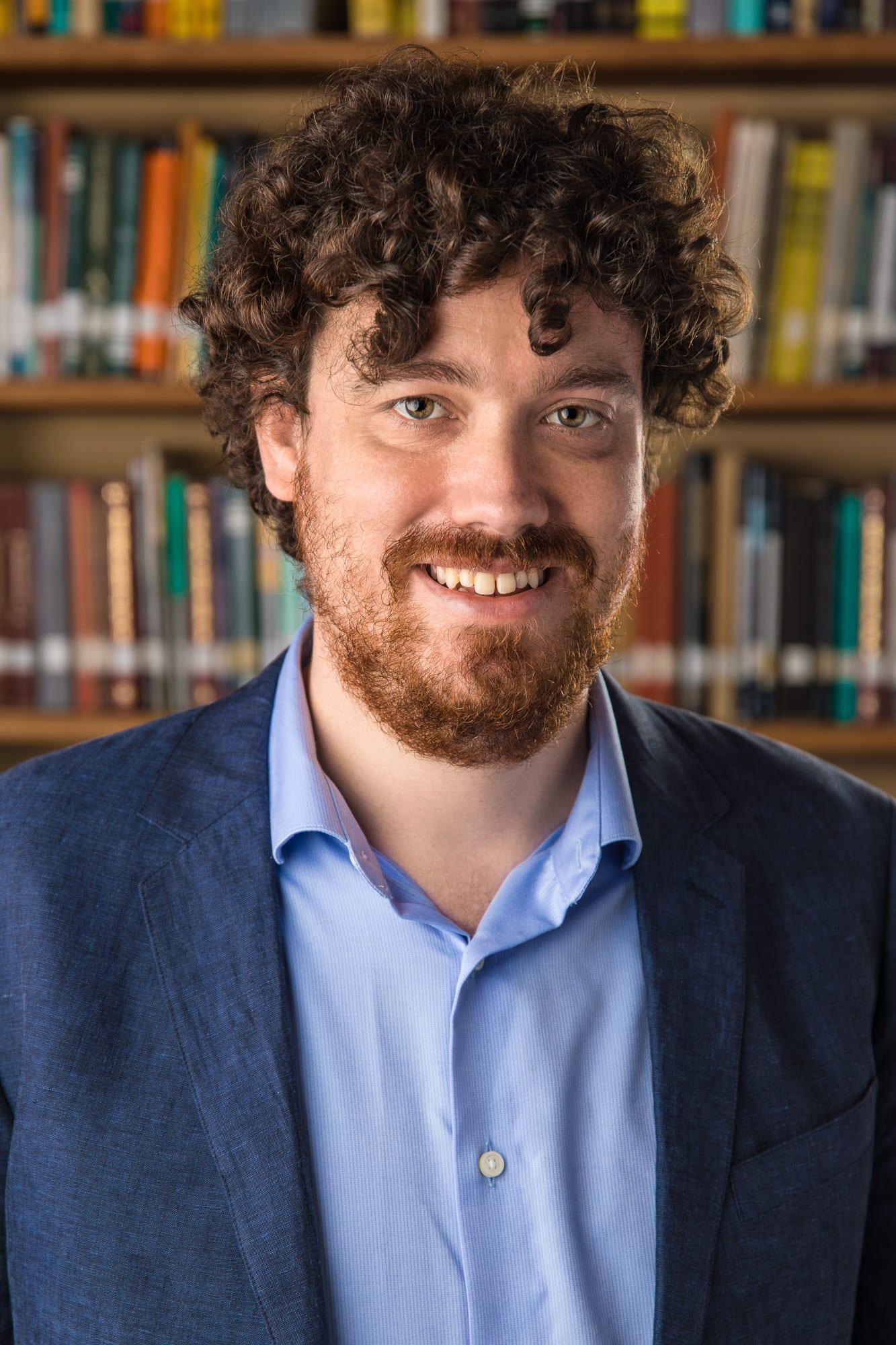
A 79-page paper posted to GitHub on Friday claims that a smooth fluid, left completely alone, can develop a singularity in finite time. Its authors, Levent Alpöge of Anthropic and Tristan Buckmaster of New York University, built it with heavy help from AI and backed it with about 600,000 lines of machine-checked Lean code. If it holds, the version of the Navier-Stokes problem most mathematicians actually meant has its answer, and one of the seven $1 million Millennium Prize problems is settled.
Leray's 1934 Hunch, Finally Built
The Navier-Stokes equations describe how water, air and blood move. Engineers use them to design wings and pipelines, and forecasters use them for the weather. The open question, which the Clay Mathematics Institute named a Millennium Prize problem in 2000, is whether a smooth flow stays smooth forever, or whether the math can produce a point where the flow's gradients grow without limit in finite time.
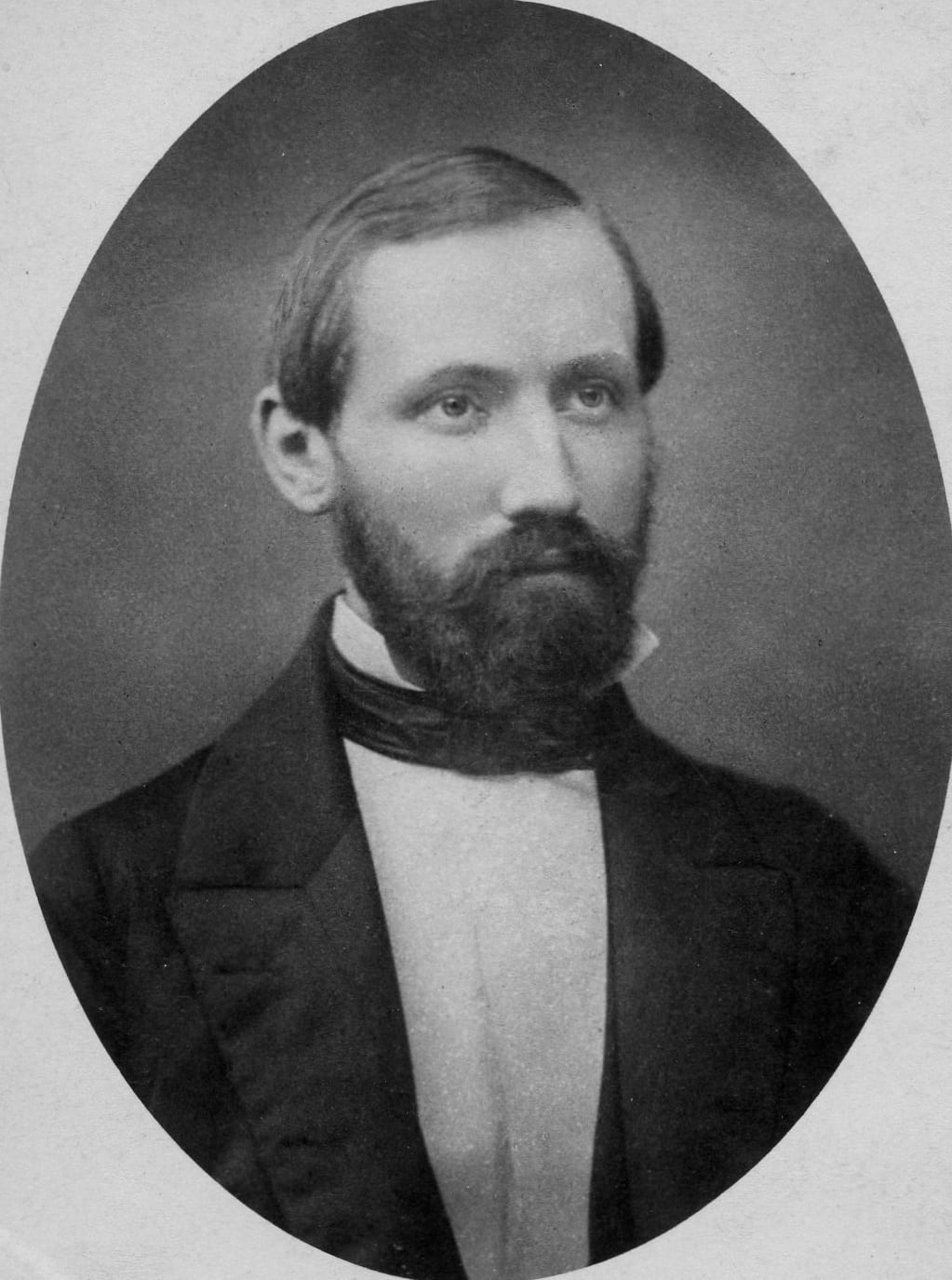
Jean Leray suggested in 1934 where to look: solutions that shrink onto a point while keeping the same shape. In 1996, Jindřich Nečas, Michael Růžička and Vladimír Šverák proved that the simplest version of that idea gives nothing. Alpöge and Buckmaster use the next candidate, a flow that repeats its shape only at a fixed ladder of scales, possibly rotated, which mathematicians call discretely self-similar.
Their abstract is blunt. They prove there exist smooth, compactly supported starting flows in all of space, and smooth flows in a periodic box, that blow up with no force acting on them. In the Clay problem's wording, written by Charles Fefferman, that disproves statements (A) and (B) and proves (C) and (D).
The "no force" part is the headline. In September, OpenAI's math team announced a blowup that relied on a finely tuned external force stirring the fluid, and many experts felt that left the real question open. So how do two mathematicians take the stirring away?
A Computer Search That Became a Proof
The proof has two halves. First, the authors show that if one smooth discretely self-similar solution exists, a genuine blowup from smooth starting data follows. Second, they show such a solution exists right next to an approximate one found by computer, which they call a certificate: a numerical solution that satisfies a list of explicit inequalities.
Terence Tao, who flagged the result on his blog the same day, described the plan as one of the expected paths to it: build an approximate solution numerically, then use rigorous perturbation theory to turn it into an exact one.
The logic lives in Lean, a programming language in which a computer checks every step of a proof. The paper says its human-readable draft was produced from an initial Lean proof with "enslopification", a set of agent skills by mathematician Scott Armstrong that turns a finished formalization into prose. It also thanks Anthropic for supporting the collaboration, and Tao describes the work as done with heavy AI usage.
The same day, Alpöge and Buckmaster, with Matei Coiculescu, released a proof of unforced blowup for the Euler equations, the frictionless cousin of Navier-Stokes, which Tao called human-readable and which is also formalized in Lean. That leaves one question: what has to happen before anyone hands over $1 million?
What Is Left Before the Prize
The authors list the open pieces themselves. The certificate, the numerical solution everything rests on, is not public yet: the paper prints its cryptographic hash and says it will be released soon. The check that it meets the required inequalities runs as interval arithmetic at 128 bits of precision, outside the Lean proof. And a patch made to the Lean files on November 20 had not been rebuilt when the repository was assembled.
“The paper is technically human-readable and the general strategy of proof is broadly clear”— Terence Tao
Tao also wrote that more work is needed to turn it into a proper, professionally written proof. That is the normal path for a result this size: Clay's rules ask for publication and two years of acceptance by the community before any award.
Who gains if it holds? Fluid physicists get an exact picture of how a smooth flow can pour its energy into a single point, a scenario they can now hunt for in simulations. Mathematicians get a template anyone can rerun: a computer search that finds an approximate answer, a proof that makes it exact, and a machine that checks every line. Ninety-two years after Leray's hunch, the answer arrives as a paper, a Lean library and a hash waiting for its file.
92 Years to an Unforced Blowup
The Brief
Stay curious
AI and technology: what changes and why it matters.
Your daily selection, in English or Spanish.
Free forever. Unsubscribe anytime.
More stories


Conversation
Start the conversation