
 The Specialty News
Anthropic's Levent Alpöge Says He and Claude Proved the Riemann Hypothesis
The claimed proof of the 167-year-old problem arrives as computer-checkable Lean code, and MIT's Andrew Sutherland has already compiled it independently.
On Friday, a mathematician at Anthropic posted four pages that open with a sentence number theorists have waited 167 years to read: "I believe I have, working with Claude, discovered a proof of the Riemann Hypothesis." Levent Alpöge did not attach a paper. He attached the proof itself, written in Lean, a language a computer can check line by line. If it holds, the deepest question about how prime numbers are spread out has an answer, and the way it was found may matter almost as much as the answer.
41 Days From First Idea to the Generalized Version
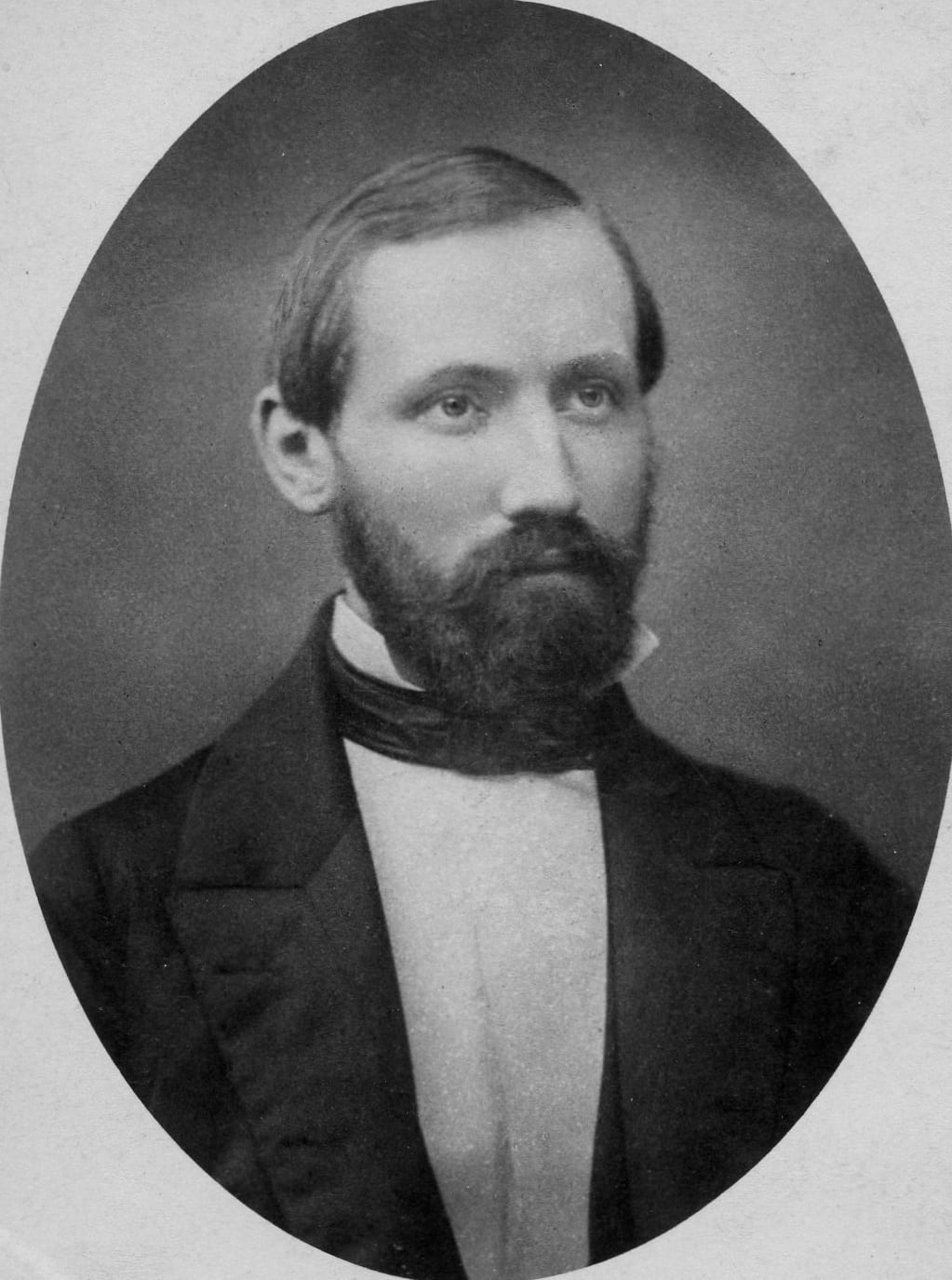
Bernhard Riemann posed the problem in 1859. It says that every nontrivial zero of the zeta function sits on a single vertical line, and in Alpöge's words it "asks for optimal control on the count of prime numbers of a given size." The Clay Mathematics Institute made it one of its seven Millennium Prize Problems, with $1 million attached.
Alpöge's note includes a timeline that, he writes, Claude reconstructed after a thorough search of their work. It starts on October 6, 2026, with what he calls a "Stepanov determinant", a nod to Sergei Stepanov's argument that settled the analogous question for curves over finite fields. Most of the decisive steps are dated November 15. The last entry, on November 16, reads simply "GRH". That is 41 days from the first idea to the end.
GRH is the Generalized Riemann Hypothesis, the stronger version that covers a whole family of related functions. Alpöge says the method "easily extends" to it, and he expects to reach the Extended Riemann Hypothesis too, with more time. So what did Claude actually do?
The √X Idea That Came From Claude
Alpöge says he set the strategy: combine two ideas he had seen work in a simpler toy setting, then find the matching situation over the whole numbers. Stepanov's method relies on multiplicity, something Alpöge compares to "differentiating whole numbers", which has no obvious meaning over the integers. The workaround was to chain theta lifts, a tool from the theory of automorphic forms, so that each link in the chain mimics one degree of multiplicity.
How long should the chain be? For a sum over primes up to X, Claude suggested a chain of length √X. Alpöge offers that single line as the one that "will suffice to make fellow mathematicians fall out of their chairs." He is candid that the higher-rank automorphic forms involved are outside his own expertise, and that some of his descriptions paraphrase Claude's summaries and may need correcting.
“Claude far outpaced me near the finish line. No, Claude flew, and danced, and sparkled near that finish line.”— Levent Alpöge
He chose not to publish a human-readable write-up yet. A fully written-out version, he notes, ran past 250,000 pages, so he released only the Lean code, split into 14 archive files on his site. It follows an earlier result this year, when a research version of Claude raised the known share of zeta zeros on Riemann's line from 41.6% to 67.2%, with Alpöge among the mathematicians who checked it.
What Has Been Checked, and What Comes Next
Andrew Sutherland of MIT compiled the Lean proof independently and told Scientific American: "This is indeed an historic moment." James Maynard of Oxford, a Fields medalist, was measured and hopeful: "I suspect that the proof will turn out to be correct, although even checking the Lean verification will take some time."
Lean confirms that every step follows from the last. What experts still need to confirm is that the theorem at the end says exactly what Riemann meant, with nothing slipped into the definitions. No expert review has been published, and the Clay Institute's rules require a published solution and two years of acceptance before any prize. Alpöge also addressed the timing, days after Anthropic's market debut, head-on: "There is an obvious cynical view, to do with the timing, but it is false."
If the proof holds, the payoff reaches far beyond one theorem. Many results in number theory begin "assuming the Riemann Hypothesis" or its generalized form, from sharp estimates of how primes are spread to the speed of some primality tests, and they would become plain facts. Alpöge expects the argument to be "massively simplified, likely immediately", and plans to write it up properly. For 167 years, mathematicians have built on an assumption. They may soon get to delete it.
167 Years, Then 41 Days
The Brief
Stay curious
AI and technology: what changes and why it matters.
Your daily selection, in English or Spanish.
Free forever. Unsubscribe anytime.
More stories






Conversation
Start the conversation