
 The Specialty News
OpenAI's Models Squeeze Up to 14% More From AMD's Flagship GPU
AMD got roughly a year of chip-design progress in under five months, and some of the changes are already in a design sent for manufacturing.
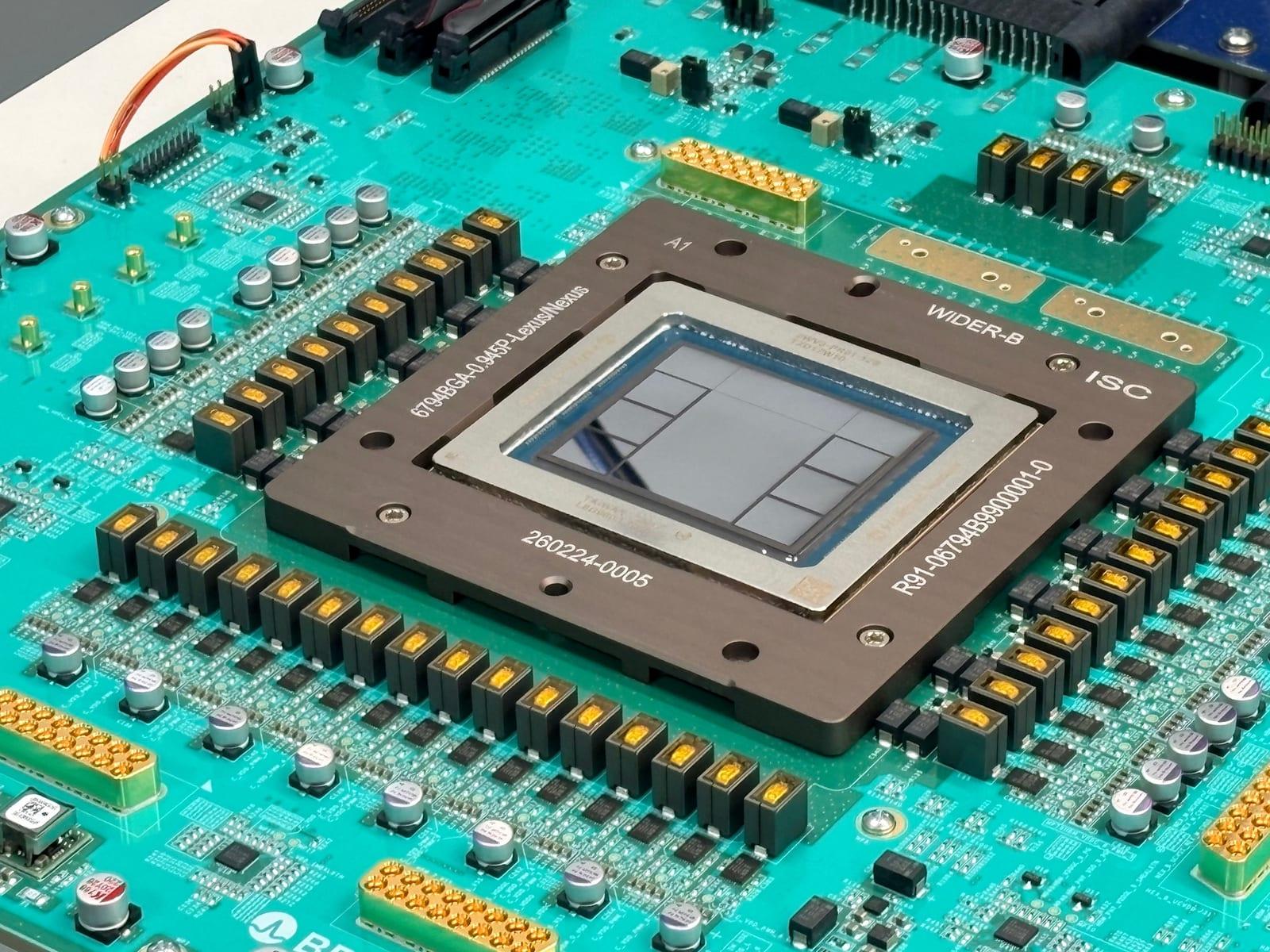
A multiplier inside OpenAI's Jalapeño chip now finishes its math in one clock cycle instead of two, on about 15% less silicon, and the redesign came from an AI model. On November 18 OpenAI said the same approach found AMD up to 14% better power, performance and area on its flagship GPU design, roughly a year of progress in under five months. The models that run on chips are starting to make those chips better.
A Year of Progress in Under Five Months
Chip designers judge their work on three numbers at once, known as PPA: how much power a circuit draws, how fast it runs and how much silicon it takes up. Moving any of them on a mature design is slow work, because the easy wins were taken years ago.
OpenAI's models found more anyway. Working with AMD, they rewrote the code that describes the chip's circuits, written in a language called SystemVerilog, and improved AMD's flagship GPU design by up to 14% against baselines that were already heavily optimized. OpenAI puts it at roughly a year of progress achieved in less than five months.
The changes are not staying on paper. AMD has already put some of them into a recent design it sent for manufacturing and added others to its production files for future versions. On its upcoming next-generation flagship CPU, AMD verified single-digit percentage gains across key blocks using designs written by the model.
The gains on AMD's chips came after a quieter test run on hardware OpenAI knows best: its own.
One Clock Cycle Instead of Two
OpenAI started using GPT-o3 mini to help design Jalapeño, its first custom inference chip, in early 2025. Even that early model found real savings.
In the matrix unit, the arithmetic heart of the chip, one multiplier redesign used about 15% less cell area while cutting its latency from two clock cycles to one. A separate adder redesign shaved another 15% of area and kept its two-cycle timing. In the vector unit, which runs many calculations in parallel, the models explored how to split work across pipeline stages so pieces of hardware could be shared and less data had to be held in between.
Added up, OpenAI estimates the model's proposals reduced standard-cell area by about 13% in the vector unit and 10% in the matrix unit. Those were no simulations: the optimizations were proven on real silicon when Jalapeño was first powered up, the chip OpenAI reported in August as rated at 700 watts.
“We've observed the model reason about RTL at the level of an expert microarchitect.”— OpenAI
Every rewrite went through Synopsys tools to check that the block still behaved exactly as before. Which raises the obvious question: can the model design a processor from scratch?
A Processor From a Spec Sheet
To track progress from one model generation to the next, OpenAI gave its models two open-source RISC-V processor cores, PicoRV32 and the Ibex core used in the OpenTitan security chip, and asked them to make each one run more instructions per second. Designs that failed a check, or grew past 16 times the original area, scored zero.
At about 112,000 tokens per run, GPT-6.2 Astra had the highest average score on both cores, roughly twice GPT-6 Astra's on PicoRV32. Then OpenAI handed the models only written requirements and the connection templates, and let them decide how data moves through the core. All five models scored higher designing from the spec than improving the existing design, across 9,881 scored runs in total.
OpenAI is upfront about what is left to solve. A core designed from scratch can drop features such as performance counters that do little for the test workloads, which may explain part of that advantage. Requiring those features, tightening the area limit and checking timing after physical synthesis would make the test closer to production work.
The next step is GPT-Synopsys, a model OpenAI is training with Synopsys to use the same design automation tools that professional chip engineers rely on. For AMD's engineers, that means a tireless colleague who has already handed them months back. The chips that train tomorrow's models are now partly designed by today's.
From Jalapeño to AMD's Flagship
The Brief
Stay curious
AI and technology: what changes and why it matters.
Your daily selection, in English or Spanish.
Free forever. Unsubscribe anytime.
More stories






Conversation
Start the conversation