
 The Specialty News
Trump Plans a 'Tremendous Tax' on US AI Data Centers Built Abroad
Announced from the White House briefing room on Friday, the policy has no mechanism yet, and his own staff heard it there first.
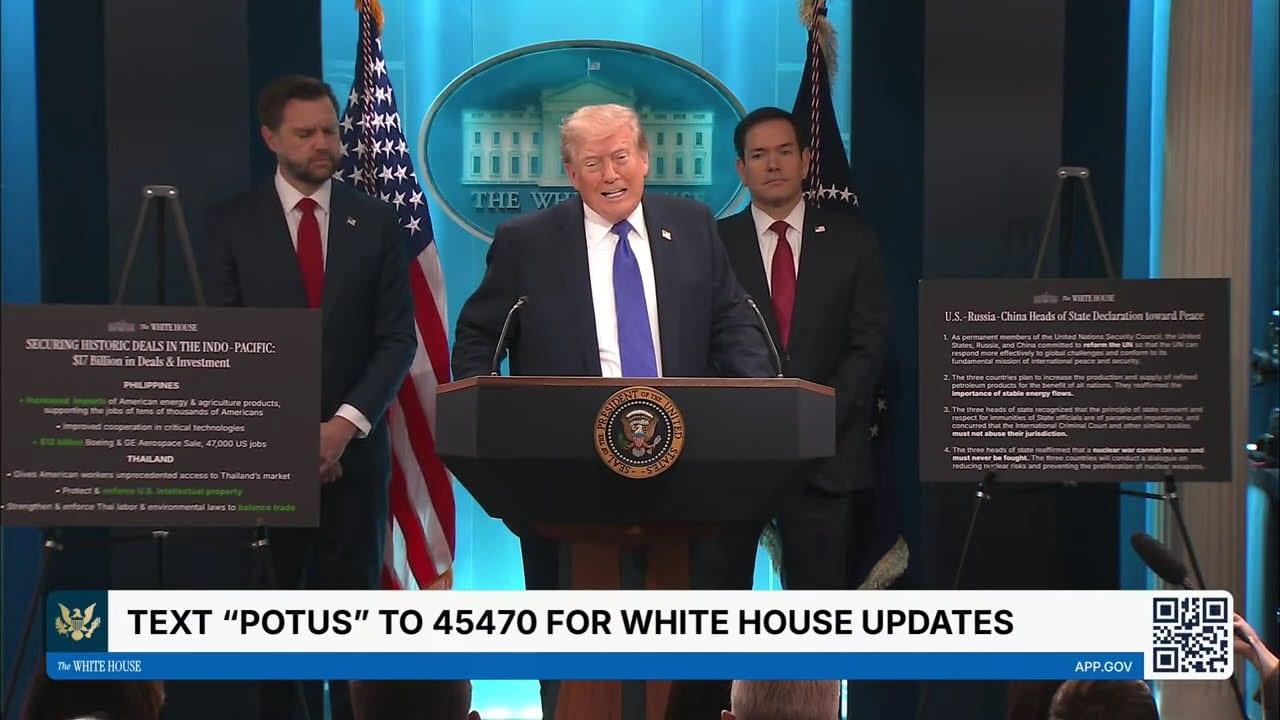
"We're not going to allow our companies to build data centers outside of our country," Donald Trump told reporters in the White House briefing room on Friday, a day after meeting Xi Jinping and Vladimir Putin in Shenzhen. Moments later he softened it into a price: companies can, he said, "but we're going to put a tremendous tax on them." The remark lands on an industry that has spent two years planning gigawatt campuses from Abu Dhabi to India, and it leaves one question for every board in the sector: what exactly will it cost to build abroad?
A Policy Announced From the Podium
Trump made the announcement at a news conference after returning from the APEC summit in China. It was new to the people who would have to carry it out. "I haven't even said that to my people," he said, adding that many of them were in the room.
He gave a short reason: that China would otherwise take the business, as he said had happened with chips. He named no rate, no start date and no legal route. NBC News reported that a White House representative did not reply to a request for comment on Friday, and he did not say whether he would seek approval from Congress or use powers the presidency already holds.
“We're not going to allow our companies to build data centers outside of our country.”— Donald Trump
The wording moved within the same answer, from a ban to a toll. That matters, because the projects it would touch are already in the ground.
Two Gigawatt Campuses Already Under Way
Building abroad has been the industry's plan, and until Friday it was also Washington's. In July 2025 an executive order set out to promote the export of the full American AI stack, chips, models and cloud together, to allied countries. CNBC notes that Alphabet, Amazon, Microsoft, Meta and Oracle have all built data centers outside the US, sometimes to meet rules that require a country's data to stay inside its borders.
Two projects show the scale. Stargate UAE, the Abu Dhabi campus built by G42 and operated by OpenAI and Oracle, is planned at 1 gigawatt, with its first 200 megawatts targeted for the end of 2026. Google broke ground in April on a $15 billion AI hub in Visakhapatnam, India, designed to start at 1 gigawatt.
Cloud providers serve customers where those customers are: a bank in Frankfurt, a hospital in Seoul, a ministry in Riyadh. None of Amazon, Google, Microsoft or Oracle had responded to CNBC's requests for comment by Friday evening.
So the pull runs both ways: if the companies build at home, the next question is whether the places at home want them.
The 64% Question at Home
A CNBC All-America Economic Survey found that most voters are wary of a data center next door.
Only 13% said they would support one. In this month's midterms, voters backed candidates who promised to limit new data centers, NBC News reported. Trump's answer on Friday was a deal for the neighbors: "Make them pay you. Make them pay your community, but take advantage. Don't shut them off."
That is the part with something in it for the people who live near these sites. Data centers pay property taxes, and some host towns already negotiate power and water terms before a shovel goes in. A national push to build at home could turn those local deals into the main way the AI buildout gets approved.
What is left to write is the rule itself: the rate, who pays it and whether a project already under construction counts. Until it exists, the clearest policy is Trump's own sentence, and the industry now has a reason to read the next executive order closely.
Washington's AI Map, Redrawn
The Brief
Stay curious
AI and technology: what changes and why it matters.
Your daily selection, in English or Spanish.
Free forever. Unsubscribe anytime.
More stories




Conversation
Start the conversation