
 The Specialty News
Nvidia Eyes $108B Quarter as Memory Shortages Threaten AI Growth
The chipmaker is on track to eclipse Apple and Alphabet's annual sales, but physical supply chains are finally capping its explosive run.
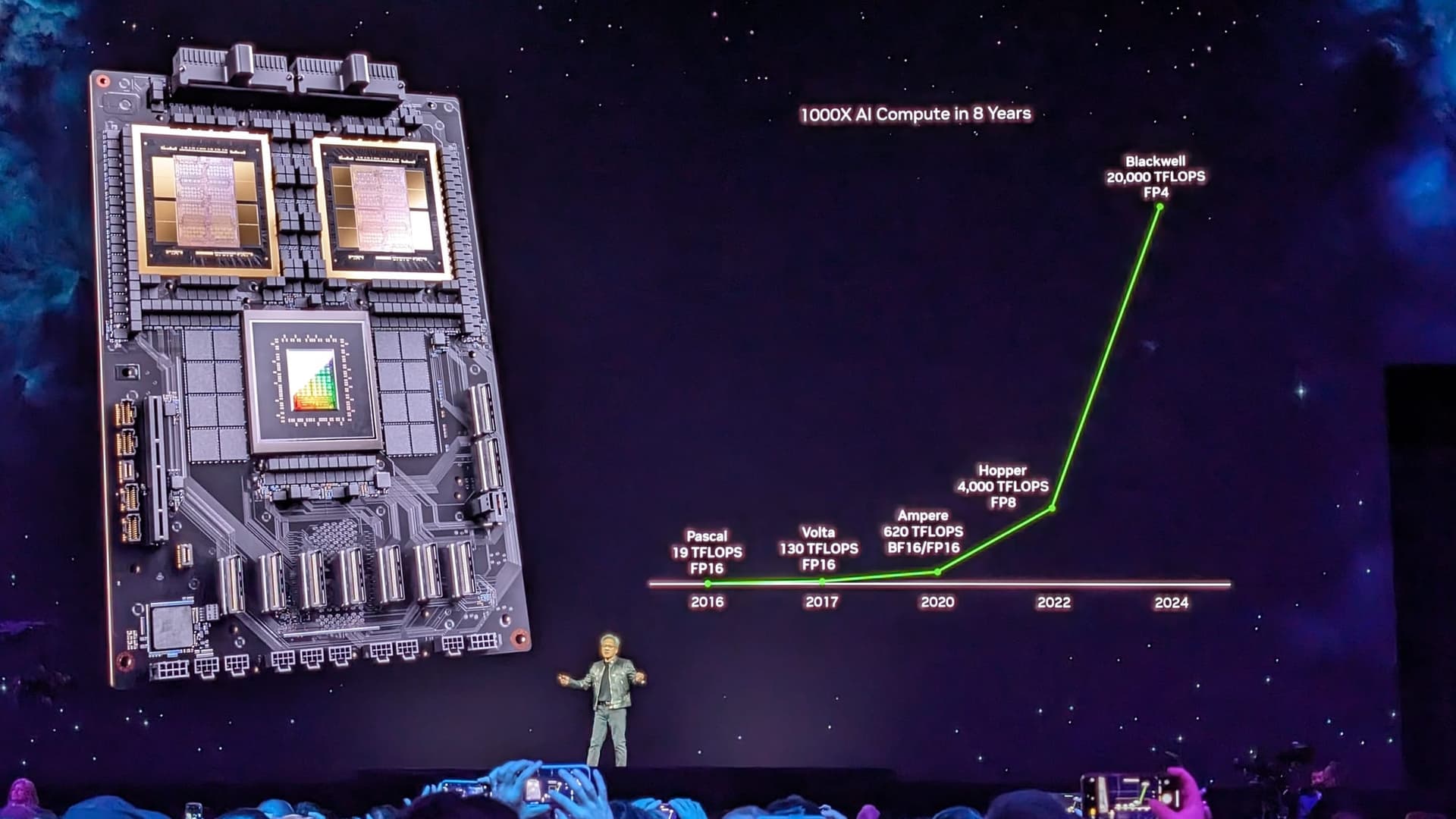
Seventy percent of Nvidia's workforce are now millionaires. The company's quarterly revenue has surged 1,730% in exactly four years, transforming a hardware manufacturer into an economic state. Now, Nvidia has issued a forecast that redefines scale in the technology sector: $108 billion in revenue for a single upcoming quarter. That target—a stark contrast to the mere $5.9 billion earned in the exact same quarter of 2023—puts the firm on pace to achieve a $432 billion annual run rate, generating more cash in a few months than legacy rivals Intel and AMD combined made in an entire year.
The End of the Training Era
For two years, Wall Street assumed the AI boom was a massive, one-time capital expenditure. Tech giants stockpiled hardware to train static generative models. But CEO Jensen Huang is aggressively driving a transition to "agentic inference." This new phase relies on autonomous systems that continuously reason, research, code, and act, generating hundreds of thousands of tokens per task.
To meet this exponential surge in computational demand, Huang rushed the next-generation Vera Rubin supercomputing architecture into full production. Yesterday's artificial intelligence was a novelty project that operated on standby. Today's agentic systems run constantly, turning compute power from a sunk research cost into a highly profitable digital utility.
“AI has reached its inflection point. It's doing useful work. Its tokens are productive and profitable. Now, compute is revenue.”— Jensen Huang
The demand side of Huang's equation is flawless, with buyers like Amazon Web Services locking in orders for 2 million GPUs through 2028. But fulfilling those orders requires materials that the market physically cannot mine, refine, and assemble fast enough.
The CFO's Supply Chain Reality
While Huang sells a new industrial revolution, Chief Financial Officer Colette Kress operates as the realist forced to temper insatiable expectations. During the company's late August earnings call, she reported a record $96.2 billion in second-quarter revenue. Yet Nvidia's stock briefly dipped in after-hours trading. Wall Street's whisper numbers demanded absolute perfection, and Kress delivered a harsh physical truth.
Severe supply constraints in memory chips mean Nvidia's pristine 75% gross margins will temporarily compress to 71% in the coming quarters. Customer forecasts indicate demand could double next year. The issue is that the physical supply chain caps the company's capacity to deliver.
Kress is managing a delicate balancing act between hardware realities and financial expectations. That friction is intensifying as critics zero in on how exactly Nvidia ensures its chips fly off the shelves so predictably.
The Cost of Manufacturing Demand
Nvidia is not passively waiting for upstart cloud providers like CoreWeave and Nebius to find their footing. The chipmaker has poured billions of dollars in venture capital into AI startups, which then use those funds to purchase Nvidia hardware. Skeptics point to this arrangement as circular financing, arguing it artificially props up demand and inflates the company's books.
Kress openly acknowledges the mounting criticism, defending the strategy as necessary seed capital for emerging digital infrastructure. Regulators and investors are tightening their scrutiny, looking for any sign that the underlying demand is a house of cards. But as agentic protocols integrate deeper into enterprise software, the usage metrics suggest the foundation is structurally sound.
The stakes have shifted entirely from salesmanship to logistics. When you are the most valuable company on Earth, your primary adversary is no longer AMD or Intel. The question is no longer whether Nvidia can sell chips. The defining test is whether global supply chains and regional power grids can build AI factories fast enough to satisfy the math.
What people are saying

“$NVDA !!!!! NVIDIA Q2 2026 EARNINGS: - Revenue $96.2B +106% YoY - Data Center Revenue $89.0B +117% YoY - GAAP EPS $2.46 +128% YoY - GAAP Operating Income $63.7B +124% YoY - GAAP Gross Margin 75.0% - Returned $26B to Shareholders in Q2 - Q3 Revenue Guidance of $108B NVIDIA”


“Nvidia customers notified about AI-related price hikes above 15%”
Nvidia Growth Hits Supply Walls
The Brief
Stay curious
AI and technology: what changes and why it matters.
Your daily selection, in English or Spanish.
Free forever. Unsubscribe anytime.
More stories






Conversation
Start the conversation