
 The Specialty News
Cerebras Runs Qwen at 1,500 Tokens a Second, Pricing Out the Developers Who Need It Most
The wafer-scale hardware finishes coding tasks 2.8x faster than standard GPUs, but a brutal 150,000-token limit and missing cache discounts make it 5.6x more expensive.

Users of Alibaba’s new Qwen 3.8 27B model are burning through their monthly API compute limits in exactly one minute and forty seconds. Cerebras’s wafer-scale hardware runs the AI at a blistering 1,500 tokens per second, functionally eliminating the agonizing wait time of code generation. But this raw physical velocity has collided with a stubborn economic reality.
The Physics of Zero Latency
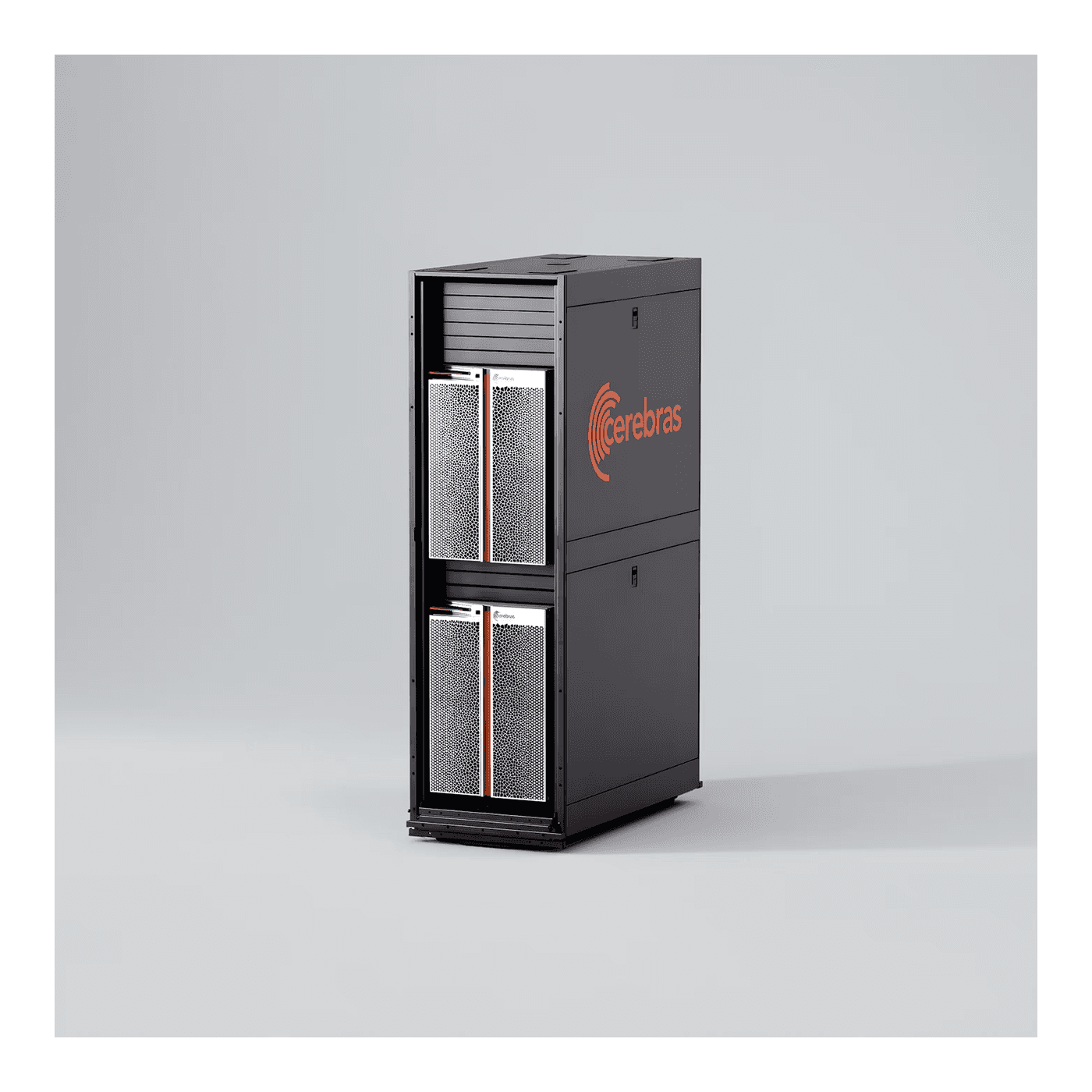
The hardware visionaries at Cerebras want to kill the waiting phase of artificial intelligence entirely. Traditional GPUs waste precious milliseconds shuttling model weights back and forth from external memory banks. Cerebras sidesteps this bottleneck by etching the entire model directly into on-chip SRAM.
When Alibaba open-sourced Qwen 3.8 27B in August, it gave developers a highly capable dense model that defaults to an aggressive internal reasoning state. The AI is incredibly smart, but it requires a massive amount of context to hold its train of thought. Pairing Qwen with Cerebras yields a staggering output speed.
That 150,000 limit sounds massive, but it equates to roughly the word count of Frank Herbert's *Dune*. At full throttle, Cerebras processes the entire novel in 100 seconds, instantly hitting the user's ceiling. The sheer speed creates a bizarre tension between what the hardware can do and what the billing infrastructure actually allows a developer to finish.
The Prompt Caching Penalty
Developers building autonomous AI agents rely on a specific financial lifeline called prompt caching. When an agent reads the same ten thousand lines of code repeatedly to fix a bug, standard cloud providers offer steep discounts for remembering the cached context.
Cerebras does not. Because of how SRAM fundamentally operates, reading cached context requires just as much physical on-chip resource as processing a fresh prompt.
“Input tokens, whether served from the cache or processed fresh, are billed at the standard input token rate.”— Cerebras inference documentation
The math turns hostile quickly. One developer tracked a typical coding review session with a 91.4 percent cache hit rate. On a standard GPU cloud, the job took 14 minutes and cost 29 cents. On Cerebras, it finished in just 5 minutes, but the bill came to $1.60. The hardware is 2.8 times faster in wall-clock time, but nearly six times more expensive for iterative workflows. Developers who love the speed are suddenly realizing they cannot afford the freight.
The Premium on the Present
This pricing divide forces a split in how we build software. High-stakes applications like live robotics, algorithmic trading, and real-time voice translation demand instantaneous responses. For those use cases, paying a premium to eliminate latency is a rounding error.
But independent developers hacking together asynchronous coding agents operate in a different reality. Hacker News users like *nostrebored* represent a growing wave of programmers who love the sheer speed but feel sidelined by an enterprise-focused billing structure that punishes complex queries. If an AI agent reads thousands of lines of code in the background while a human goes to get coffee, finishing the job in five seconds instead of fifteen offers zero actual utility.
The market is about to test exactly how much we value immediacy. Wall Street and robotics labs will gladly pay top dollar to eliminate the loading bar. But for the autonomous agents meant to do our heavy lifting in the dark, brute-force affordability will always beat instantaneous speed.
What people are saying

“🚀Qwen3.8-Max just got upgraded. Meet Qwen3.8-Max-0902! 2.4T parameters. 1M context tokens. Built for real world complexity. Further post trained on Coding & Cowork, Qwen3.8-Max-0902 now delivers stronger performance across complex enterprise tasks, scientific research, and”

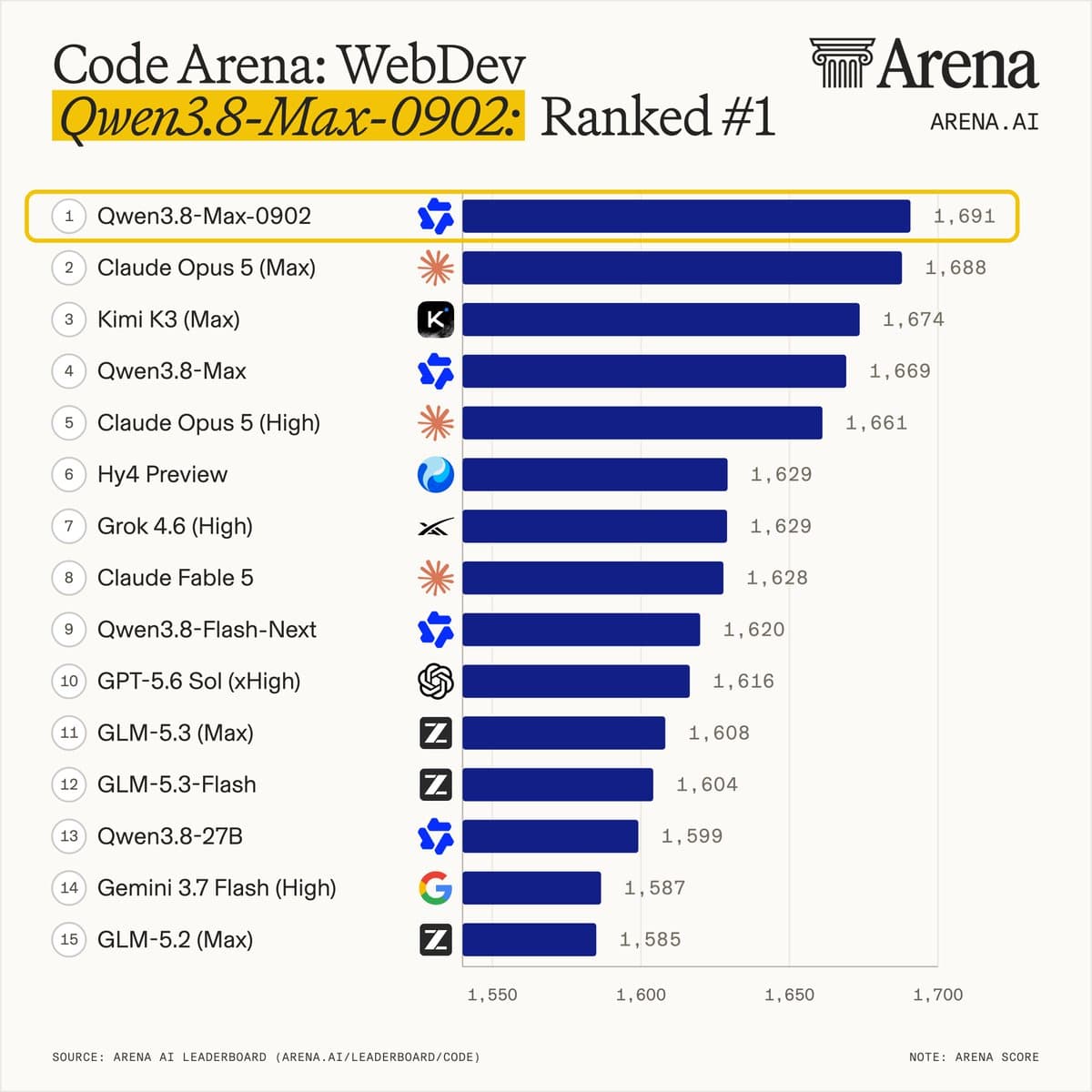
“Big news: Qwen3.8-Max-0902 by @Alibaba_Qwen just debuted at #1 overall in the Code Arena: WebDev with 1691 pts! It scores 3 pts above Claude Opus 5 (Max), 17 pts above Kimi K3 (Max), and 22 pts above the previous Qwen3.8-Max. Priced at a blended $5/MToken, Qwen3.8-Max-0902 also”

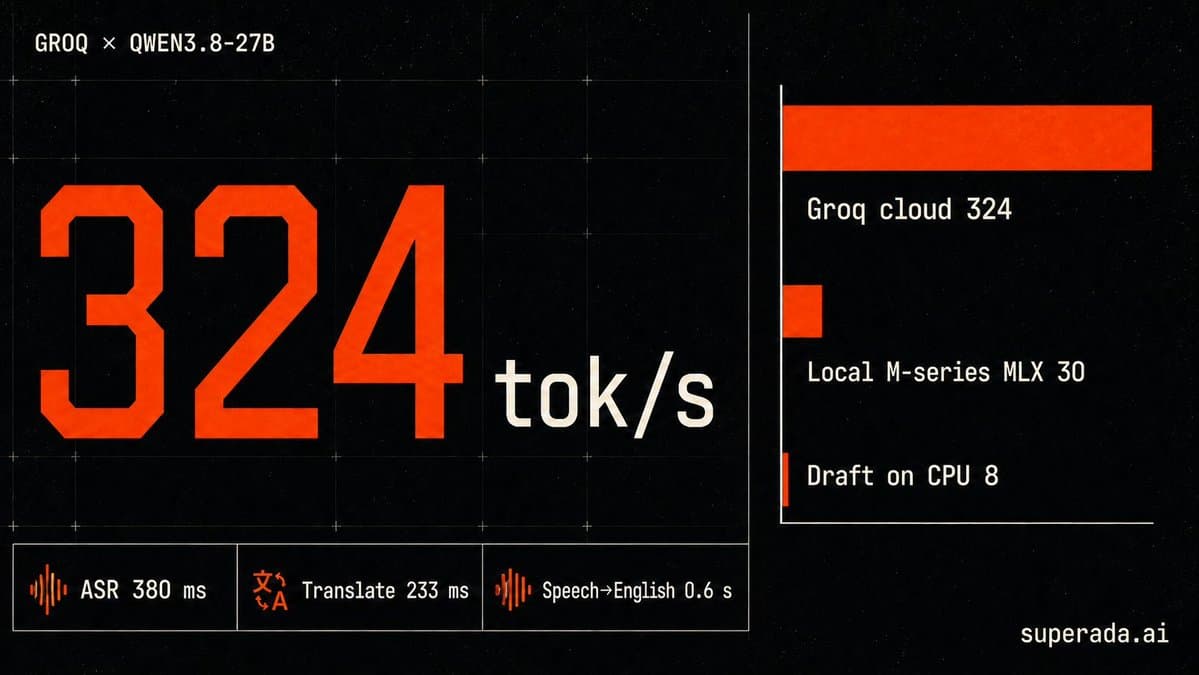
“I'm using Qwen3.8 27B on Groq and its awesome Only limits so far: 1,000 requests/min 8,000 tokens/min (prompt + completion combined)”
Cerebras Speed Costs 5.6x More
The Brief
Stay curious
AI and technology: what changes and why it matters.
Your daily selection, in English or Spanish.
Free forever. Unsubscribe anytime.
More stories



Conversation
Start the conversation