
 The Specialty News
Canada Closes Trade Talks With the Philippines and ASEAN's 700 Million People
Ottawa expects the ASEAN deal alone to add nearly C$2 billion to its economy and almost 14,000 jobs, with both agreements due to be signed in 2027.
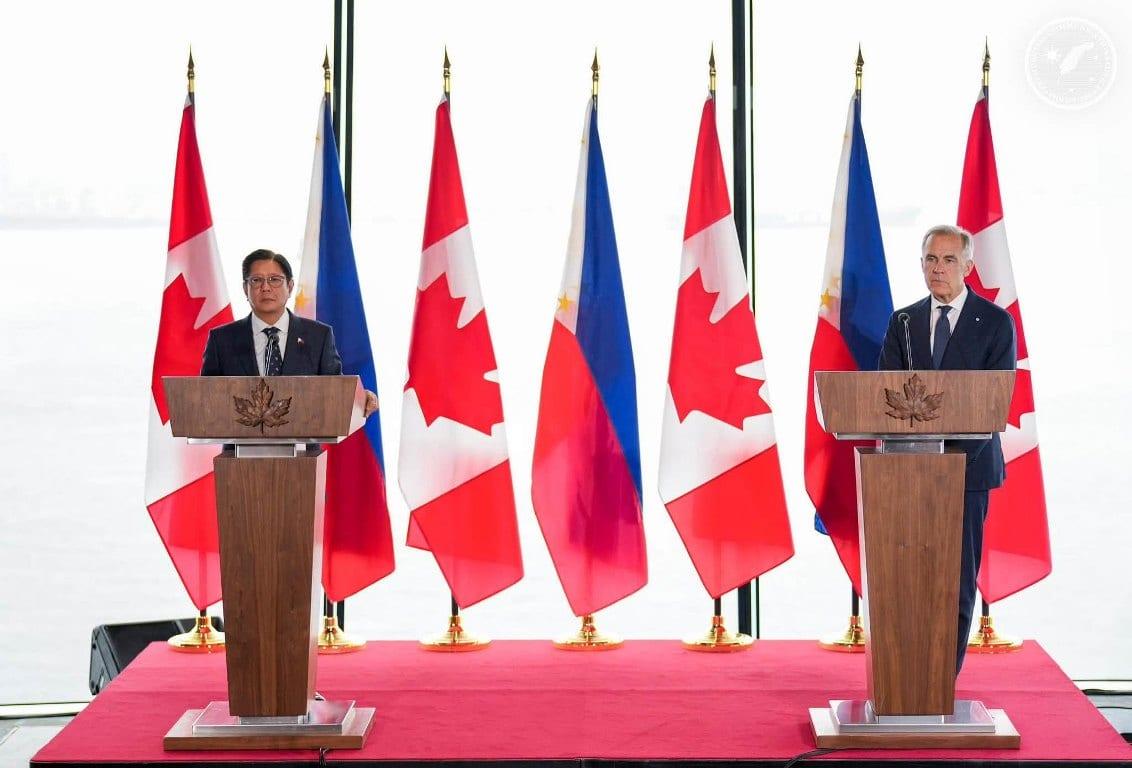
Five years of talks with Southeast Asia and one year with the Philippines ended on the same day. At the 49th ASEAN Summit in Manila on Saturday, Prime Minister Mark Carney announced that Canada had concluded negotiations for a free trade agreement with the Philippines and substantially concluded one with the whole Association of Southeast Asian Nations, a bloc of almost 700 million people. Canada becomes the first North American country to reach this stage with ASEAN, and its farmers, aerospace firms and miners get easier access to one of the fastest-growing regions on earth.
Two Deals, One Day in Manila
The Philippines agreement moved fast by trade standards. Carney and President Ferdinand Marcos Jr. agreed to launch talks at the ASEAN summit in Kuala Lumpur in October 2025, met again in Vancouver in July to promise a finish, and closed the negotiations in Manila. Both leaders signed a document formally ending them, and the two governments are now working toward signing the agreement itself in 2027.
The starting point is modest, which is what makes the target interesting. Two-way merchandise trade reached C$3.4 billion in 2025, up 7.4%, and Canada's direct investment in the country stood at about C$1.7 billion. Ottawa says the deal could triple Canadian exports to the Philippines by 2035, with Carney pointing to agriculture, aerospace, artificial intelligence, forest products, mining and energy services.
The Philippines was the quick win. The ASEAN deal was the long one.
The Five-Year Negotiation With 11 Countries
Talks toward an ASEAN-Canada free trade agreement began in 2021 and, by Carney's account, had stalled by the time his government took office. Getting 11 economies at very different stages of development to agree on one set of tariff rules is slow work, and Saturday's announcement is a "substantial conclusion": the core is done, a few chapters remain, and the aim is to sign in 2027.
The prize is already large. ASEAN was Canada's fifth-largest merchandise trading partner in 2025, with C$52.5 billion in two-way trade, up 22.7% in a year. The bloc's combined economy is close to C$6 trillion. Ottawa expects the agreement to add nearly C$2 billion to Canada's GDP, with the new jobs concentrated in agriculture and manufacturing.
To make sure smaller members can actually ratify and use the deal, Canada is putting C$5 million over three years into technical help for ASEAN governments: trade experts, regulatory advice and training.
Why Ottawa Is Signing Deals at This Speed
Carney has set Canada a goal of doubling its exports to countries other than the United States by 2035. He told reporters in Manila that nearly one in three Canadian export dollars now comes from outside the U.S., the highest share in 40 years. His government says it has signed seven trade and investment agreements this year, including one with Indonesia, and launched negotiations for seven more.
“In a more dangerous and divided world, a dense web of connections holds strong.”— Mark Carney
The summit also produced a set of smaller commitments: C$26 million for projects in the Philippines, from nuclear energy cooperation to support for women who farm cacao and coffee, and a new cyber security dialogue between the two countries. Carney travels next to Shenzhen for APEC, where he is due to meet China's President Xi Jinping.
For exporters on both sides of the Pacific, the next date to watch is the 2027 signing. Once both agreements are in force, a Canadian farmer will be selling into a market of almost 700 million people with lower tariffs and fewer barriers along the way.
Five Years to a 700M Market
The Brief
Stay curious
AI and technology: what changes and why it matters.
Your daily selection, in English or Spanish.
Free forever. Unsubscribe anytime.
More stories

Conversation
Start the conversation