
 The Specialty News
ASEAN's 11 Members Sign One Digital Rulebook for 680 Million People
The bloc's first binding digital pact lets trade documents, data and payments cross borders as files, and a BCG study says it could double the region's digital economy to $2 trillion by 2030.
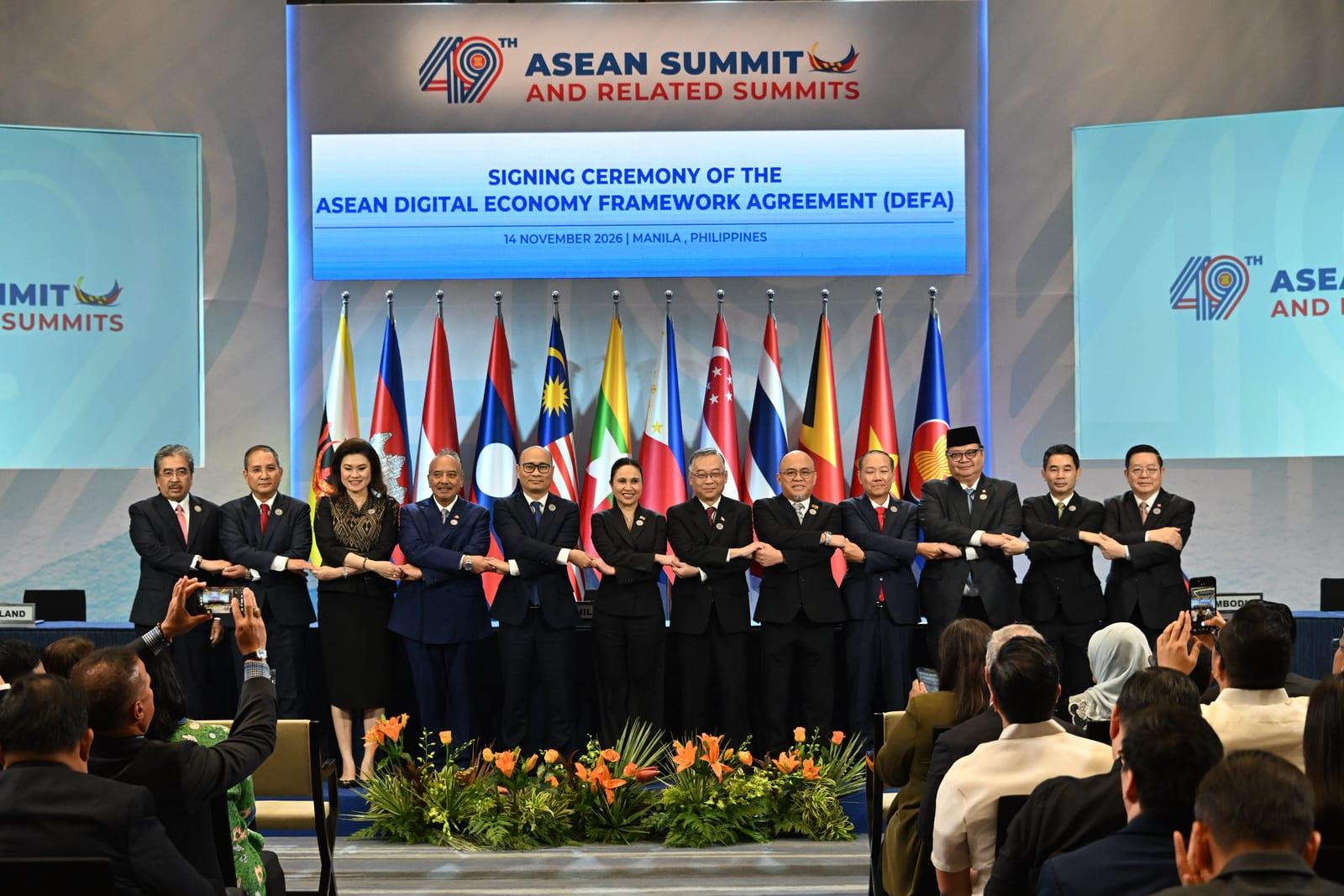
In a Manila ballroom on Saturday, trade ministers from all 11 ASEAN countries signed one set of digital trade rules for nearly 680 million people, roughly one and a half times the population of the European Union. The Digital Economy Framework Agreement, or DEFA, is the bloc's first standalone, legally binding pact on the digital economy. It covers everything from electronic certificates of origin to cross-border data flows, and it enters into force 180 days after signing, in 2027.
A Bill of Lading That Never Touches Paper
The agreement reads like a list of chores that cross-border traders know too well. It widens the use and acceptance of electronic trade documents such as certificates of origin, phytosanitary certificates and bills of lading, along with electronic signatures and electronic invoices, and it improves the rules on express shipments.
The deeper commitments are about data. Companies get clearer rules for moving data across borders, financial data included, without having to store it locally when the transfer is for commercial purposes. No member can demand a company's source code or cryptographic information as a condition for entering its market, and ASEAN keeps its moratorium on customs duties for electronic transmissions, with a review five years after the agreement takes effect.
The winners Singapore's trade ministry names first are small and medium-sized firms, for whom every extra form is a real cost. Grab, which runs its app in eight ASEAN countries, said the framework "will support local businesses in capturing the tremendous opportunities across the region."
Getting 11 governments to sign up to all of that took three years, and the reason says a lot about the region.
Three Years to Agree on One Set of Rules

Negotiations started in September 2023 and closed in May 2026. The hard part was the spread between members: Singapore runs one of the world's most digital economies, while Timor-Leste joined the bloc only in October 2025.
"To be able to negotiate an agreement that is on one hand sufficiently ambitious, at the same time acceptable to all member countries, is not easy," Singapore's Deputy Prime Minister Gan Kim Yong told reporters after the signing. The answer was a text that sets common rules while letting members move at different speeds.
The Philippines, which holds the ASEAN chair this year, made the pact a priority deliverable. Trade Secretary Cristina Roque, speaking at the ceremony, called it the world's first region-wide digital economy agreement of its kind.
“DEFA is not simply about economic growth. It is establishing the rules, systems and cooperation that will allow our people and businesses to participate more fully in that growth.”— Cristina Roque
So how big is the prize the ministers are chasing?
From $368 Billion Toward $2 Trillion
The e-Conomy SEA report by Google, Temasek and Bain puts the region's digital economy at $368 billion in 2026, on track to pass $1 trillion by 2035. A study by Boston Consulting Group, endorsed by ASEAN's economic ministers in 2023, measured a broader digital and digitally enabled economy and set out what an ambitious agreement could add.
The money to build the plumbing is lining up. The Asian Development Bank pledged up to $5 billion by 2030 to "turn its DEFA into action: digital infrastructure, cross-border data and payments, cybersecurity, AI readiness and digital inclusion," its president Masato Kanda said in Manila. Gan expects the first joint projects to target digital payments, digital identity, electronic trade documents and interoperability, ready for when the agreement takes effect.
The full text goes up on the ASEAN Secretariat's website in early 2027, the year Singapore takes over the chair and the bloc turns 60. The Singapore Business Federation set the bar plainly: "The key measure of success will be what businesses experience on the ground." If it works, a certificate of origin will cross 11 borders as a file, and a shop in Cebu will sell to Jakarta with the paperwork of a domestic order.
Three Years From Talks to Treaty
The Brief
Stay curious
AI and technology: what changes and why it matters.
Your daily selection, in English or Spanish.
Free forever. Unsubscribe anytime.
More stories



Conversation
Start the conversation