
 The Specialty News
SpaceX's Tower Catches Starship Home From Orbit After 14 Laps of Earth
Ship 42 spent about 22.5 hours in space, released 26 Starlink V3 satellites and flew back into the arms of the tower that launched it.
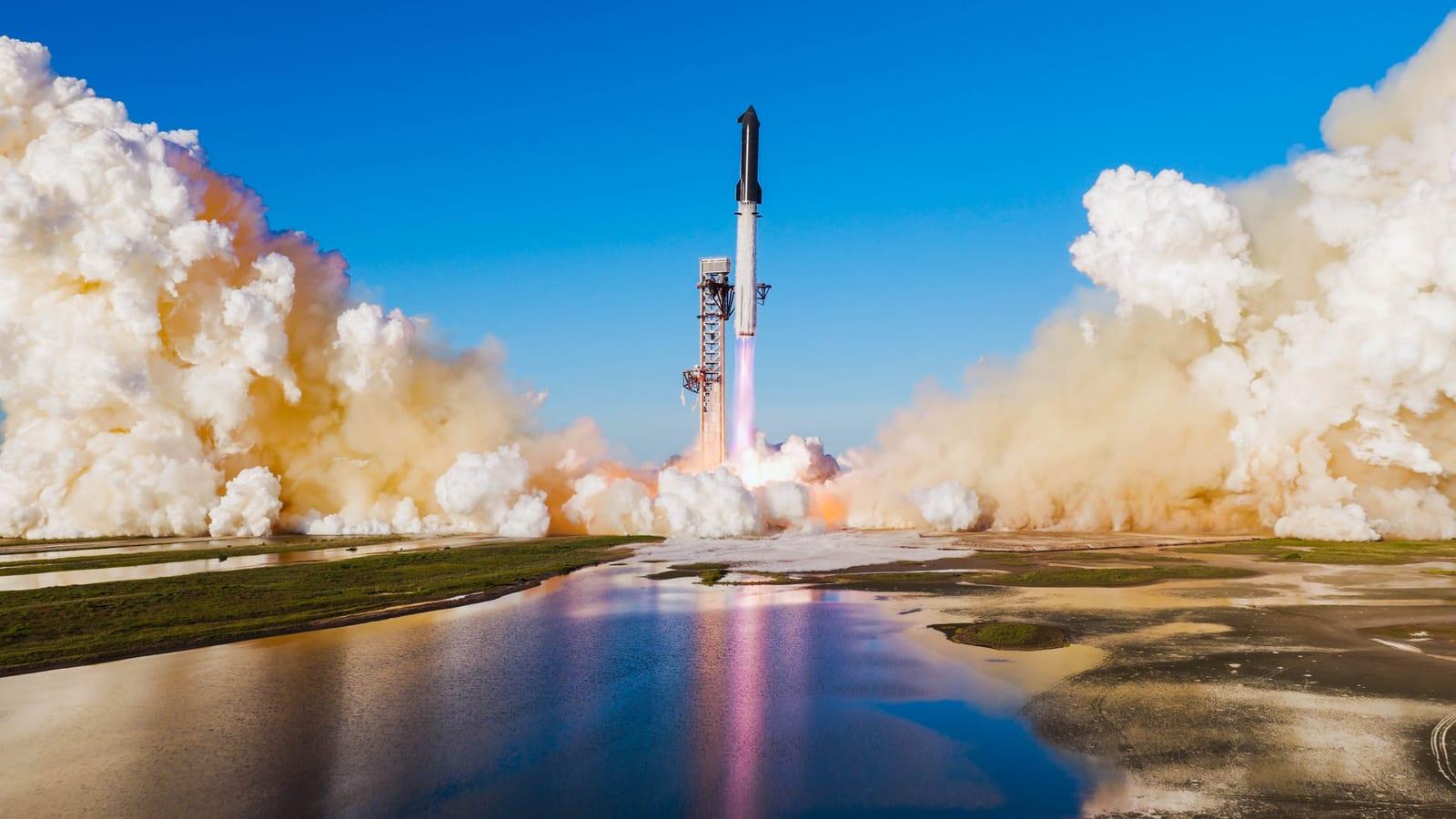
On Saturday afternoon, a stainless-steel spacecraft taller than a 15-story building dropped out of the clouds over South Texas flying sideways, swung upright on three engines and settled into the steel arms of the tower that had launched it the evening before. It was the first time anyone has caught a spacecraft returning from orbit. SpaceX's Flight 15 turns Starship's upper stage, the part that has to survive reentry, into something that can come home in one piece and fly again.
Twenty-Two Hours, 14 Orbits, One Catch
Flight 15 lifted off from Starbase on Friday evening, November 13. About 40 minutes later, Ship 42 had released all 26 of its Starlink V3 satellites, the larger satellites Starship was built to carry. Then it did something no Starship had done before: it stayed. Through the night, SpaceX reported that the vehicle and its heat shield were healthy, and Elon Musk posted that it was "traveling around the world every ~90 minutes."
After 14 orbits, the ship fired its engines for the deorbit burn on Saturday afternoon and came back through the atmosphere on a track over Mexico and South Texas. SpaceX's cameras showed the S42 markings above a sea of clouds, then a banking turn toward the coast. Less than a minute after it came into view of the crowd at Starbase, the tower's arms, which SpaceX calls Mechazilla, had it.
“Mechazilla catches Starship! Congratulations to the entire SpaceX team on this incredible achievement!”— SpaceX
The other half of the rocket had a shorter night. Super Heavy Booster 22 was due back at the tower about six and a half minutes after liftoff, but it was sent offshore instead and splashed down in the Gulf of Mexico. SpaceX said recovery teams were on site right away and that it would recover any debris that reaches Boca Chica Beach. The company is still reviewing why; early indications, according to Space.com, point to a low-fuel alarm that cut the booster's return burn short. That leaves an obvious question: why does catching the ship matter more?
Why Catching the Ship Changes the Math
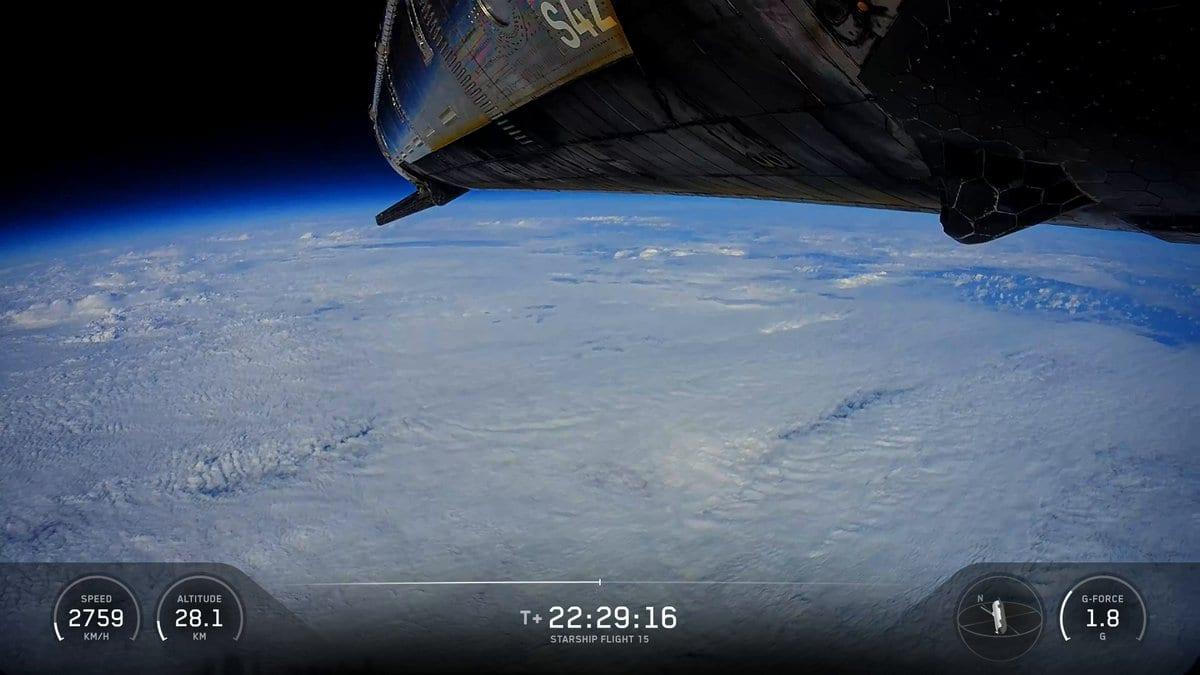
SpaceX has been catching boosters since October 2024, when Flight 5 brought a Super Heavy back to the same tower. Boosters have the easier job. They separate a few minutes after launch, far below orbital speed, and fall back close to home. The ship has to reach roughly 26,000 kilometers per hour, circle the planet and then shed all that speed as heat on the way down.
Even SpaceX's workhorse, Falcon 9, reuses its first stage but throws away its second stage on every flight. A rocket whose upper half also comes home can be refueled and flown again, the way an airliner is, instead of being rebuilt for each launch. Flight 15 is the first proof that Starship's upper half can make that trip and land where the next launch begins.
From One Catch to Weekly Flights
The payoff reaches well beyond Texas. NASA's plan to land astronauts on the Moon with Starship depends on refueling in orbit, which takes repeated tanker flights by ships that can turn around quickly. Each ship that lands on the tower instead of the ocean makes that plan cheaper and faster to fly.
There is a commercial payoff too. Musk said on Saturday that future Starship flights will carry over 50 terabits per second of Starlink bandwidth to orbit, and every reusable ship lowers what that capacity costs to put up there. What is left to solve is clear: bringing the booster home on the same flight, then doing both catches again and again.
For 22 hours, a spaceship lapped the planet with nobody aboard. Then it flew home and parked in the arms that launched it, ready, for the first time, to be used again.
What people are saying

Starship's Road to a Ship Catch
The Brief
Stay curious
AI and technology: what changes and why it matters.
Your daily selection, in English or Spanish.
Free forever. Unsubscribe anytime.
More stories




Conversation
Start the conversation