
 The Specialty News
Treasury Secretary Bessent Weaponizes $1 Trillion Cash Pile to Subdue Bond Yields
By threatening to bypass the Federal Reserve and use the Treasury General Account to fund bond buybacks, the U.S. government is engineering a massive liquidity injection.
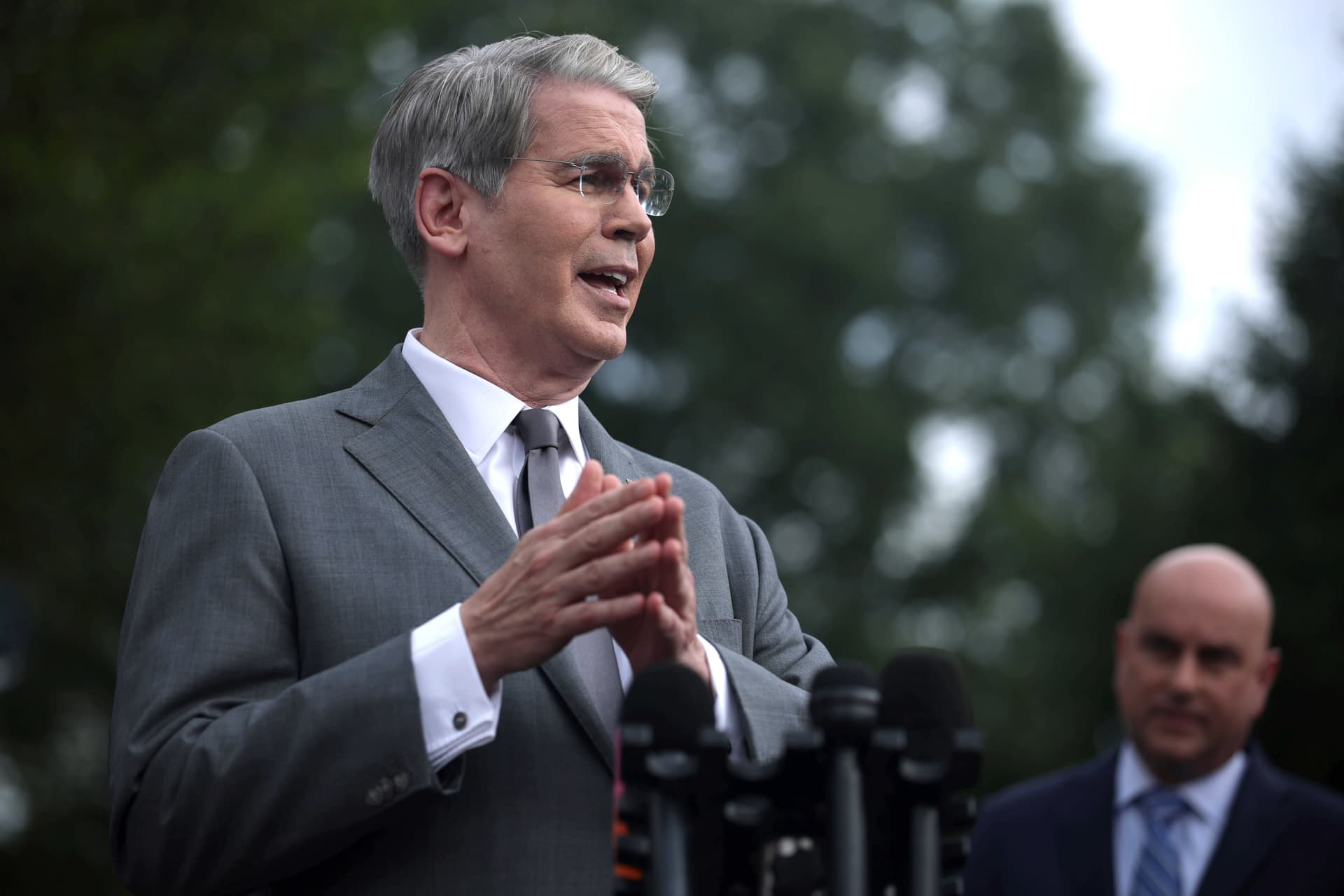
The U.S. government's checking account is sitting on nearly $1 trillion, and Treasury Secretary Scott Bessent is ready to spend it. Facing a $40 trillion national debt and 30-year bond yields surging past 5.3%—levels unseen since 2007—the Treasury is planning to double its buyback operations of older government bonds. But the real shockwave isn't the buybacks themselves; it's how Bessent plans to pay for them, signaling a seismic shift in how the United States manages its financial plumbing.
The Treasury Twist
In mid-August, the Treasury announced it would double its buyback operations for older 10-to-30-year bonds to at least $4 billion per operation. Initially, Wall Street yawned. Traders assumed the government would simply issue a corresponding amount of short-term bills to pay for the long-term bonds. If you pay off a credit card by taking out a personal loan, your overall debt has not changed. You are just shuffling the burden around. Unsurprisingly, bond yields quickly rebounded to their punishing highs.
Then came the plot twist. On August 24, sources revealed that Bessent is considering bypassing new debt issuance entirely. Instead, he might tap directly into the Treasury General Account (TGA)—essentially the government's mega-checking account held at the Federal Reserve. Over his tenure, Bessent has quietly swelled this account to between $935 billion and $950 billion, blowing past the historical targets of $550 billion to $600 billion maintained under previous administrations.
Using cold, hard cash from the TGA to buy back debt changes the financial physics of the market. Rather than just trading one type of debt for another, this maneuver represents a genuine, net-new injection of liquidity into the financial system. When markets digested this possibility, the reaction was immediate. Bond prices rallied anew, pushing the 10-year yield down to 4.69% and edging the 30-year yield lower. The Treasury is making it clear they will not be boxed in by standard operating procedures. As Molly Brooks, a U.S. Rates Strategist at TD Securities, observed: "It seems they are willing to be less predictable than they once were... We have to leave more options on the table."
“It seems they are willing to be less predictable than they once were... We have to leave more options on the table.”— Molly Brooks
The Dawn of Fiscal Dominance
This maneuver is a massive deal because of what it signals for the future of American financial architecture. For decades, open-market operations intended to alter systemic liquidity and move long-term yields have been the exclusive superpower of the Federal Reserve. Think of Ben Bernanke's post-2008 Quantitative Easing or the Fed's 2011 "Operation Twist." Now, the Treasury is proving it does not need to sit around waiting for newly appointed Fed Chair Kevin Warsh to cut interest rates. By utilizing its trillion-dollar cash pile, the fiscal branch has built its own bazooka.
It opens the door to an era of "fiscal dominance," where the Treasury takes a proactive, agile role in global market stabilization to protect the U.S. economy from the ripple effects of exorbitant borrowing costs. However, this newfound superpower has strict limitations. The U.S. debt market is a $40 trillion behemoth. While a $1 trillion TGA sounds infinite to a normal person, only a fraction of it—roughly $100 billion to $200 billion—can realistically be deployed as a usable buffer without threatening the government's ability to fund day-to-day operations and emergencies.
Economist Robert Brusca pointedly highlighted this ceiling, noting that the Treasury cannot invent money. If they tap an unspent pool of cash, they simply cannot spend it on something else later. Ultimately, Bessent's trillion-dollar threat is as much psychological as it is structural. By putting the TGA on the table, Bessent is firing a warning shot at anyone betting against U.S. bonds. The Treasury has evolved sophisticated tools to fight back against yield spikes, proving that when the financial plumbing backs up, the government has more than one wrench.
What people are saying

“🇺🇸 TREASURY COULD TAP $935 BILLION CASH PILE The US Treasury could use its $935 billion cash stockpile to fund expanded bond buybacks, rather than relying solely on new short-term debt issuance. The move could give Treasury Secretary Scott Bessent more firepower to reduce”

“Treasury Secretary Bessent doubles US long-bond buybacks in the face of surging yields”

“US long-term bonds slide as Bessent intervention fails to soothe investors. US long-term govt bonds were hit with a fresh wave of selling today as Treasury secretary Scott Bessent’s intervention to prop up the market failed to soothe investor jitters @FT Breaking News”
How TGA Buybacks Lower Yields
The Brief
Stay curious
AI and technology: what changes and why it matters.
Your daily selection, in English or Spanish.
Free forever. Unsubscribe anytime.
More stories






Conversation
Start the conversation