
 The Specialty News
From Luxury to Commodity: The 99.8 Percent Plunge in Solar Costs
How five decades of innovation turned an experimental tech into the world's most affordable energy source.
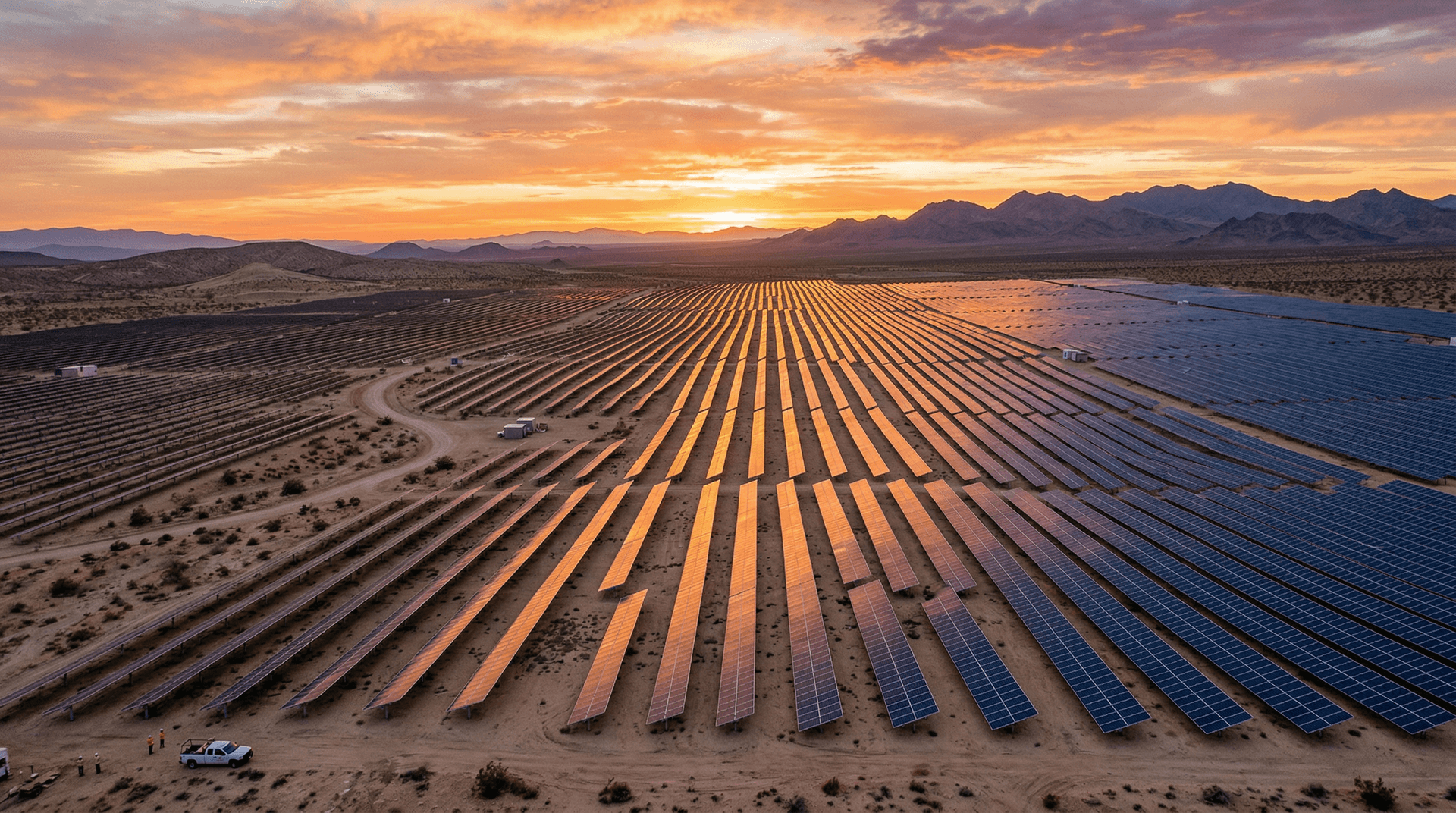
In 1975, a standard five-kilowatt residential solar array was a financial impossibility for most, costing over half a million dollars in unadjusted panel prices. Fast-forward to 2025, and that same hardware costs approximately $1,200, representing a staggering 99.8% decline. This collapse in cost has transformed solar from an experimental aerospace technology into the cheapest source of electricity in human history.
The Mechanics of a Clean Energy Revolution
This dramatic price decline is a textbook demonstration of Wright’s Law, which suggests that for every doubling of cumulative production capacity, costs drop by a predictable 20%. This constant 'learning curve' has allowed the price of solar photovoltaic (PV) modules to plummet from $115 per watt in the mid-seventies to around $0.25 today. The scale of this achievement is unprecedented in the energy sector; solar now represents 75% of all new renewable capacity added to global grids.
“In some regions, solar is so abundant during peak hours that producers occasionally pay consumers to take the excess energy.”
Efficiency gains have played a vital role in this narrative alongside industrial scaling. In the 1970s, panels converted only about 10% of sunlight into power. Today’s mainstream TOPCon panels reach up to 23% efficiency. We are now entering the era of tandem cells, where silicon is layered with materials like perovskite to push efficiency past the 30% mark by 2026, as evidenced by recent world records from manufacturers like LONGi.
The International Energy Agency (IEA) now forecasts that renewables, led primarily by solar, will overtake coal as the world's top source of electricity by 2026. In some regions, solar is so abundant during peak hours that producers occasionally pay consumers to take the excess energy. This saturation marks a total reversal from the energy scarcity of the previous century.
Geopolitical Headwinds and the Real Cost of Energy

Despite the long-term downward trend, the industry is entering a more complex phase. China, which currently controls roughly 80% of the global supply chain, recently scrapped VAT rebates on exports. This move signals a transition away from 'artificial pricing' toward what industry directors call 'real cost logic.' While this may lead to a minor 10-15% price increase, analysts view it as a necessary adjustment for a stable, long-term global market.
In the West, geopolitical concerns are reshaping the landscape through legislation like the U.S. 'One Big Beautiful Bill.' This policy tightens rules on Chinese-made components to encourage domestic manufacturing and enhance energy security. While these initiatives aim for long-term stability, they have led to short-term price bumps in the residential market, where 'soft costs' like labor, permitting, and financing now account for more than 60% of the total price.
The future of solar depends on balancing these local manufacturing goals with the continued need for global innovation. Even with slight price corrections and policy shifts, the return on investment for solar remains superior to fossil fuels. As battery storage costs continue to fall in tandem, the transition toward a solar-dominant grid appears not just likely, but inevitable.
The 99.8% Collapse
The Brief
Stay curious
AI and technology: what changes and why it matters.
Your daily selection, in English or Spanish.
Free forever. Unsubscribe anytime.
More stories



Conversation
Start the conversation