
 The Specialty News
Apple Puts Active Noise Cancellation in the $129 AirPods 5, Freeing Commuters From Silicone Ear Tips
The entry price for a quiet commute drops by $50, bringing computational audio to Apple's most affordable earbuds.
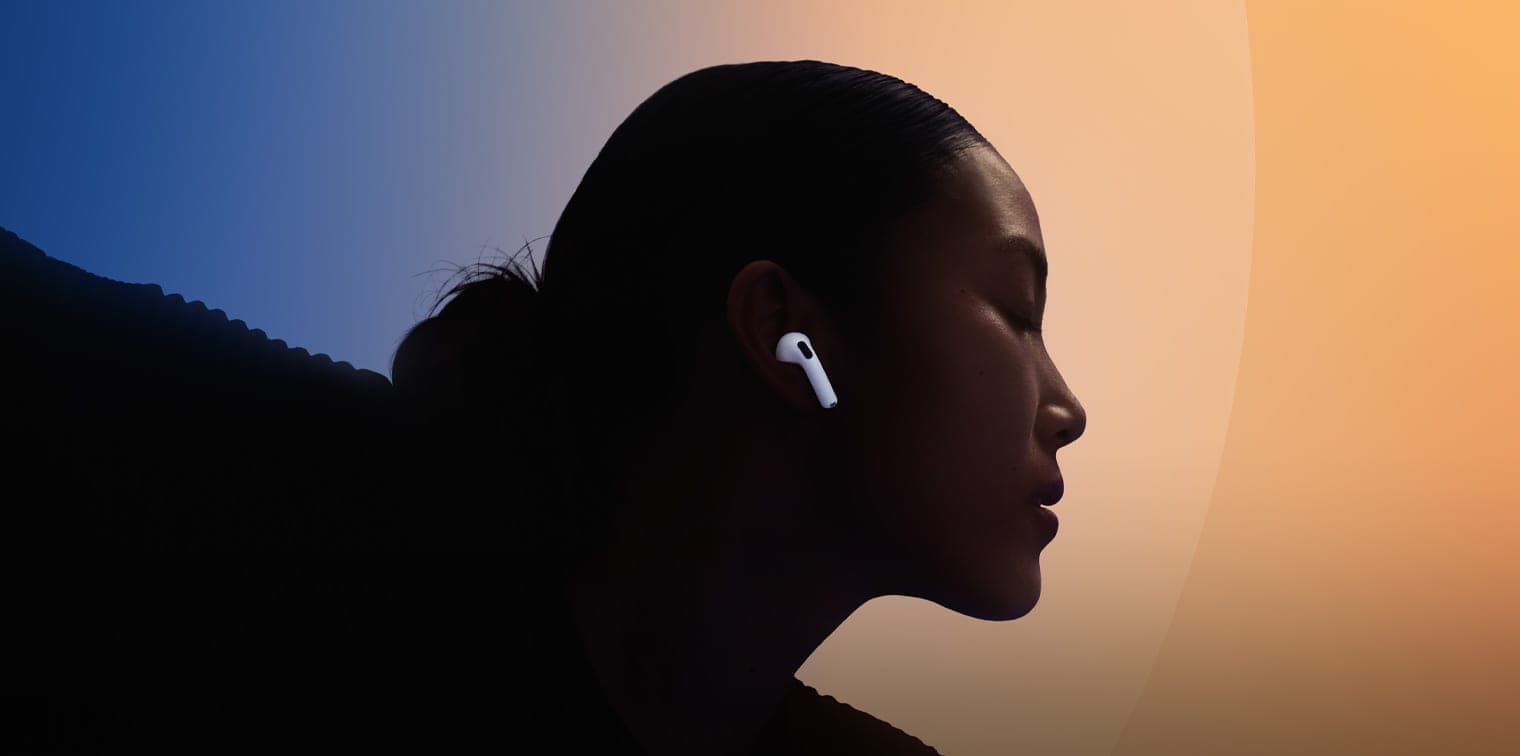
For years, blocking out the drone of an airplane engine meant wedging a piece of silicone deep into your ear canal. With the AirPods 5, Apple has replaced that physical plug with a digital seal, engineering Active Noise Cancellation into an open-ear design. Rather than reserving the computational audio for a premium tier, the company made it the default standard on its baseline earbuds. Commuters and travelers who find in-ear tips painful finally have a way to quiet their surroundings.
The $50 Price Cut
During the last hardware generation in 2024, buyers who wanted to filter out their environment had to pay $179 for a dedicated ANC tier. By pushing its acoustic architecture down the product stack, Apple has effectively turned a luxury feature into a commodity. The new baseline model cuts the cost of entry by $50, hitting store shelves on September 18.
“We're thrilled that with AirPods 5, we're able to bring Active Noise Cancellation — one of our most beloved features — to our most affordable AirPods.”— Dave Pakula
Dave Pakula, Apple’s Vice President of Hardware Engineering, drove the initiative to make the company's premium capabilities standard. The hardware relies on a new multiport acoustic architecture that claims to remove 50 percent more noise than the previous generation, all while leaving the ear canal physically open. The question for acoustic engineers now is whether a purely computational approach can handle erratic, high-frequency city sounds like a passing ambulance without a silicone plug.
The Wearable AI Node
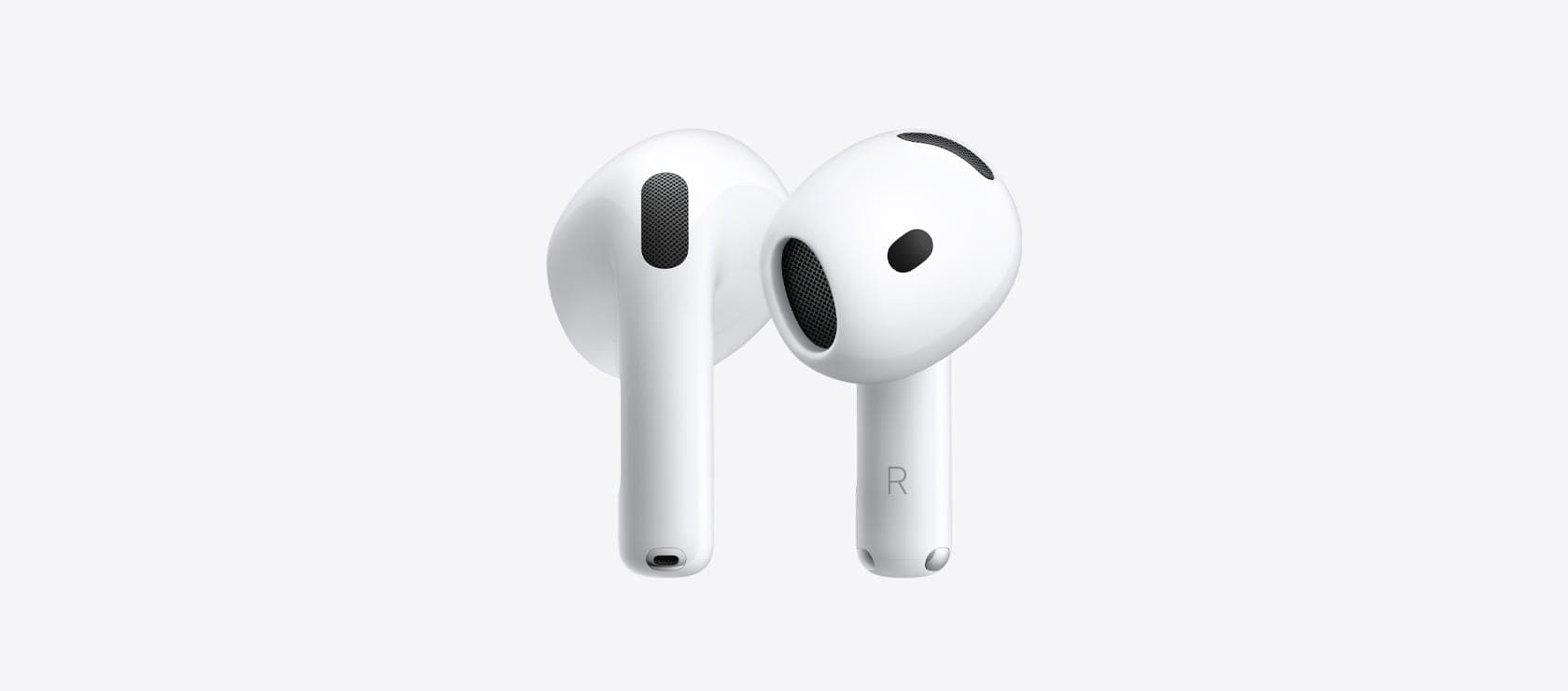
The upgraded hardware does more than play music. Powered by the H2 chip, the earbuds function as a hands-free AI node. A user in a quiet office can now answer or reject a phone call simply by nodding or shaking their head at the Siri AI.
For multinational workers, the software unlocks real-time Live Translation, processing foreign languages and piping the translated audio directly into the user's ears. These capabilities rely on the sequential rollout of iOS 27 and Apple Intelligence, meaning early adopters will initially be constrained by regional language support. But the trajectory is clear. The earbud is transitioning from a passive speaker into an active assistant, and navigating a foreign city is about to require a lot less screen time.
What people are saying

“The AirPods 5 coming tomorrow will have improvements to active-noise-cancelation. There will still be two models, differed by including and not including a wireless charging case.”

“De nouveaux AirPods 5 ! #AppleEvent Toujours très sympa d'avoir des écouteurs ouverts avec de la réduction de bruit 😊”
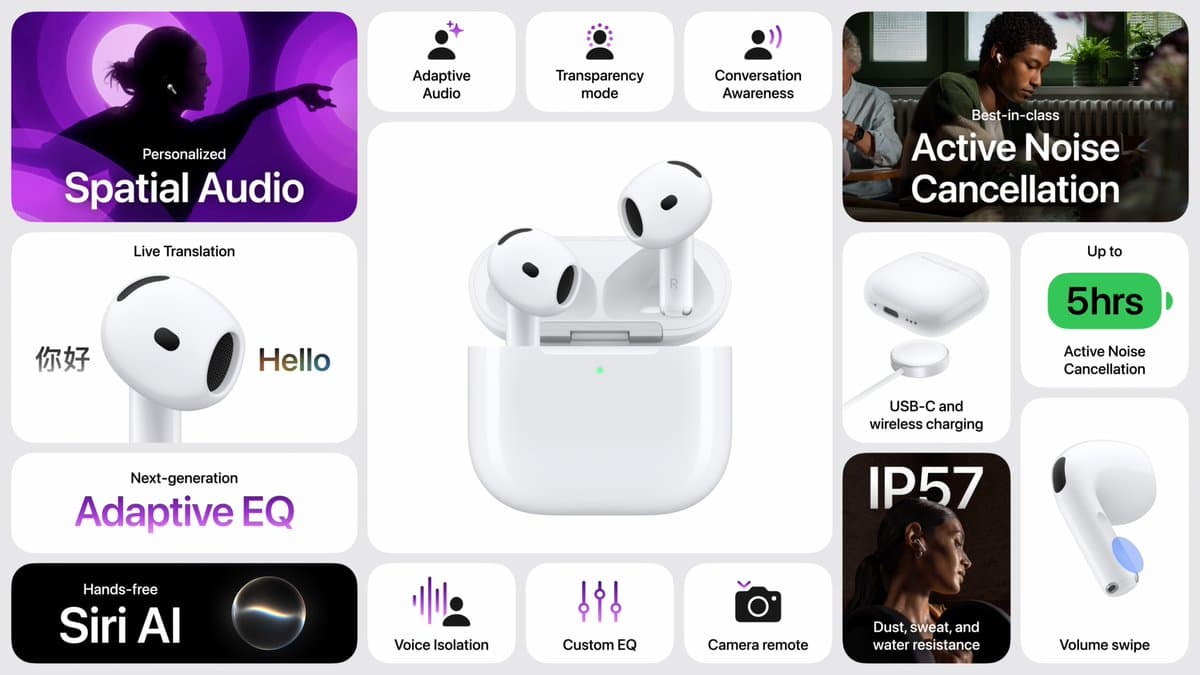

“Nuevos AirPods 5: -Mismo diseño que los 4 -Nueva arquitectura acústica -Audio espacial personalizado -ANC 50% mejor que la generación pasada -Audio adaptativo -Traducción en vivo -Hasta 20 hrs de uso -Resistentes al sudor, agua y polvo”
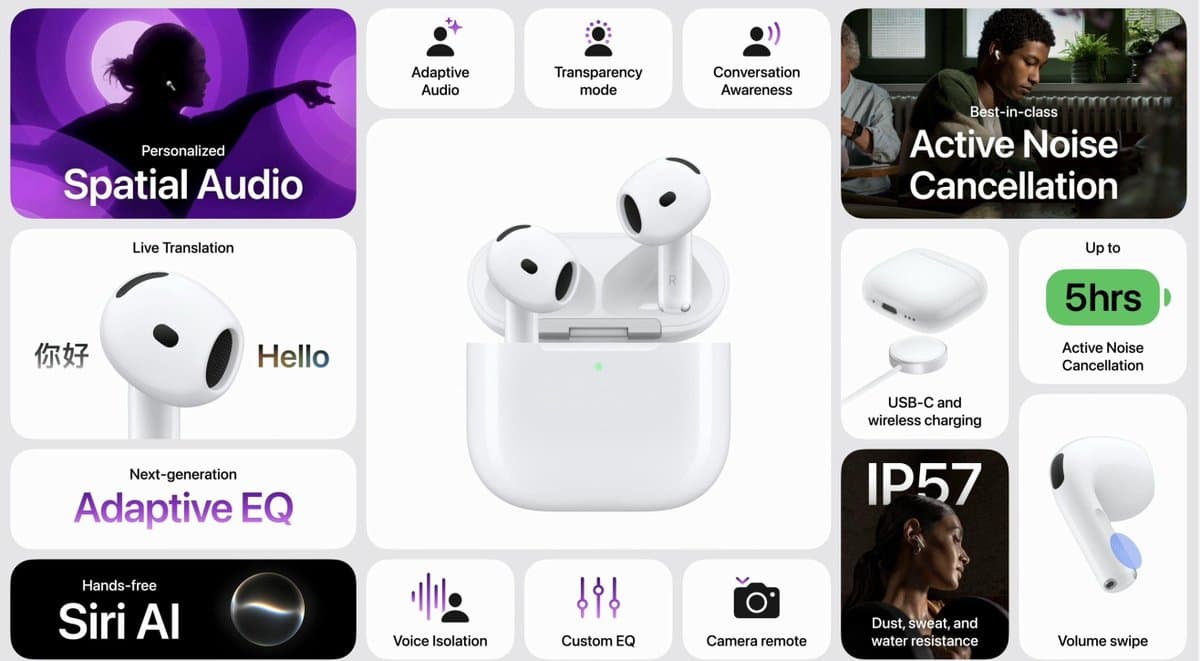
Apple Lowers Barrier To ANC
The Brief
Stay curious
AI and technology: what changes and why it matters.
Your daily selection, in English or Spanish.
Free forever. Unsubscribe anytime.
More stories




Conversation
Start the conversation