
 The Specialty News
Perplexity Puts 10,000+ GPUs Behind an AI That Does Its Own Research
Perplexity Frontier Research, led by Andrew Gordon Wilson, will publish its papers, models, data and code in the open.
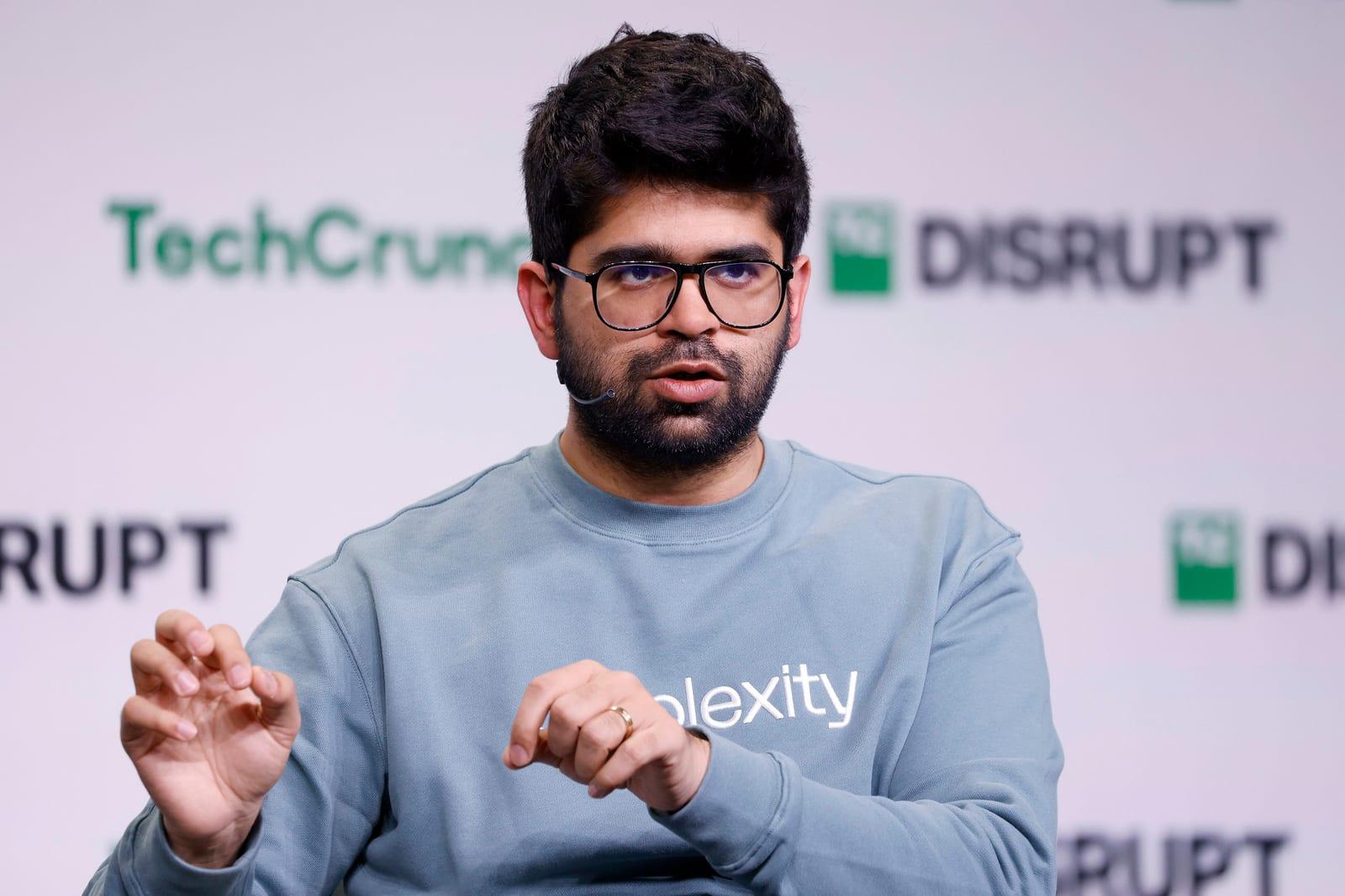
Perplexity has spent three years answering other people's questions. On Monday it said it wants to build an AI that asks its own: an automatic research scientist that can hypothesize, design experiments, analyze results and change its mind, backed by more than 10,000 GPUs. The new lab, Perplexity Frontier Research, promises to release its papers, models, data and code openly, so researchers outside the company get to use what it learns.
Research as a Loop a Machine Can Run
Perplexity's announcement starts by describing what a scientist does all day. Research, it says, is a loop: asking the right questions, hypothesizing, designing experiments, analyzing results, navigating ambiguity and updating beliefs. The goal is a system that runs that loop by itself and produces new, interpretable knowledge, rather than black-box predictions in one narrow setting.
“We aim to build an automatic research scientist, an AI system that can conduct research on its own.”— Perplexity
The agenda rests on six pillars: multi-agent orchestration, pre-training, continual learning, reinforcement learning, systems and evaluations. Each comes with an open question. Can new architectures be more efficient? Can synthetic data help models generalize further? When do teams of agents work best together? And the one that may matter most: can anyone build tests that measure research ability and extrapolation, rather than only recall?
Asking the questions is the easy part. The interesting part is who gets to chase them, and with what.
More Than 10,000 GPUs and a Research Lead
The lab is run by Andrew Gordon Wilson, named on Perplexity's research site as Research Lead of Perplexity Frontier Research. Wilson is a machine learning researcher who previously taught at New York University, best known for work on Bayesian deep learning and how models generalize.
Perplexity has not said which chips make up that fleet or whether it owns or rents them. It has said where the people will sit: San Francisco, Palo Alto, New York and London, with a priority deadline for applications on December 5. A research fellowship sits alongside the full-time roles, paying $180,000 for predoctoral fellows and $220,000 for postdoctoral fellows.
For a company best known as an answer engine, this is a move into territory usually held by the big model labs. What Perplexity promises to do with the results is the unusual part.
Open by Default, Tested by Millions
"We will release papers, blog posts, data, models, and code," the announcement says. The research site already lists earlier work in that spirit, including Decider v1.2, a 27-billion-parameter model on Hugging Face, and WANDR, a benchmark for research agents that must search both wide and deep.
That openness is what turns one company's lab into something the wider field can use. A university group without 10,000 GPUs can still pick up a released model, rerun a benchmark or build on a paper. Perplexity, in turn, gets the hardest exam it could ask for: its findings shape a product used by millions of curious people every day.
Search engines were built to answer questions. Perplexity is now building one that asks them, and promising to show its work.
What people are saying

“Today we're launching Perplexity Frontier Research. The goal of Perplexity Frontier Research is to create a system that can perform autonomous research. The work will focus on multi-agent orchestration, reinforcement learning, continual learning, systems, and pre-training. We”
The Loop Perplexity Wants Automated
The Brief
Stay curious
AI and technology: what changes and why it matters.
Your daily selection, in English or Spanish.
Free forever. Unsubscribe anytime.
More stories


Conversation
Start the conversation