
 The Specialty News
Nvidia's Nemotron for Science Beats GPT-6 Astra at 10x Lower Cost
Tuned with lab feedback, its quantum-dot lab protocols reached 61% accuracy, against 54% for GPT-6 Astra.
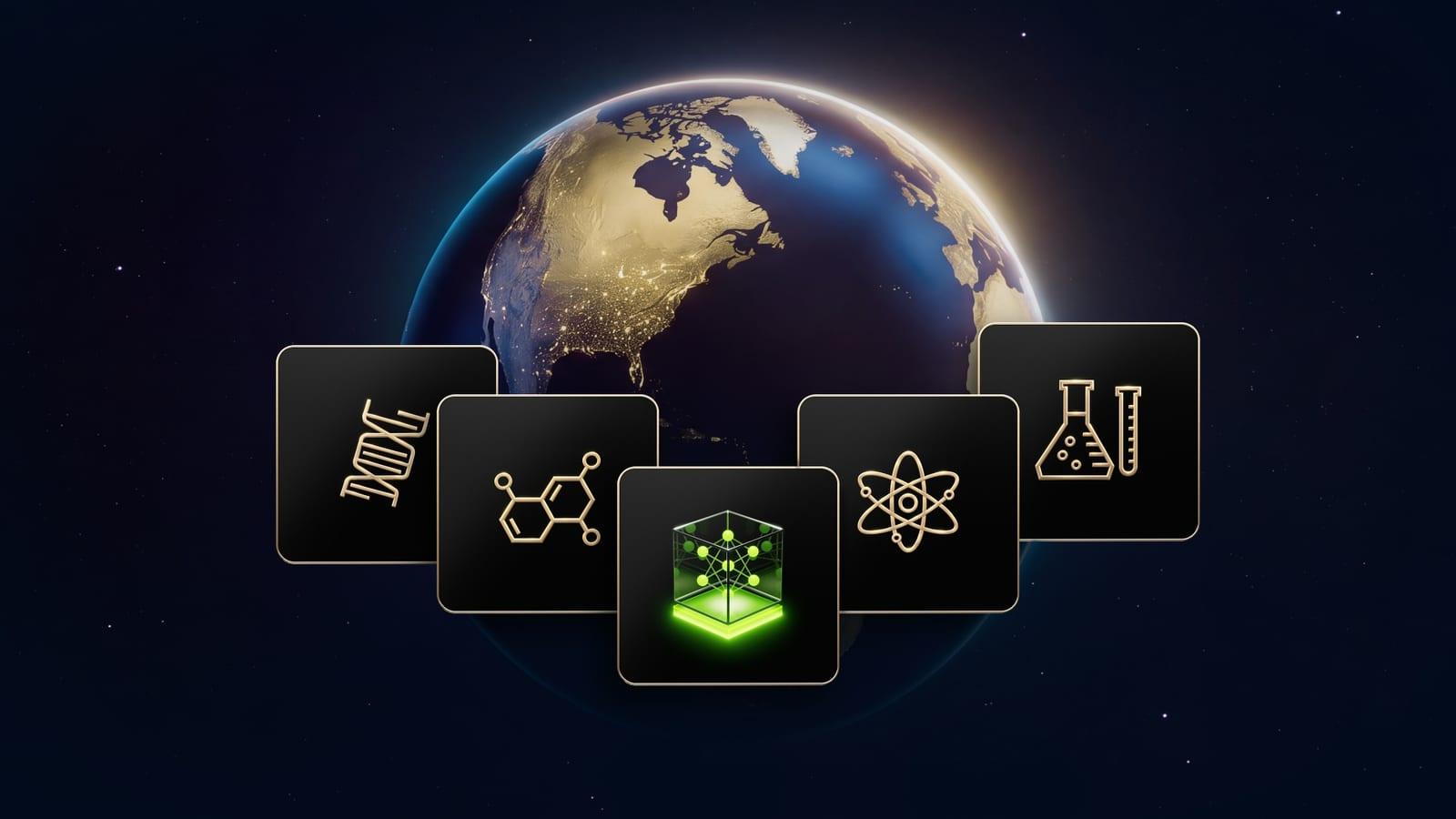
A molecular-dynamics agent at Sweden's KTH Royal Institute of Technology spent one night on a single desktop-sized Nvidia DGX Spark and repaired 81% of the broken simulation setups it was given. That result is one of the receipts behind Nemotron for Science, which Nvidia announced on Monday: an open model, a new chemistry dataset and post-training recipes that let any lab build its own scientific agents. It puts a frontier-class assistant inside labs that could never afford to rent one at scale.
A Kit, Not Just a Model
The core is Nemotron 3.5 Super VL, the open vision-language model Nvidia released in October. It has 120 billion parameters but uses only 12 billion for each step, which is why it can run locally on a 128GB DGX Spark instead of a data center. It reads text and images, and in chemistry the images matter: reactions live in diagrams.
Around it Nvidia added three things scientists usually have to build themselves. There are evaluations that measure how the model does on real research tasks and recipes to post-train it on a lab's own data. The third is LitmusBench v0.2, an open set of nearly 50,000 chemistry-reasoning questions on molecular properties and drug-discovery data such as solubility and how the body processes a molecule. Agents can also call Nvidia's CUDA-X tools for the heavy number crunching.
“Nemotron for Science gives researchers open models, scientific data and post-training recipes to build specialized agents”— Ian Buck, Nvidia
The early users show what that buys.
The 61% Recipe for Quantum Dots
Lila Sciences asked the model to write lab protocols, step-by-step instructions a robot or a chemist can follow, for making quantum dots, the tiny crystals that give some TV screens their color. Out of the box it matched frontier models with no extra tuning. After post-training on feedback from its own lab, accuracy nearly doubled to 61%, against 54% for GPT-6 Astra, at 10 to 20 times lower inference cost.
Terray Therapeutics trained it to pull reactants, products and conditions out of the diagrams in chemistry papers, and it beat previously published results on two benchmarks, recovering about 76% of annotated reactions on RxnScribe. Therna tuned it for designing mRNA medicines: its accuracy at predicting how much protein a design will produce nearly doubled against frontier models, and scientists preferred its explanations to the base model's in 96% of comparisons.
Companies are only half the list.
From Argonne to RIKEN, on Hardware Labs Already Own
Argonne National Laboratory is building Nemotron into StructBioReasoner, a multi-agent system that designs and evaluates protein-based therapeutic candidates for cancer and other diseases. Japan's RIKEN has made the model available on its RIKYU AI supercomputing platform, and Germany's Jülich Supercomputing Centre is wiring it into agents for drug and scientific discovery. KTH's overnight result was checked independently by GROMACS, the simulation software itself, so every fix was verified rather than assumed.
The pattern is the same in every case: a lab takes an open model, teaches it the narrow thing it cares about with its own data and gets a specialist that is cheaper to run than a general frontier model. The model and LitmusBench are already on Hugging Face.
A chemistry lab with one desktop machine can now train its own research assistant overnight and wake up to the results.
Tuned Open Model Beats Frontier
The Brief
Stay curious
AI and technology: what changes and why it matters.
Your daily selection, in English or Spanish.
Free forever. Unsubscribe anytime.
More stories



Conversation
Start the conversation