
 The Specialty News
Apple Opens Its Health AI Study to 200,000 iPhone Owners
Every answer cites peer-reviewed research from journals like NEJM and JAMA, and none of the study's data will train an AI model.
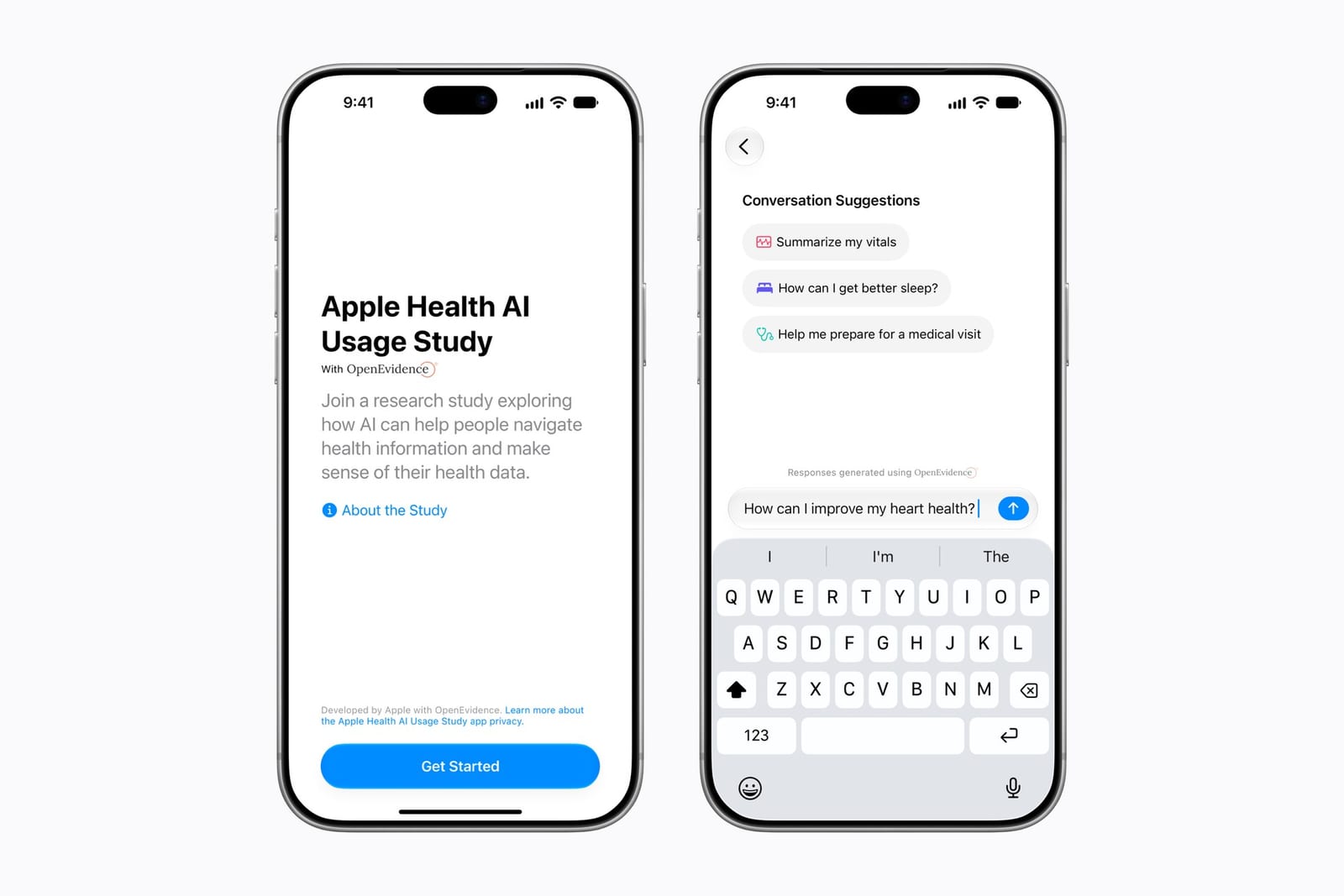
On Sunday Apple put a free app on the US App Store that answers health questions only from peer-reviewed medicine and shows its sources under every reply. It is the front door to the Apple Health AI Usage Study, which wants up to 200,000 adults asking real questions about their own sleep, heart rate and lab results. The goal is to learn what makes a health answer trusted, understood and acted on, and Apple says it plans to share what it finds beyond its own products.
Answers That Show Their Sources
The study app pairs an Apple-designed experience with OpenEvidence, a clinical AI platform that doctors already use and that draws on journals such as The New England Journal of Medicine, the Journal of the American Medical Association and Nature. Ask "How can I improve my heart health?" and the reply comes in plain language, with links to the peer-reviewed papers behind it.
Participants can choose to share HealthKit data, from resting heart rate and sleep to activity and lab results. That turns a generic answer into a personal one: someone asking how to lower their resting heart rate gets advice based on their own measurements rather than a textbook average. The app can also prepare a summary to take into a doctor's appointment.
Then comes the part that makes it research rather than a product. Volunteers rate each answer and fill in short surveys, monthly according to TechCrunch, so Apple learns where an answer landed and where it lost the reader. If the AI already knows the medicine, what is left to study?
The 95% Model and the 35% Reader
A University of Oxford study published in Nature Medicine in February measured the gap. Tested on clinical cases, AI chatbots identified the right condition nearly 95% of the time. When everyday people used those same chatbots to work through the cases, they reached the right answer less than 35% of the time, as ABC News reported.
The medicine was in the model. It got lost somewhere between the screen and the person reading it. That is what Apple wants to measure: trust, comprehension, the quality of each response and whether people do something useful with it. Demand is not in doubt. OpenAI said earlier this year that people ask ChatGPT more than 300 million health questions a week.
“Patients and clinicians are both turning to AI, but the tools they use are being built and tested in separate worlds.”— Robert M. Wachter
Wachter, who chairs the Department of Medicine at UCSF, sees shared tools as the way through. OpenEvidence's full product is open only to healthcare professionals; this app gives patients answers drawn from the same sources, which Apple rewrites so a non-doctor can follow them.
What 200,000 Volunteers Can Teach Every Health App
Apple built the study with privacy as a condition of entry. Study data will not be used to train AI models, identifying details are removed before a question reaches OpenEvidence, and OpenEvidence deletes each question and answer within 24 hours, according to Apple. Sharing HealthKit data or survey answers stays optional, and safety checks spot worrying questions and point people to a doctor or other help.
To join, you need to be 21 or older, live in the United States and own an Apple Intelligence iPhone (iPhone 15 Pro or later) running iOS 26 or later. The app is not wired into Siri or Apple Intelligence, and it says plainly that it does not give medical advice, diagnosis or treatment.
What the study can open up is bigger than one app. Two hundred thousand people grading health answers would show which explanations people trust, which they misread and which send them to the doctor better prepared. Apple told ABC News it plans to make the research broadly available, so the lessons can reach everyone building health AI. The best health answer is the one a patient understands well enough to use.
From Question to Better Visit
The Brief
Stay curious
AI and technology: what changes and why it matters.
Your daily selection, in English or Spanish.
Free forever. Unsubscribe anytime.
More stories




Conversation
Start the conversation