
 The Specialty News
Thinking Machines Releases Inkling 2 Small's 594B Weights Under Apache 2.0
A week after launch, Mira Murati's lab let anyone download the model that trained another AI on its own in 4.5 hours for $426.
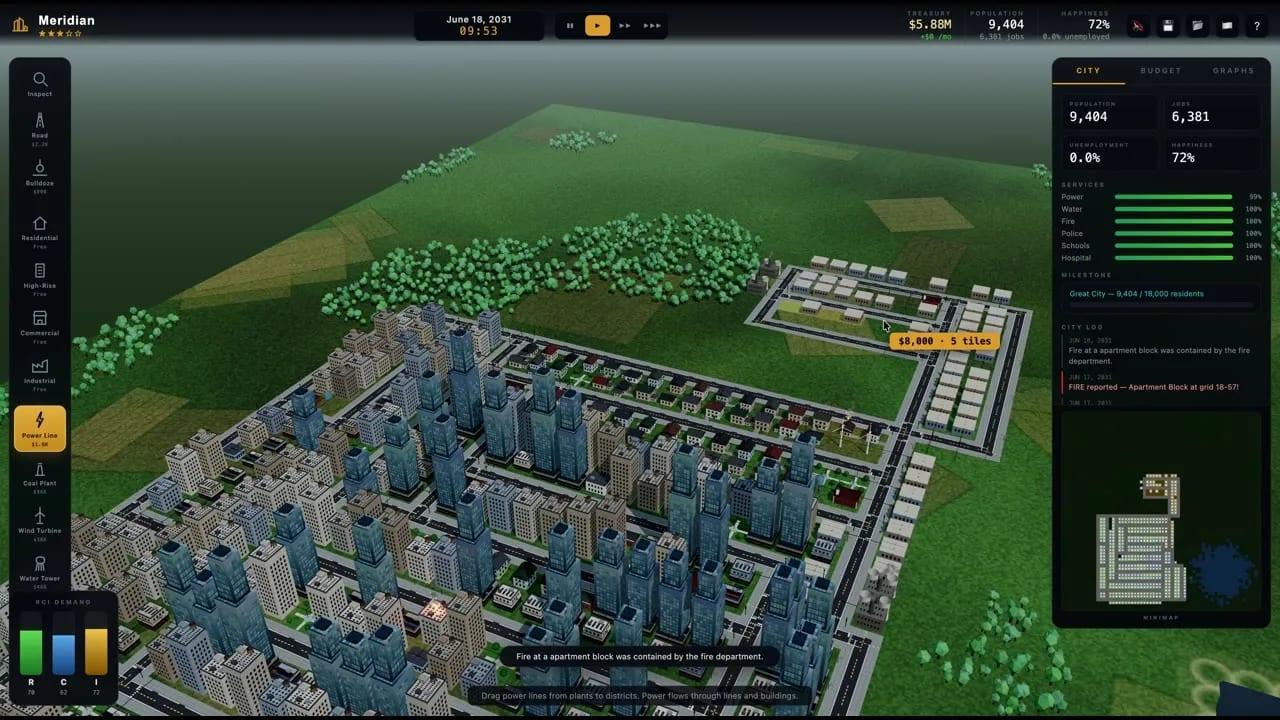
Given a small AI model and a goal, Inkling 2 Small wrote its own test, tried several training recipes, fixed what broke and, four and a half hours and $426 later, had more than doubled the smaller model's forecasting score. On November 12, Thinking Machines Lab, the company founded by former OpenAI technology chief Mira Murati, put the full weights of that model on Hugging Face under the Apache 2.0 license. Any company or researcher can now download it, change it and build products on it, without asking anyone.
From Closed Preview to Free Download in Seven Days
Thinking Machines announced Inkling 2 Small on November 5 as the first model of its second generation, and kept the weights closed at first. It followed what the lab calls "a safe path to open weights": the model ran only on Tinker, its training and inference service, while outside testers probed it for safety problems and tried to make it misbehave. When that red-teaming was done, the weights went public a week later, as promised.
The model is big but light on its feet. It has 594 billion parameters in total, yet only 17 billion work on any given word. That design, called mixture of experts, behaves like a hospital with hundreds of specialists where each patient sees only the few who are needed, which keeps the cost of running it far below what its size suggests. It reads images as well as text and lets users choose how hard it thinks.
The release came ready to use. On day one the model worked with popular serving software such as vLLM, SGLang and Unsloth, could be post-trained with tools like SkyRL and Snowflake Cortex Training, and was available by API at NVIDIA, Fireworks, Together, Baseten, Nebius, Modal and Cloudflare. By the next day, independent developers had already published compressed versions for Apple's MLX and other formats on Hugging Face.
What makes the release interesting is less the size than what the model was trained to do on its own.
The AI That Trained Another AI for $426
Thinking Machines trained Inkling 2 Small with reinforcement learning on hundreds of thousands of long coding tasks. Instead of only checking whether the code passed its tests, many tasks used a grader that judged how the model approached the problem. Early versions were tested quietly on the open-source coding tool OpenCode, under the name Fledge-Alpha.
The lab's showcase is a research job done end to end. On a task built by the firm Proximal, the model had to train Qwen3.5-4B, a small open model, to predict time series such as weather and Wikipedia page views. It analyzed the task, wrote its own evaluator, experimented with datasets and with two different training methods, and debugged the process as it went.
The demos on the lab's page show the same persistence in other forms: a city simulator built in Three.js with no pre-made assets, where every building, texture and car is generated by code, and a PC emulator written in Python that boots a real Linux kernel in the browser. Persistence on long tasks is where the model shines, which raises the question of how it compares with its peers.
Where It Leads, and What Is Left to Polish
On the Artificial Analysis Intelligence Index it scores 30.6, close to the best open models of its class in the lab's own comparison: DeepSeek-V4.1-Flash reaches 32.6 and GLM-5.3-Flash 27.8. Inkling 2 Small leads that table on BrowseComp, a test of hard web research, with 90.2%, and on Sudo, a set of difficult computer-administration tasks, with 14.1%.
The lab is candid about its rough edges. It says the model "is not the most succinct communicator," doesn't always pick the best tool in codebases with many skills, does not process audio, and is less polished as a chat assistant, with untidy formatting and an overreaction to some safety-related questions. Those are the problems a fine-tuning run is good at fixing, and the Apache 2.0 license means anyone is free to run one.
“We hope that it encourages your ambitions, and we look forward to seeing what you build with it.”— Thinking Machines Lab
A university lab, a hospital that must keep its data in-house or a startup that cannot afford frontier prices can now take a model that works for hours without supervision and make it their own. The weights are on Hugging Face, and the next useful version of Inkling 2 Small may come from someone outside the lab.
Seven Days to Open Weights
The Brief
Stay curious
AI and technology: what changes and why it matters.
Your daily selection, in English or Spanish.
Free forever. Unsubscribe anytime.
More stories


Conversation
Start the conversation