
 The Specialty News
Claude Maps Gödel's 1,009 Pages of Notebooks in Days, Finding 663 Theorems
A logician who decoded the shorthand at a page a week got a 650-page guide in a couple of days, and an almost complete proof Gödel claimed in 1966.
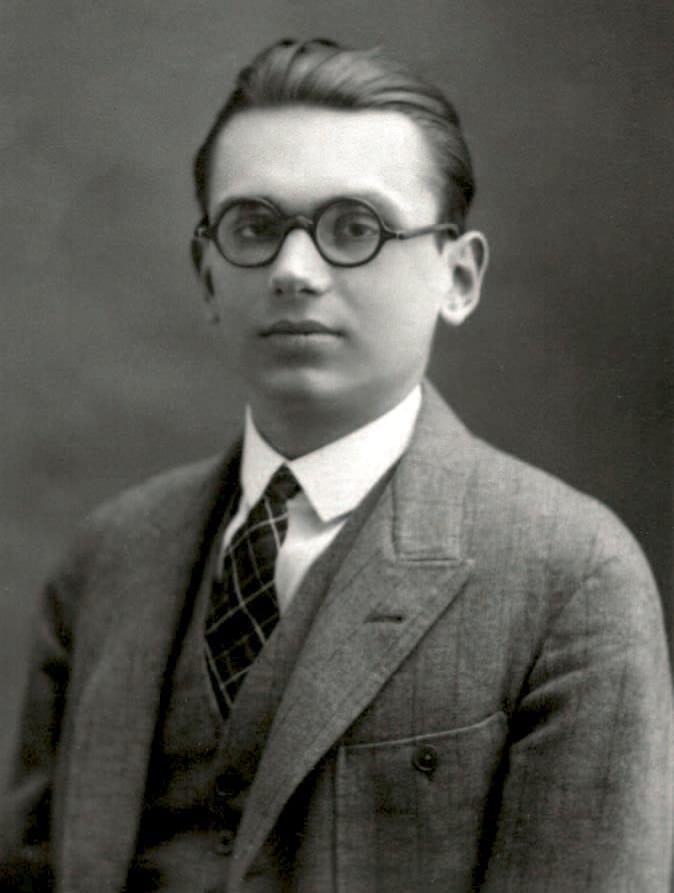
At a page a week, Kurt Gödel's 1,009 pages of shorthand notebooks would take about 19 years to work through. In September, Anthropic's Claude produced a 650-page guide to all of them in a couple of days. The logician who fed it the material says it shows that the most famous logician of the 20th century proved hundreds of theorems nobody knew about, and that one of them settles a 60-year-old argument about who got there first.
Six People Can Read It. One Asked Claude
Jan von Plato started the project in 2017, facing mandatory retirement at the University of Helsinki. "What should I do to make myself indispensable?" he told The Guardian. His answer was Gödel's "workbooks": 16 notebooks from the early 1940s, written largely in Gabelsberger, a German shorthand that was already obsolete when Gödel used it.
With a €2.5 million grant from the European Research Council, von Plato taught himself the script, assembled a small team and started transcribing. He says he is one of only six people in the world who can read it. Progress on the mathematics ran at about a page a week.
In August, at a conference in France on AI and theorem proving, computer scientists suggested he try Claude. Back in Helsinki he gave it his transcriptions, six books he had written on Gödel and the scholarly literature. Within a couple of days he had a 650-page explanation of all 16 notebooks, which he then checked page by page.
“The AI can connect all the pieces in a thousand pages. It can see all of Gödel's writings as one piece.”— Jan von Plato
The first question he put to it was one historians of mathematics have argued about since 1966.
The Proof Gödel Said He Had in 1966
In 1966 Paul Cohen won the Fields Medal, the top prize in mathematics, for showing that two famous statements, the continuum hypothesis and the axiom of choice, can be neither proved nor disproved from the standard axioms of set theory. Gödel responded that he had proved it in the 1940s. When colleagues asked to see the proof, he could not reconstruct it from his notes.
Von Plato asked Claude whether the workbooks held a proof of the independence of the axiom of choice. The answer came back: yes, almost. "He was just one step away," von Plato said. One definition was wrong, but Gödel had written the right one two years earlier.
Von Plato ran the reconstructed proof through Coq, a program that checks every step of a mathematical proof mechanically, and it passed. What moved him most was its shape: "For me, the architecture of his proof is just wonderful. It makes all of these results of set theory follow a uniform pattern."
That was one theorem. Next he asked Claude for all of them.
400 Verified, 200 Repaired, 50 Marked Falsch
Von Plato asked Claude to list every theorem in the workbooks for which Gödel had a proof, a sketched proof or just the idea for one.
Run through Coq, about 400 held exactly as stated and about 200 needed repair: a sharper statement or an extra assumption. About 50 were false, which von Plato calls no wonder, since Gödel himself scribbled "falsch!" and "schlecht!" in the margins when rereading. Von Plato says the notebooks also anticipate dozens of results not known until the 1970s and 1980s, and hold 14 themes in logic that nobody has pursued.
Not everyone is ready to rewrite the history books. Joel David Hamkins, a logician at the University of Notre Dame who has not seen the reconstruction, said that if it holds up "it is remarkable and historically interesting," adding that "how much is Claude and how much is Gödel is a job for the historians." His other point is about credit: "You don't get credit for work you don't tell anyone about."
What has changed is how fast those historians can work. Gödel's unpublished papers run to tens of thousands of pages, and his physics and cosmology notebooks, which von Plato plans to open next, are still unexplored. Every archive full of handwriting that only a handful of people can read just gained a research assistant that holds a thousand pages in mind at once. Gödel filled these notebooks for himself in the 1940s; in 2026, the rest of mathematics gets to read along.
Gödel's Hidden Theorems, Found in Days
The Brief
Stay curious
AI and technology: what changes and why it matters.
Your daily selection, in English or Spanish.
Free forever. Unsubscribe anytime.
More stories





Conversation
Start the conversation