
 The Specialty News
OpenAI Unveils GPT-5.4 As The New Standard For Agentic Reasoning
By unifying coding, reasoning, and computer-use capabilities, OpenAI is pivoting from chatty assistants to genuine digital agents.

The era of the passive chatbot is officially ending. With the release of GPT-5.4, OpenAI has debuted a model that doesn’t just output text—it executes actions, navigates desktop environments, and manages complex, multi-step projects with a level of reliability that feels like a genuine shift in the AI landscape. It is the company’s most concerted effort yet to move beyond simple queries and into the realm of the autonomous agent.
From Chatting To Executing
At its heart, GPT-5.4 is built on a philosophy of consolidation. By integrating advanced reasoning, professional-grade coding capabilities, and a new native 'computer-use' engine into a single flagship model, OpenAI is streamlining what was previously a fragmented user experience. This model isn't just smart; it is designed for 'build-run-verify-fix' loops that allow it to solve software problems without constant human hand-holding.
The numbers underscore this pivot toward professional utility. On the OSWorld-Verified benchmark, GPT-5.4 achieved a 75% success rate in navigating desktop environments, effectively outperforming the human average. This is the 'wow' factor: you can now ask the model to manage spreadsheets, organize files, or interact with web-based interfaces, and it will actually perform the mouse clicks and keystrokes required to get the job done.
Furthermore, the model addresses one of the biggest frustrations in AI development: the 'token burn' associated with context loading. By optimizing tool-search efficiency, GPT-5.4 only pulls in necessary definitions when they are needed, rather than front-loading irrelevant data. This makes it not only more capable but, despite its higher per-token price, potentially more cost-efficient for complex, real-world professional tasks.
The Future Of The Knowledge Workplace
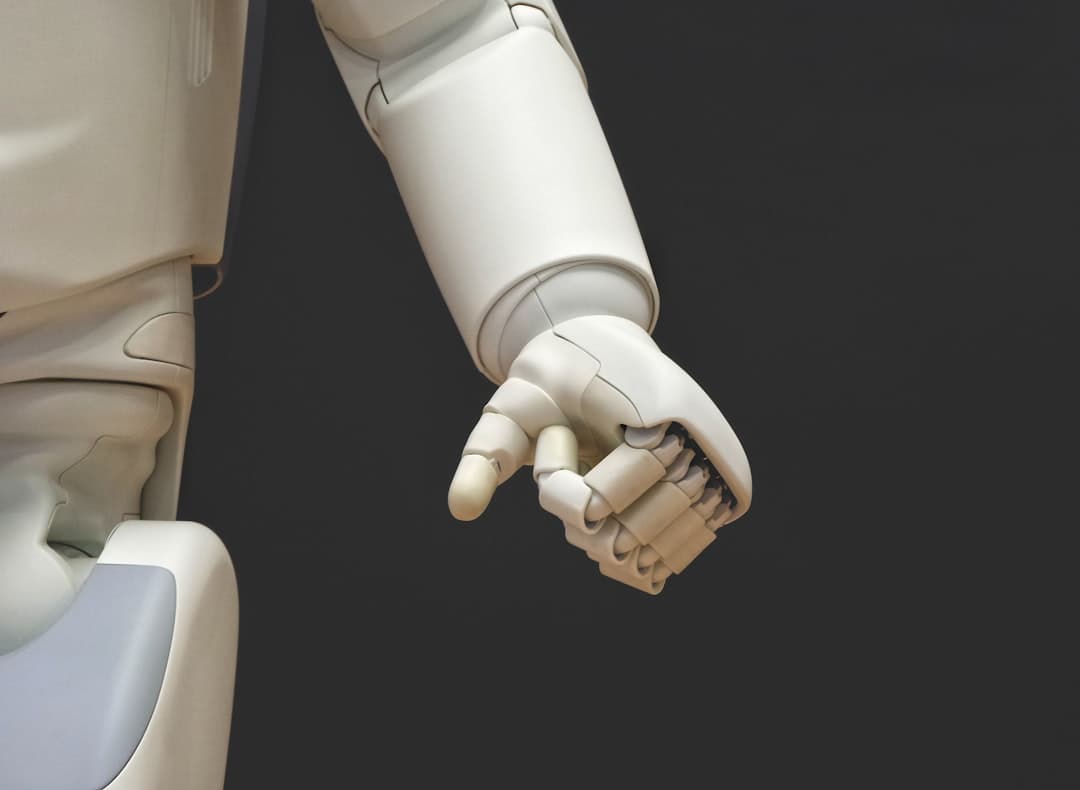
The broader implication of GPT-5.4 is that the 'work' in 'knowledge work' is about to change significantly. With an 83% success rate on the GDPval benchmark—a test spanning 44 professional occupations—the model is signaling that it is ready for the office. For businesses, this means the barrier between 'having an idea' and 'executing a project' is shrinking.
“the future of work isn't just about faster answers—it's about the computer doing the heavy lifting while we focus on the strategy.”
However, the rapid-fire release cycle—coming so closely on the heels of previous iterations—creates a clear pressure cooker for the industry. While OpenAI’s move to unify its product suite creates a compelling proposition, the sustainability of this pace remains the central question for competitors and users alike. As the model becomes more 'agentic,' the challenge will shift from simple accuracy to trust and security, particularly as these systems gain the ability to operate across our private software environments.
Looking ahead, we are entering the 'workflow era.' Future models won't be judged by how well they write poems or summarize emails, but by how much time they can shave off complex, multi-day projects. If GPT-5.4 is any indication, the future of work isn't just about faster answers—it's about the computer doing the heavy lifting while we focus on the strategy.
The Chatbot Grows Hands
The Brief
Stay curious
AI and technology: what changes and why it matters.
Your daily selection, in English or Spanish.
Free forever. Unsubscribe anytime.
More stories



Conversation
Start the conversation