
 The Specialty News
OpenAI Unveils GPT-5.4 with Native Computer Use and Agentic Reasoning
The new model shifts from being a mere chatbot to an active, autonomous operator of your desktop.

The era of the 'AI as an assistant' is rapidly ending, replaced by the age of the 'AI as an operator.' OpenAI just announced GPT-5.4, a model that doesn't just draft emails or write code—it navigates your operating system, clicks your mouse, and executes complex workflows autonomously. It is a fundamental shift in how we interact with software, signaling a move from command-line interactions to agent-driven automation.
The Rise of the Autonomous Operator
At the heart of GPT-5.4 is its native computer-use capability. Instead of relying on rigid APIs to perform tasks, the model now interprets what it sees on your screen, allowing it to navigate third-party applications, manage files, and interact with web browsers much like a human would. In benchmark tests, the model outperformed industry professionals in 83% of tasks, boasting an 18% reduction in errors compared to its predecessor. This isn't just a smarter chatbot; it is a system designed to perform professional-grade work independently.
To power this performance, OpenAI has introduced 'native compaction.' As the model executes multi-step tasks over hours, it learns to condense its memory, shedding irrelevant data while retaining critical context. This allows it to maintain accuracy even through long, tool-heavy workflows. When combined with a 1 million token context window, the model can digest entire codebases or dense legal documents, finding and utilizing the necessary external tools only when they are needed, which significantly optimizes token efficiency.
A New Chapter for Knowledge Work
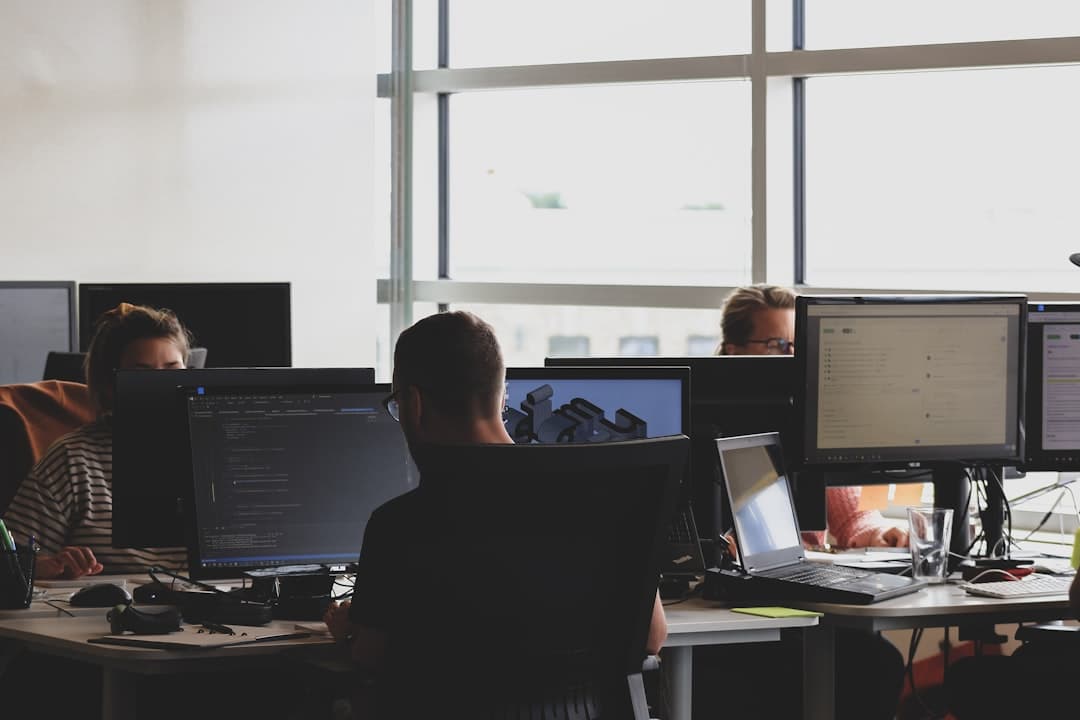
The strategic pivot to 'agentic' AI is a clear signal that OpenAI is doubling down on the enterprise market. By moving away from conversational drafting and toward direct execution—like financial modeling in Excel or complex refactoring of software—the company is positioning itself to be an active participant in professional environments. The release of both a standard version and a high-performance 'Pro' model confirms that this technology is being tuned for industrial-scale reliability rather than just casual use.
“We are no longer just asking computers what to do; we are managing systems that decide how to do it.”
While this represents a massive leap in capability, it also introduces a new reality for the workforce. As AI transitions from a library you consult to an operator you delegate to, the human role will inevitably evolve toward supervision and verification. We are no longer just asking computers what to do; we are managing systems that decide how to do it. The future of productivity will be defined by those who can best orchestrate these agents, ensuring that while the model handles the execution, the human stays in control of the strategy.
From Assistant to Operator
The Brief
Stay curious
AI and technology: what changes and why it matters.
Your daily selection, in English or Spanish.
Free forever. Unsubscribe anytime.
More stories



Conversation
Start the conversation