
 The Specialty News
Donald Knuth Just Admitted Even The Gods Need An Intern
The computer science legend used an AI to solve a math riddle, and his reaction is a masterclass in intellectual humility.
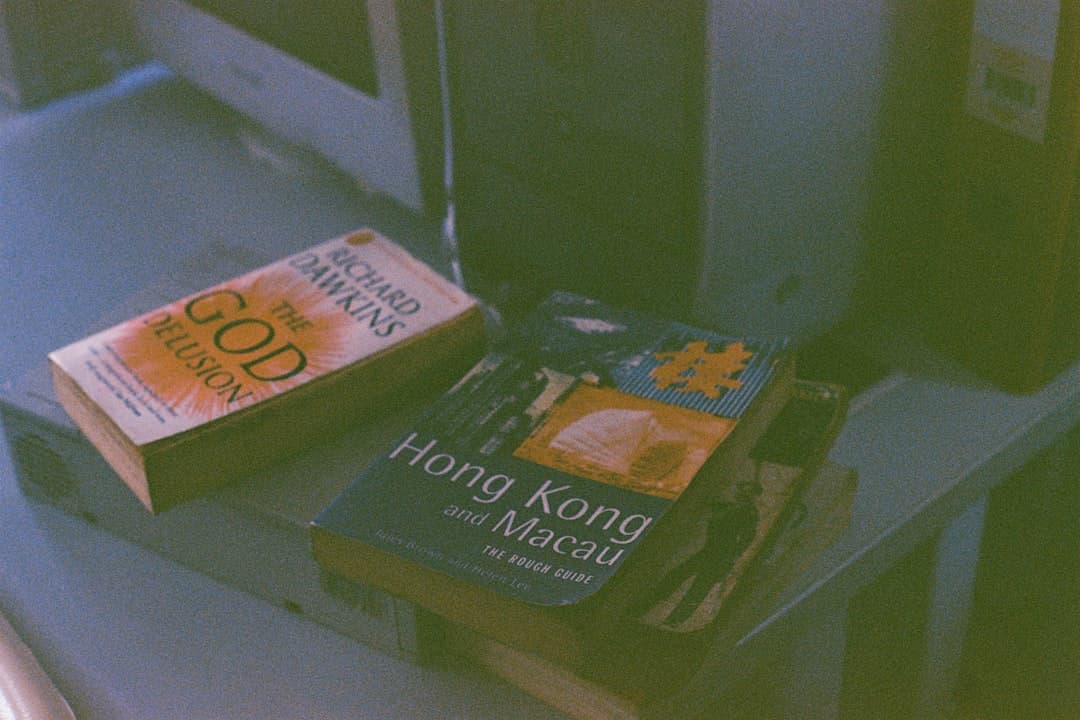
When Donald Knuth, the man who wrote the bible of computer science, opens a paper with the words 'Shock! Shock!', you should pay attention. He wasn't announcing a breakthrough in the foundations of computation, but rather his own stunned realization that a chatbot had done in an hour what he had spent weeks failing to finish. The paper, aptly titled 'Claude’s Cycles,' documents Knuth’s collaboration with Anthropic’s Claude Opus 4.6 to crack a persistent graph decomposition conjecture.
The High-Speed Intern Problem
To be clear, the AI did not emerge from a digital void with a fully formed proof in hand. This was a messy, human-centric affair. Knuth’s colleague, Filip Stappers, spent an hour managing a machine that hit dead ends, hallucinated strategies, and required constant hand-holding. The model didn't 'solve' the conjecture so much as it brute-forced a construction pattern through thirty-one iterative attempts under direct human supervision.
Think of the AI less like a colleague and more like a high-speed, sleep-deprived intern. It could spit out potential solutions for small-scale cases with frightening efficiency, but it fell apart whenever it was asked to generalize for even numbers or navigate complex logic without a guide. The 'magic' was entirely dependent on human oversight, error correction, and the final, critical step: Knuth verifying the math and drafting the formal proof himself.
The Lesson in Utility

The takeaway isn't that AI is sentient, or even that it is a 'better' mathematician than Knuth. It is that we have finally built a tool capable of doing the grunt work of exploration that once required a grad student or weeks of lonely sketching. When Knuth admitted he would have to 'revise my opinions' about generative AI, he wasn't waving a white flag to the machines; he was acknowledging that his previous stance—that these tools were merely 'faking it'—failed to capture their utility as a brainstorming engine.
“power comes from the synergy between the architect and the tool.”
Ultimately, this story reveals a fundamental truth about human ingenuity: power comes from the synergy between the architect and the tool. AI is never going to replace the person who can verify a proof, but it is going to make those people significantly faster at identifying which paths are worth their time. The machines are getting better at playing the role of a hyper-active assistant, but until they can understand the 'why' behind the 'how,' they are just very expensive, very fast calculators. And if you think that’s not enough to change the world, you haven't been paying attention to how much of science is just trial and error.
The Legend and the Intern
The Brief
Stay curious
AI and technology: what changes and why it matters.
Your daily selection, in English or Spanish.
Free forever. Unsubscribe anytime.
More stories



Conversation
Start the conversation