
 The Specialty News
Apple Drops Face ID to Build the 4.5mm iPhone Duo, Giving Creatives a Pocketable Canvas
At a deliberate $2,000, John Ternus’s first flagship as CEO merges the phone and the tablet into a single device that finally supports the Apple Pencil.

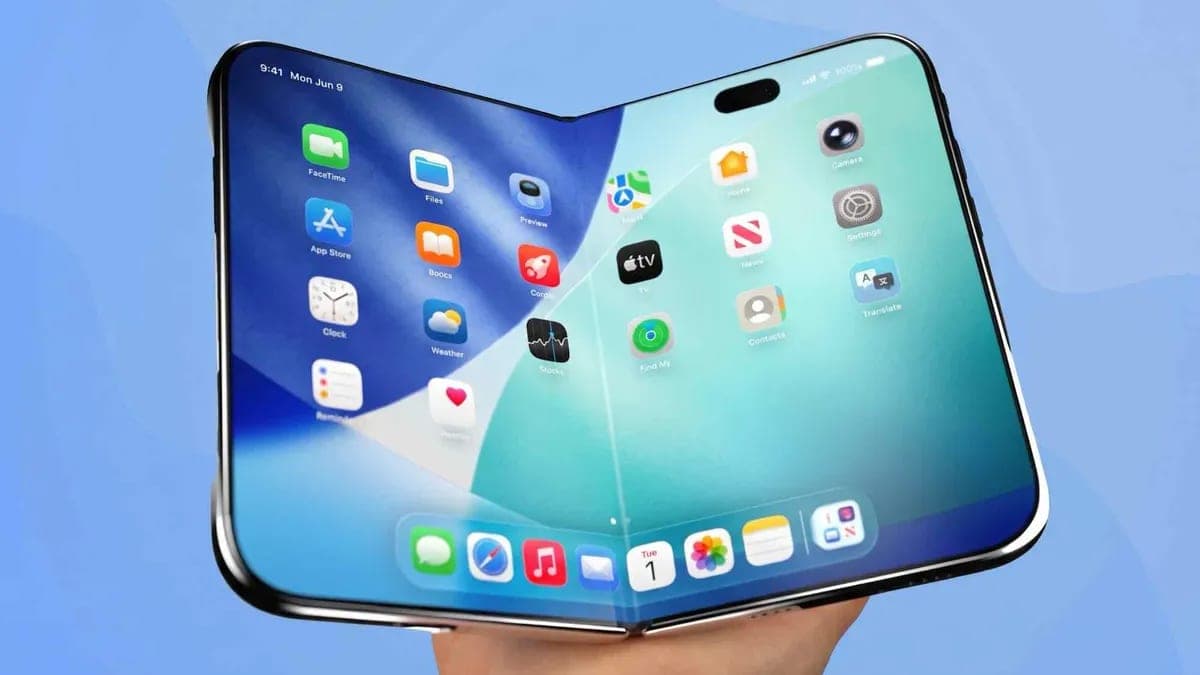
To build its first foldable phone, Apple took a deliberate step backward. The company stripped Face ID out of the new iPhone Duo entirely, returning to a Touch ID sensor integrated into the side power button. That specific engineering trade-off is what allowed Apple to shrink the unfolded device to just 4.5mm thick. It solves the bulk that has plagued rival foldables for half a decade, giving creatives the portable, stylus-supported tablet they have been asking for.
Shrinking the Canvas
For years, professionals who wanted a phone for communication and a tablet for drawing or side-by-side multitasking had to buy and carry two separate devices. The iPhone Duo merges them. Unfolded, it offers a 7.76-inch, 4:3 aspect ratio screen that fully supports the Apple Pencil.
It is the functional equivalent of folding an iPad Mini in half and sliding it into your jeans. Getting there meant waiting until the hinge durability could match a traditional flagship, letting competitors like Samsung and Google test the waters while Apple perfected the pocket profile.
The result is a device that brings genuine utility to a category that often felt like a novelty. Yet, physics still dictates what fits inside a chassis, and reaching that 4.5mm profile required a distinct hardware compromise.
The Missing Camera
To flatten the device, engineers had to omit the telephoto camera lens entirely. Buyers paying $2,000 for the Duo will get a less capable optical zoom system than those buying the $1,199 iPhone 18 Pro. The camera takes a step back so the form factor can leap forward.
Apple is pairing this hardware decision with a bold upsell strategy across its entire lineup. The company delayed the standard $799 iPhone 18 to spring 2027, leaving a vacuum at the entry level. Holiday buyers must either pay a premium for the iPhone 18 Pro or hold onto their older devices.
The company is testing whether consumers will absorb a higher entry price for the 2nm A20 Pro chip. It sets up a massive financial bet for the man who orchestrated the transition.
What people are saying

“Apple likes their 3 letter suffixes Pro Max Neo Air They do use Ultra but given the folding iPhone is missing Face ID and a Telephoto lens, “Duo” might be the perfect choice.”


“#Apple’s foldable #iPhoneDuo could support Apple Pencil input, giving the large-screen device another advantage over traditional iPhones.”

“Apple landed on the iPhone Duo name for the foldable iPhone and a $2,000 starting price, eating the additional memory costs. Storage capacities will reach 2 terabytes and roughly $3,000. It’ll ship in October, has support for the Apple Pencil and come in dark blue + white.”
Apple's $2,000 Foldable Gamble
The Brief
Stay curious
AI and technology: what changes and why it matters.
Your daily selection, in English or Spanish.
Free forever. Unsubscribe anytime.
More stories





Conversation
Start the conversation