
 The Specialty News
AMD Ships 256-Core EPYC Venice, With Up to 73,728 Threads per Rack
The flagship EPYC 9996 lists at $14,904 and scores 68% higher than its predecessor in published SPEC results, and servers built on it are already shipping.
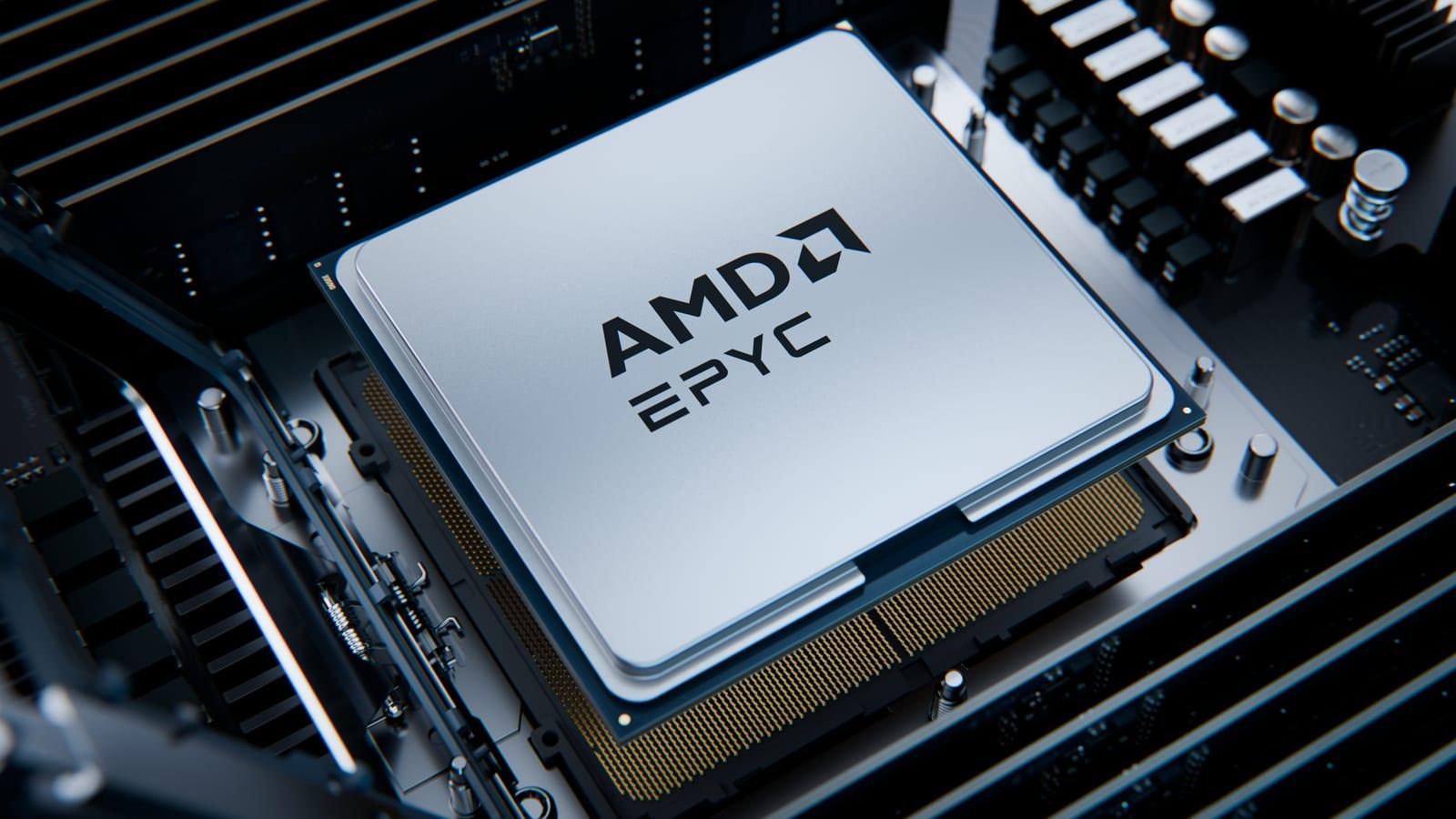
A single AMD EPYC 9996 runs 512 threads at once, and as of Tuesday servers built around it are shipping. AMD announced general availability of its sixth-generation EPYC server processors, codenamed Venice, on November 10, with Meta validating the platform as a lead customer and Microsoft Azure previewing its first instances. The pitch is aimed at the newest job in the data center: hosting AI agents that write code, call tools and query databases, work that lands on CPUs rather than GPUs.
256 Cores for $14,904
The EPYC 9996 tops a family built on AMD's Zen 6 architecture. Each chip carries 256 cores, draws 600 watts under AMD's new Default CPU Power rating and lists at $14,904 in 1,000-unit quantities. AMD said in April 2025 that Venice was the industry's first high-performance computing product taped out on TSMC's 2-nanometer process, and it has arrived in the year AMD promised.
On SPECrate2017, the industry's standard test of integer throughput, a two-socket 9996 server scored 5,470 in results published at spec.org. A server with two of the previous flagship, the EPYC 9965, scored 3,260. That is 68% more throughput in one generation, for about 24% more money per chip.
AMD's own comparisons go further: up to 2.2 times the performance and twice the performance per dollar of a server with Intel's Xeon 6980P, and up to 3.7 times an Nvidia Vera system. The Vera figure is an AMD estimate built on public Phoronix testing, because Nvidia has not published a score.
Those comparisons matter most to a newer kind of customer: the one running AI agents.
Why AI Agents Live on CPUs
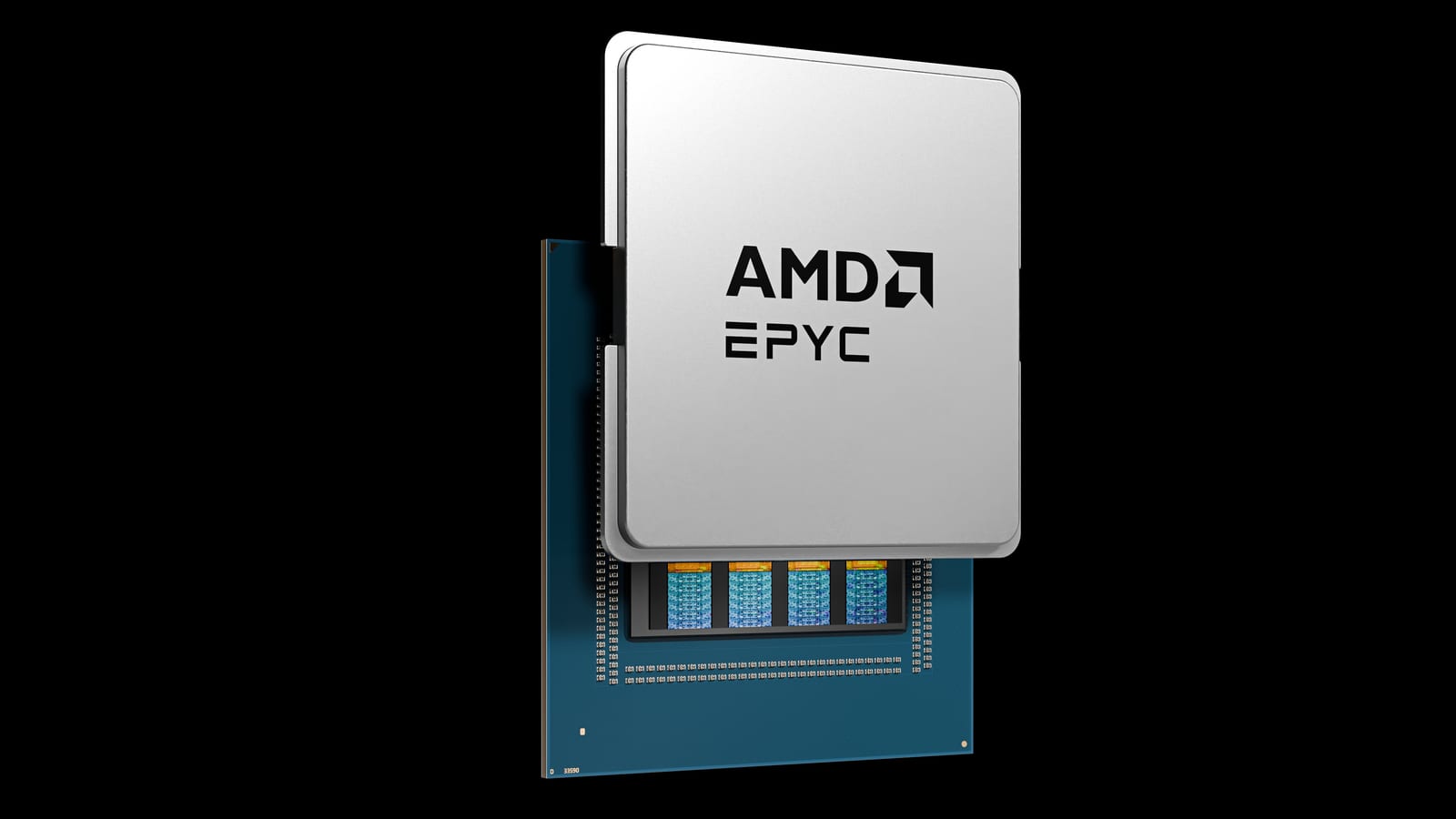
An AI agent spends much of its working life away from the GPU. It runs code in a sandbox, opens files, calls APIs and waits on databases, and each of those jobs needs a CPU thread. AMD splits agent infrastructure into three CPU roles: general-purpose services, host nodes that keep GPUs supplied, and dense servers that run agent sandboxes. Venice comes in a version for each.
“AI is significantly expanding the role of the CPU across every layer of the data center.”— Dan McNamara, AMD
For sandboxes, AMD claims about 3.3 times as many agents per CPU watt as Nvidia Vera and 2.5 times as many as Intel's Xeon 6980P. The method matters: AMD counts available threads as a stand-in for agents, so the figure measures how much parallel room a chip offers per watt, not agents observed in production.
For GPU host nodes, high-frequency Venice parts reach 5.3 GHz. When part of a language model's weights sits in system memory instead of on the GPU, AMD projects up to 1.8 times the output of the previous generation, because PCIe 6.0 doubles the width of the link between the two. Stack enough of these chips together and the unit that matters stops being the server.
73,728 Threads in a Single Rack
AMD now sells Venice by the rack. Its Helion line comes in three versions: Helion Liquid, built to sit beside AMD's Helios GPU racks in large agent deployments; Helion Air, for data centers that are still air-cooled; and Helion Air Inference, which combines CPU execution and local GPU inference in one cabinet.
By AMD's one-thread-per-agent arithmetic, that is room for more than 70,000 agent sandboxes in a cabinet about the height of a tall refrigerator. AMD also says a power-management setting can fit about 18% more agents into the same 35-kilowatt rack by capping how much power each server may draw.
The first customers are lining up. Meta is validating Venice platforms as a lead customer ahead of deployment at scale, Azure HDv2 instances for AI data processing, agentic AI and HPC are in preview, and Oracle's OCI Compute E7 instances will run on the new chips. For anyone running agents at scale, more threads per watt means more agents per building without pouring new concrete.
The models do their thinking on GPUs. Everything an agent does with that thinking runs on chips like Venice.
Venice Adds 68% More Throughput
The Brief
Stay curious
AI and technology: what changes and why it matters.
Your daily selection, in English or Spanish.
Free forever. Unsubscribe anytime.
More stories





Conversation
Start the conversation