
 The Specialty News
US Strikes Iranian Rocket-Mine Launchers — and 8 Ballistic Missiles Follow
A thwarted attempt to re-mine the Strait of Hormuz shatters a month-long truce, pulling Washington and Tehran back into a kinetic fight.
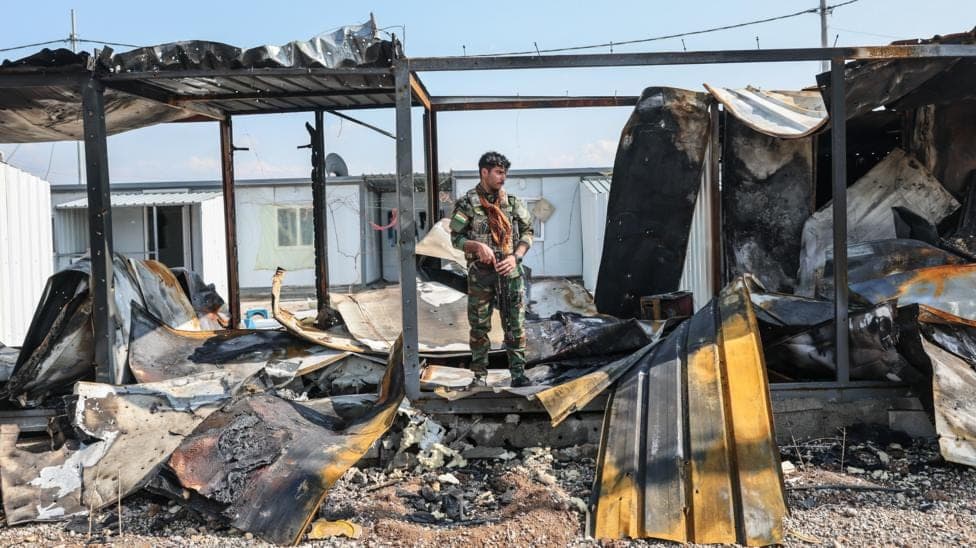
On Sunday morning, Iranian forces on Larak Island prepared to fire sea mines strapped to rockets directly into the shipping lanes of the Strait of Hormuz. It was a rapid, improvised attempt to re-mine the waterway just days after the U.S. Navy had finished clearing it. American forces detected the launchers and preemptively destroyed them, killing two Iranians and instantly shattering a month-long pause in direct military strikes.
The One-Month Ceasefire Collapses
For four weeks, the conflict between Washington and Tehran had settled into a grim but stable rhythm. The U.S. paused its bombing campaign in late July, relying instead on a 50,000-troop naval blockade to strangle the Iranian economy. Mediators from Oman and Qatar were actively working in Tehran to negotiate a temporary navigational corridor.
That diplomatic window closed when U.S. intelligence spotted the Islamic Revolutionary Guard Corps (IRGC) maneuvering on Larak Island. Rather than using vulnerable patrol boats to quietly drop explosives, Iranian forces were setting up launchers to shoot them into the water from ashore.
“Iran has been notified that any ship or boat placing new mines will be immediately and systematically destroyed.”— President Donald Trump
U.S. Central Command spokesman Capt. Tim Hawkins confirmed the preemptive strike, framing it as a strict enforcement of Washington's red line on global commerce. The strike eliminated the launchers, but it also handed the IRGC a casualty event to rally around. Iranian state media quickly reported the deaths of two personnel, with IRGC spokesman Hossein Mohebi promising severe consequences across both economic and military fields. The question was how Tehran would choose to collect that debt.
Eight Missiles Over Jordan
The answer arrived Monday morning in the skies over Jordan. Fox News correspondent Trey Yingst broke the news that Iran had launched a direct retaliatory barrage targeting the Muwaffaq Salti and King Hussein air bases, where American troops are stationed.
The attack highlighted the stark technological arithmetic of the conflict. U.S. Patriot and THAAD missile defense systems, operating alongside Jordanian armed forces, intercepted nearly the entire barrage. Zero significant impacts were recorded, and no casualties were reported at the bases.
Yet the success of the interception masks a deeper vulnerability for the U.S. strategy. By drawing American focus back to kinetic defense, the IRGC forces a reallocation of resources. Every missile fired at a regional base threatens to pull assets away from the blockade, testing how long U.S. air defenses can maintain a flawless interception rate before a single failure alters the course of the war.
The Economic Frontline
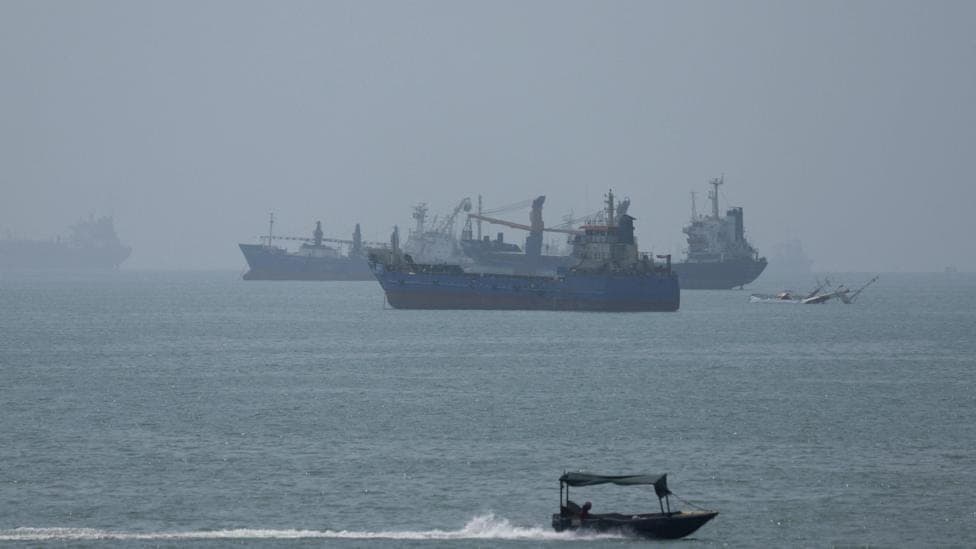
The true battlefield is not the airspace over Jordan, but the water in the Strait of Hormuz. Over the past week, approximately 6.7 million barrels of crude oil crossed the U.S. blockade line each day—a volume that meets the daily energy needs of Japan and Germany combined.
Iran's objective on Larak Island was not necessarily to sink a specific vessel, but to introduce enough risk to halt that flow entirely. Skeptics of the U.S. strategy warn that by baiting Washington into defensive strikes, Tehran achieves the perception of an active war zone. If commercial shippers panic and refuse to transit the strait, Iran accomplishes its goal of mass economic disruption without successfully laying a single mine.
The U.S. now faces the challenge of sustaining an economic siege while fending off an active shooting war. Precision strikes and missile defense systems successfully neutralized the immediate threats of the past 48 hours. But flawless air defenses can only win a Monday; they cannot permanently secure a strait.
What people are saying

“Iran has retaliated against US forces after the US military struck Iranian rocket launchers, a US official said, marking the first escalation between the sides in a month.”
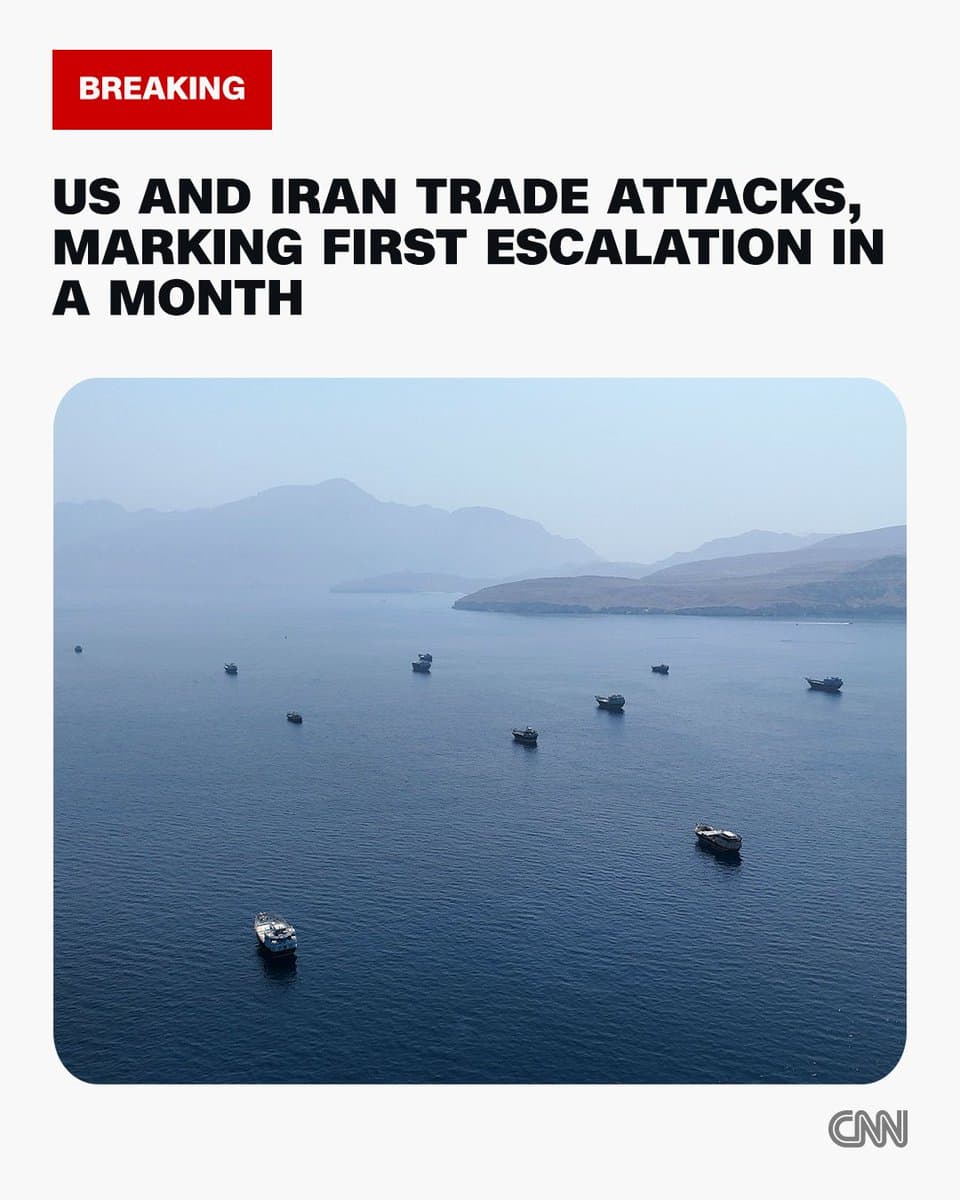

“🚫CLAIM: Iran’s Islamic Revolutionary Guard Corps (IRGC) claimed in a recent statement that strikes by U.S. forces to prevent the IRGC from placing mines in the Strait of Hormuz were an “act of aggression.” This claim is absolutely FALSE. ✅FACT: U.S. forces took limited,”


“🚨U.S. official: "Earlier today U.S. forces struck two Iranian launchers on Larak Island. Islamic Revolutionary Guard Corps forces were observed preparing to launch rockets with sea mines into Strait of Hormuz"”
48 Hours of U.S.-Iran Escalation
The Brief
Stay curious
AI and technology: what changes and why it matters.
Your daily selection, in English or Spanish.
Free forever. Unsubscribe anytime.
More stories





Conversation
Start the conversation