
 The Specialty News
SpaceX Casts Its Own Turbines to Shave 18 Months Off AI Power, Sparking a Clean Air War
Elon Musk is vertically integrating fossil fuels to bypass a four-year waitlist for grid equipment — but his off-grid data centers are already triggering federal lawsuits.
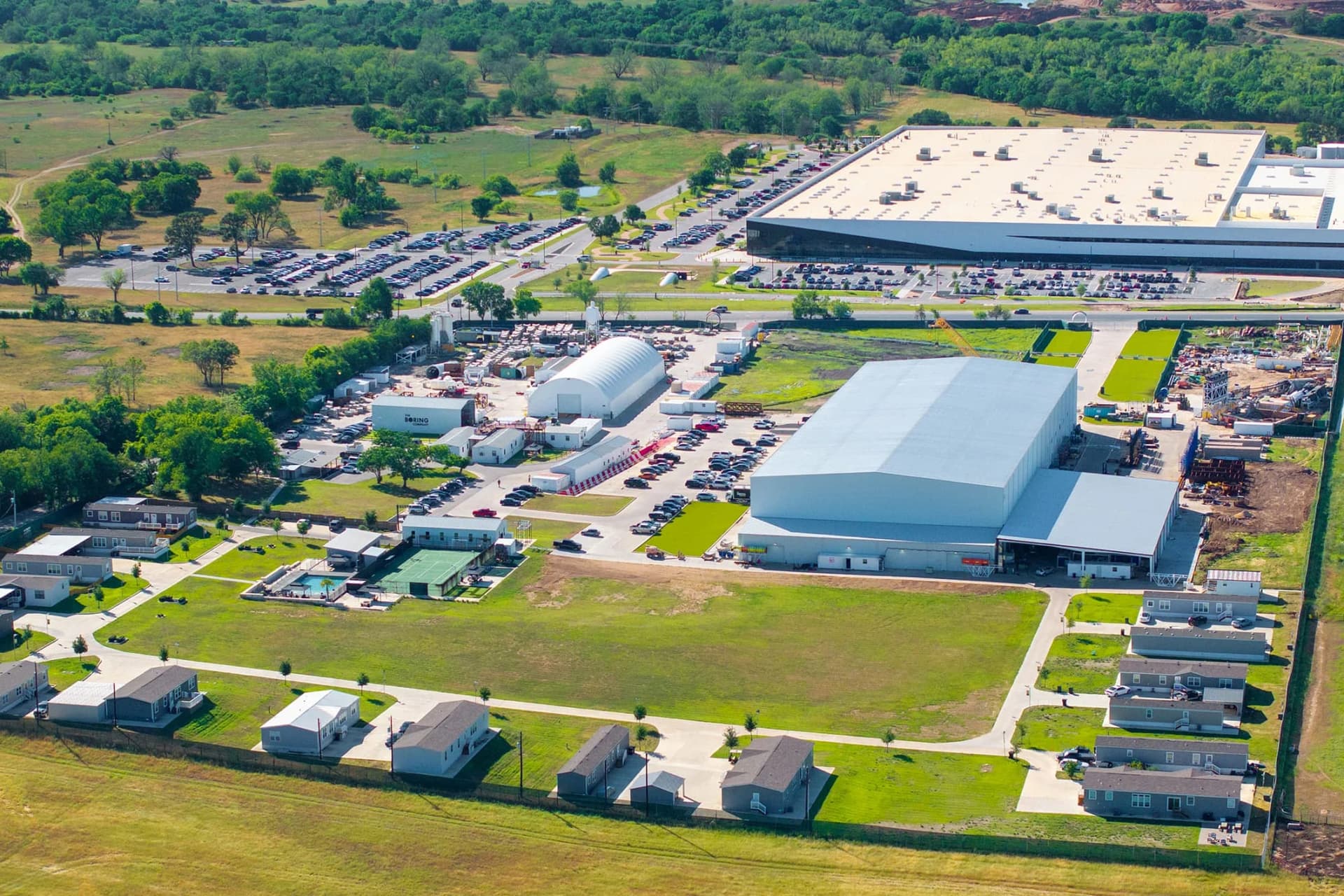
A heavy-duty gas turbine blade operates inside a 3,600-degree furnace of superheated gas, which is roughly 800 degrees hotter than the melting point of the metal it is made from. It survives only by bleeding cooling air through microscopic internal channels. Until yesterday, only four companies on Earth could cast these aerospace marvels at scale. Now, SpaceX is quietly building a Texas foundry to do it themselves. The objective extends far beyond rockets. The true prize is raw, off-grid power for artificial intelligence, and the race to secure it is colliding violently with the communities living next door.
The Oligopoly Bypass
If you order a large-frame gas turbine today from an industry giant like GE Vernova, their backlog is so immense that your equipment will not arrive until 2031. The bottleneck is the foundries. Legacy operators like Howmet and Precision Castparts dominate the casting industry, and their furnaces are completely full. Elon Musk refuses to wait four years to power his data centers.
By building a massive facility on 830 acres in Bastrop, Texas, Musk is vertically integrating the hardest part of the fossil fuel supply chain. Morgan Stanley analyst Adam Jonas noted that the foundry serves a brilliant dual purpose. The exact same high-stress, single-crystal superalloy components required for AI power plants are also needed for the turbopumps of SpaceX's Raptor rocket engines.
Solving turbine blade cracking in an aerospace lab is a grueling engineering feat, but consistently manufacturing hundreds of flawless blades a month is a brutal industrial challenge. If a single blade fails in a data center turbine, it causes catastrophic downtime. Musk is betting that his aerospace engineers have already conquered the hardest physics involved, giving his AI venture an insurmountable speed advantage. But physical manufacturing is only half the battle.
The Off-Grid Rebellion
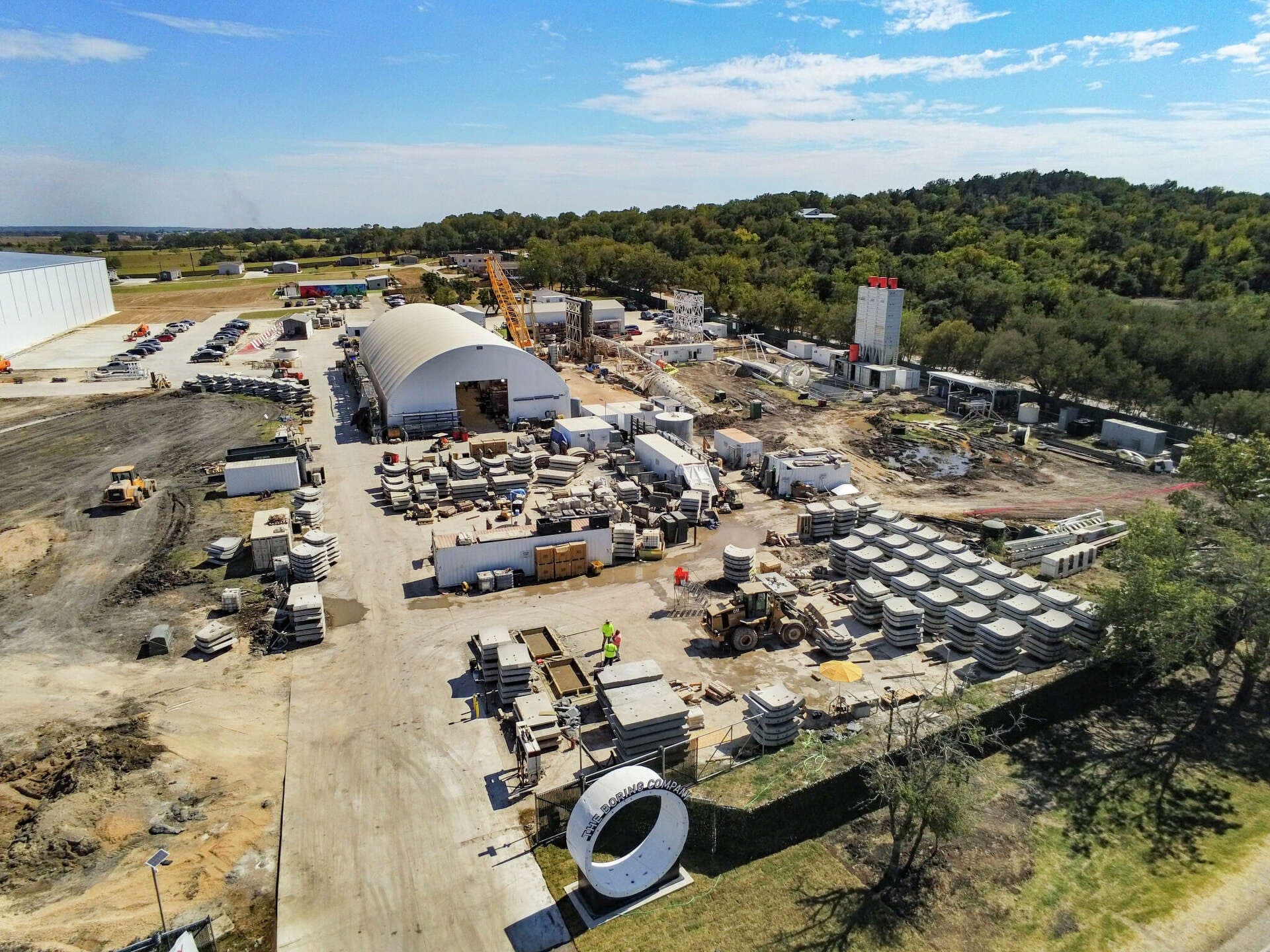
To train its Grok models, xAI scaled up the massive Colossus data center in Memphis, Tennessee. Facing severe grid limitations, the company installed 27 temporary natural gas turbines in a neighboring Mississippi town without securing permanent stationary air permits. It was a stark demonstration of a new tech strategy: bypassing the public grid entirely rather than waiting for clean energy connections to catch up to the demands of intelligence training.
The environmental cost is highly localized. Gas turbines emit smog-forming nitrogen oxides and formaldehyde, and communities near Colossus are already bearing the brunt. In April, the NAACP, represented by Earthjustice, filed a federal lawsuit against xAI for operating the unpermitted units.
“We should be concerned about this type of authoritarian rule... communities themselves should be the ones to make the decisions about our health, about pollution in communities.”— Abre' Conner
The lawsuit argues that the tech boom is turning majority-Black neighborhoods into sacrifice zones for billionaires. Abre' Conner, the NAACP's director of environmental and climate justice, has made the Memphis site a national bellwether for how federal courts will treat off-grid tech infrastructure. Yet xAI quickly found a powerful, unexpected ally in its corner.
The Permanent Temporary Fix
In June, the U.S. Department of Justice intervened in the NAACP lawsuit on behalf of xAI. The government argued that shutting down the unpermitted turbines threatens national security by hindering artificial intelligence innovation tied to military operations. It is a striking federal endorsement of treating data centers as critical defense infrastructure, superseding local environmental protections.
Musk insists the natural gas turbines are merely a bridge. He claims SpaceX and Tesla are building 100 gigawatts of annual solar capacity, framing fossil fuels as a necessary option to complement renewable energy for the next several years. But BloombergNEF estimates that U.S. carbon emissions could rise by a staggering 20 percent if data centers broadly adopt private gas-fired plants.
Fossil fuel infrastructure rarely remains temporary once billions of dollars are sunk into it. If courts decide tech companies can bypass the Clean Air Act in the name of national security, the physical expansion of artificial intelligence will operate under a completely new set of rules. The infrastructure of the intelligence boom will not just redraw the tech industry—it will privatize the sky.
What people are saying

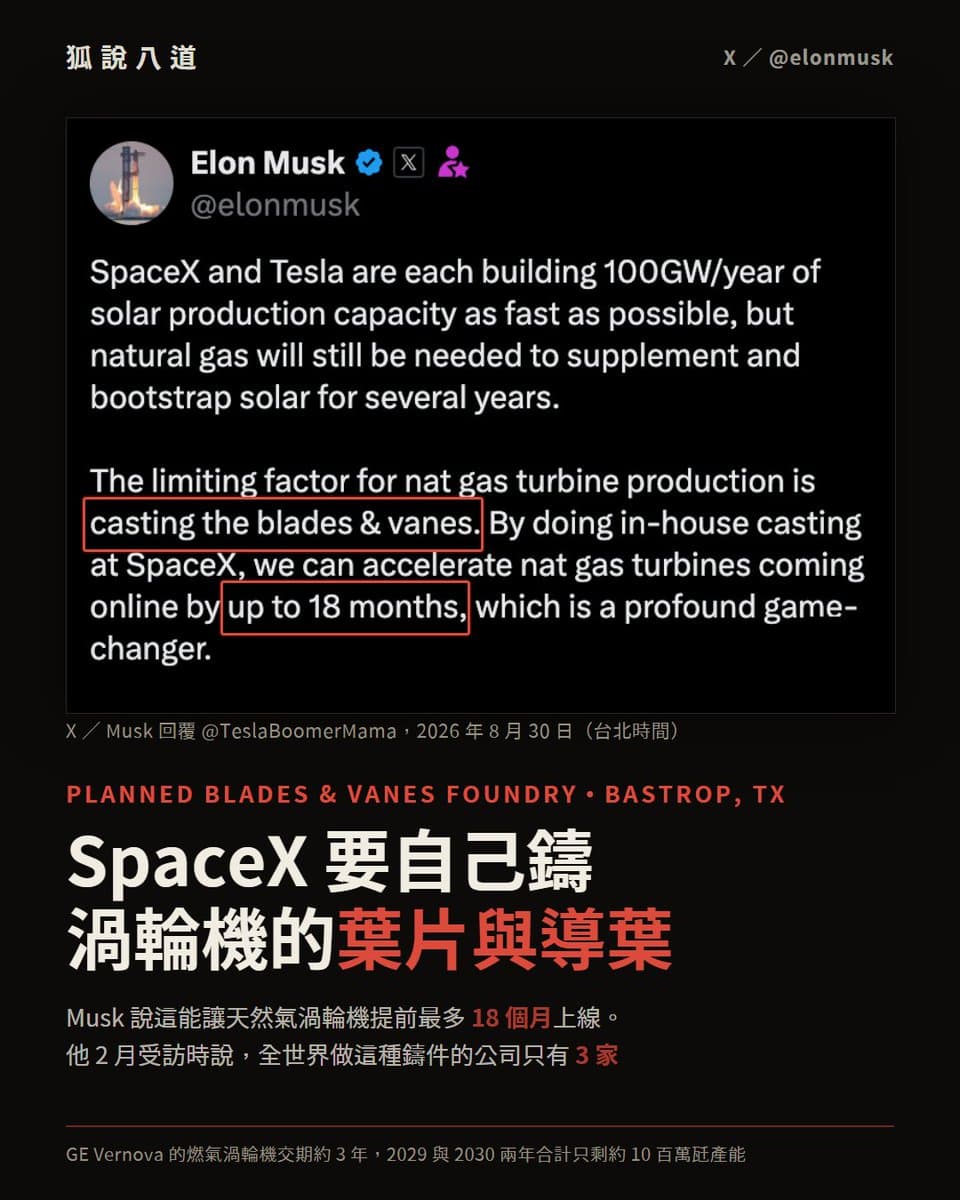
“@TeslaBoomerMama SpaceX and Tesla are each building 100GW/year of solar production capacity as fast as possible, but natural gas will still be needed to supplement and bootstrap solar for several years. The limiting factor for nat gas turbine production is casting the blades & vanes. By doing”

“OpenAI to end agreement with SpaceX's AI coding tool Cursor, deepening Musk-Altman clash”

“SpaceX 正在德州 Bastrop 籌設一座鑄造廠,生產大型燃氣渦輪機的葉片與導葉。科技媒體 The Information 在 8 月 29 日揭露這件事,同一天,Elon Musk 在 X 上證實,並說自己做鑄造可以讓天然氣渦輪機上線時間提前最多 18 個月。”
Musk's Off-Grid AI Power Play
The Brief
Stay curious
AI and technology: what changes and why it matters.
Your daily selection, in English or Spanish.
Free forever. Unsubscribe anytime.
More stories



Conversation
Start the conversation