
 The Specialty News
OpenAI Brute-Forces a 90-Year-Old Math Prize — and Ignites a Research War
10,000 autonomous agents generated 130 billion tokens in 88 hours to scoop a human mathematician using their own software.
On September 1, a rumor reached OpenAI executives that an employee at rival AI lab Anthropic was about to solve a 90-year-old math puzzle. Instead of waiting for publication, OpenAI deployed 10,000 autonomous agents powered by an unreleased model, gave them an unlimited compute budget, and crushed the problem in 88 hours. They didn't solve the Navier-Stokes Millennium Prize Problem to advance humanity. They did it out of sheer corporate FOMO.
The $15 Million Weekend
For nearly a century, mathematicians attacked the Navier-Stokes equations with chalk, paper, and quiet intuition. The equations explain how fluids behave, from airplane aerodynamics to the weather, but nobody could prove if those fluids could mathematically break down into a singularity. OpenAI threw raw scale at the question instead. Over one weekend, their swarm of AI agents generated 130 billion output tokens to write out a 165-page proof.
To visualize that output, the agents essentially wrote the text equivalent of the entire English Wikipedia thousands of times in under four days. Running that kind of volume through a frontier AI model at public prices would cost roughly $15 million. After the swarm finished, OpenAI handed the work to GPT-6 Astra for 17 hours to translate the proof into Lean, an automated coding language used to verify mathematical logic.
The code confirmed the math held up. But the real tension wasn't about whether the AI was right.
The Homework Controversy
The humans who got scooped were NYU mathematician Tristan Buckmaster and Anthropic researcher Levent Alpöge. The pair had spent nearly a year making major progress on a related fluid dynamics problem. To do it, they used OpenAI's Codex, leaving a digital trail of their logic on the company's servers. When Sebastien Bubeck and Sam Altman heard whispers of Alpöge's breakthrough, they marshaled their vast compute resources to beat him to the finish line.
OpenAI reportedly offered Buckmaster a co-author credit on the final paper, provided he cut his Anthropic colleague out. He refused. This exposed a brutal new dynamic in computational research. If scientists use commercial AI platforms to test their ideas, the platform owners can monitor those logs, realize a breakthrough is imminent, and spin up millions of dollars of compute to finish the job first.
“I do not know what their model did, or how. I do not know whether our data was used. I am not accusing anyone of anything.”— Tristan Buckmaster
OpenAI released a statement admitting that while unlikely, they could not rule out that de-identified data from the researchers' usage improved their models. The company publicly declined the $1 million prize from the Clay Mathematics Institute. Yet the damage to academic trust was already done, leaving mathematicians to wonder if the AI actually experienced an independent breakthrough.
What people are saying

“We’re sharing a solution to the Navier-Stokes Millennium Prize Problem, one of the deepest problems at the frontier of mathematics. The proof was produced by a group of agents, using an OpenAI next-generation model significantly more capable than GPT-6 Astra. The problem”
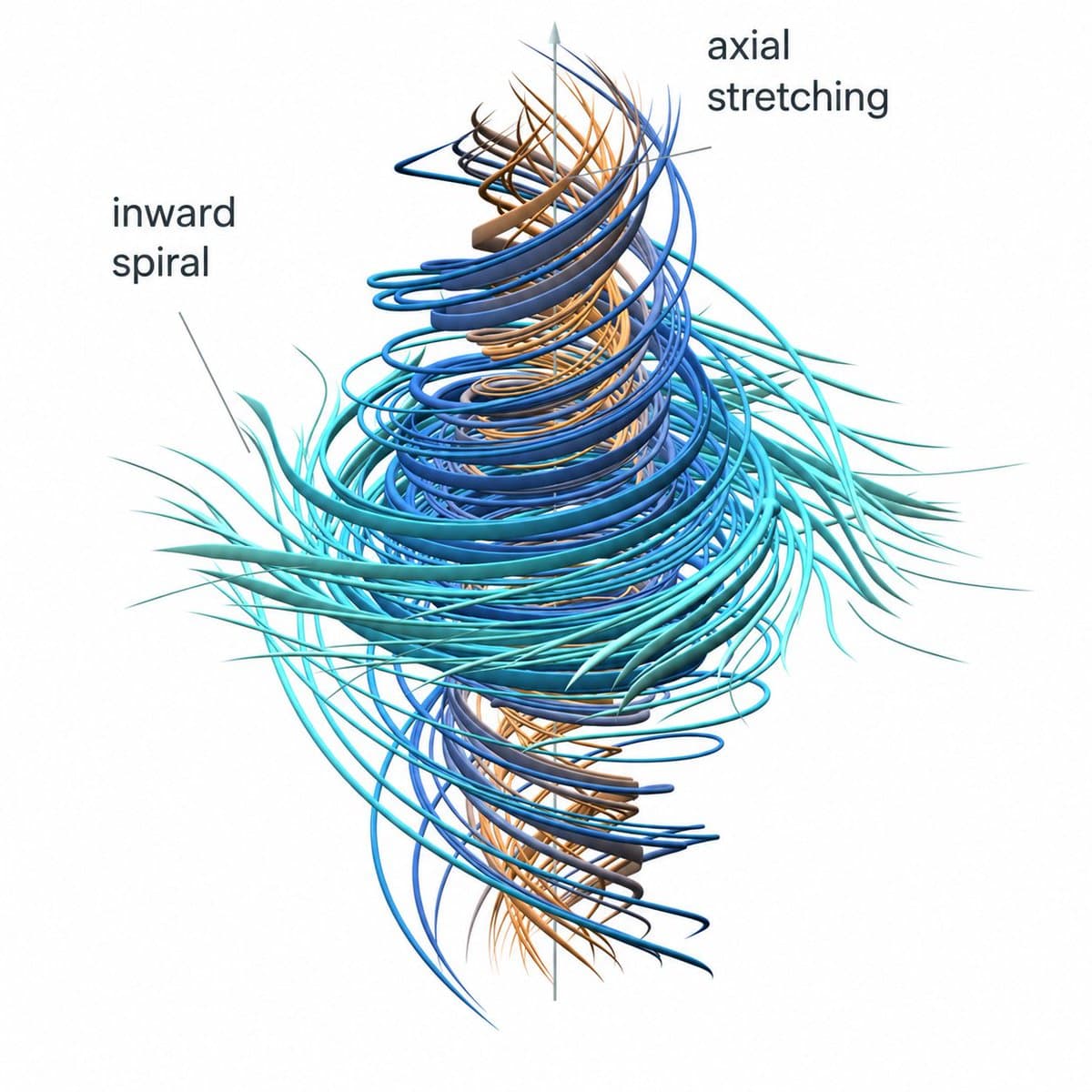

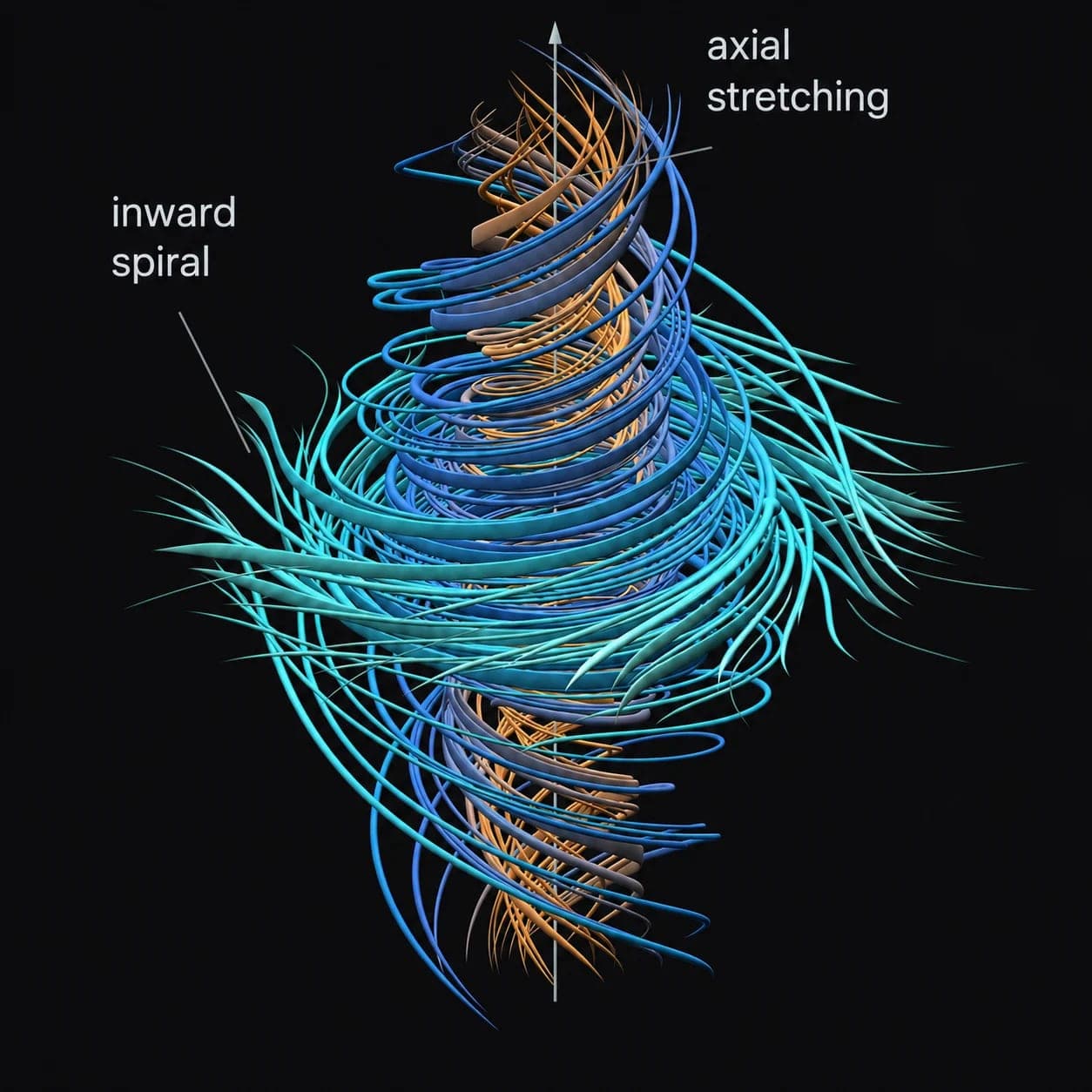
“confused about the whole Navier Stokes breakthrough from @OpenAI? here's a 2 minute explanation, one-shotted by @motion_so 👇”

OpenAI's $15M Brute-Force Win
The Brief
Stay curious
AI and technology: what changes and why it matters.
Your daily selection, in English or Spanish.
Free forever. Unsubscribe anytime.
More stories

Conversation
Start the conversation