
 The Specialty News
Nvidia Links Your Idle Home PCs Into a Free AI Cluster — Threatening the API Cloud Economy
The new Personal AI Router unlocks 165 Teraflops of sleeping compute in a typical household, slashing local processing times by 51 percent.
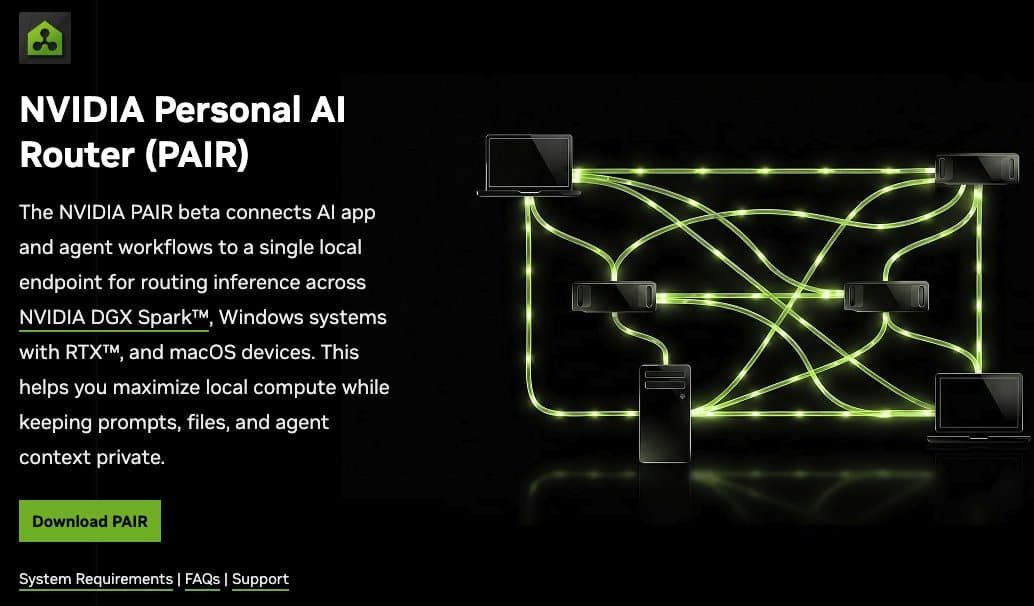
Right now in a typical American home, a gaming PC, a laptop, and a workstation are sitting entirely idle. Nvidia wants to string them together to build a localized brain. Unveiled in beta at the IFA 2026 trade show, the Personal AI Router (PAIR) is not a hardware box, despite what the name implies. It is an open-source software tool that sneaks into your home network, finds every sleeping processor, and pools them to run complex AI tasks without charging you a single cloud subscription fee.
The 18-Minute Bottleneck Broken
Until this week, running local AI meant being strictly limited by the silicon inside the machine you were currently typing on. If you gave an AI agent a complex workflow, it would spawn multiple sub-agents that instantly collided, fighting for resources on a lone graphics card.
That is roughly the equivalent of stacking a dozen high-end PlayStation 5s in your living room, completely asleep. PAIR wakes them up. It acts as an intelligent traffic controller. When you ask your laptop to read a sprawling codebase, PAIR quietly offloads the heavy lifting to the idle gaming rig in the living room and the Mac in the bedroom.
The results are immediate. In Nvidia's real-world demo, a heavy five-subagent workflow took 18 minutes to complete on a single laptop. Pushed through PAIR across three local devices, the exact same task finished in 8 minutes and 48 seconds. It is a 51 percent drop in wait time using hardware the user already paid for. But this sudden burst of free efficiency isn't charity.
The $12.9 Billion Trojan Horse
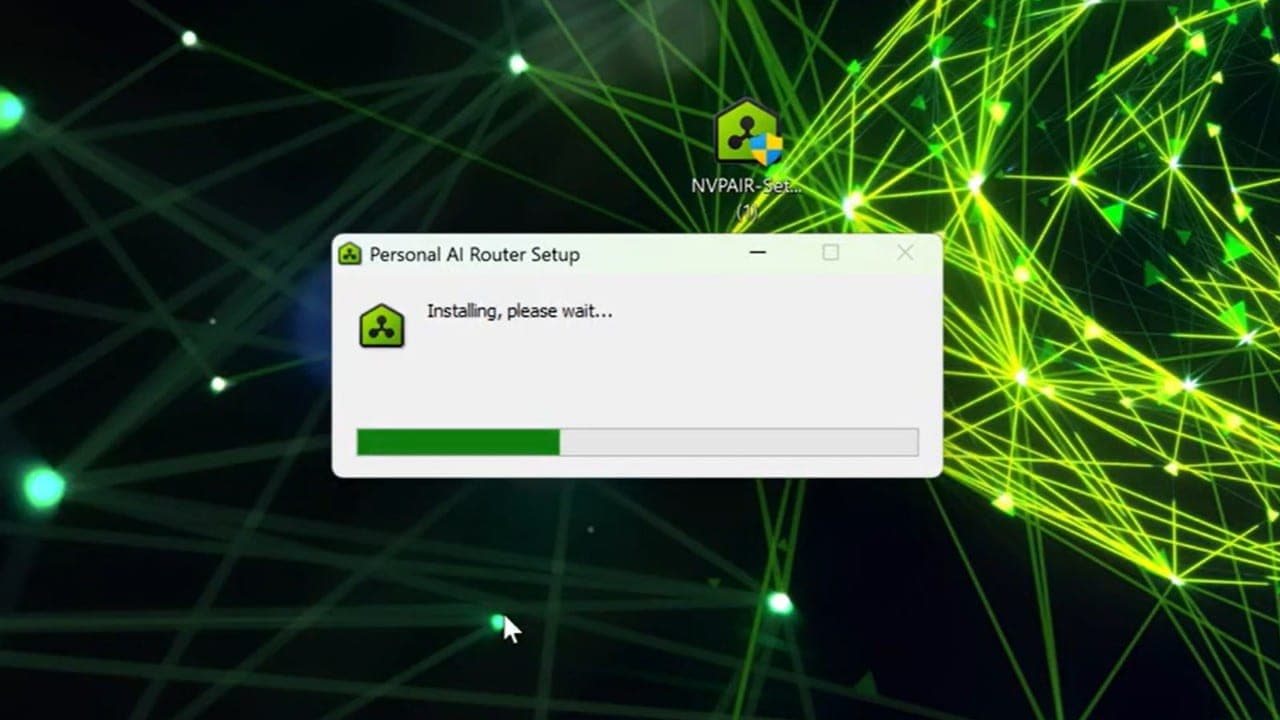
Nvidia is orchestrating a highly coordinated play to own the entire pipeline, from the silicon in your desk to the software models running on it. On the exact same day Nvidia unveiled PAIR, the company confirmed a massive $12.9 billion acquisition of Hugging Face, the world’s primary hub for open-source AI models.
The motivation snaps into focus: if Nvidia can make downloading and running heavy, private models utterly frictionless at home, they spike the demand for their upcoming RTX Spark consumer hardware arriving in October.
“More than half of U.S. households have two or more PCs, and much of that computing power sits idle throughout the day.”— Nvidia official announcement
The historical parallel is SETI@home, the early 2000s project that harvested idle household PCs to search for alien life. PAIR takes that exact distributed architecture but applies it to your private data. By allowing Apple users into the fold, flawlessly linking M4 Macs with Nvidia RTX machines, Nvidia is capturing the privacy-conscious crowd who refuse to upload their sensitive files to OpenAI's servers. Yet not everyone is using PAIR as intended.
What people are saying

“$NVDA TURNS IDLE PCS INTO A PERSONAL AI CLUSTER NVIDIA launched PAIR, free open-source software that links computers on the same network and pools their unused compute for local AI and agentic workloads. It supports RTX 20-series and newer GPUs, RTX Pro, DGX Spark and even”
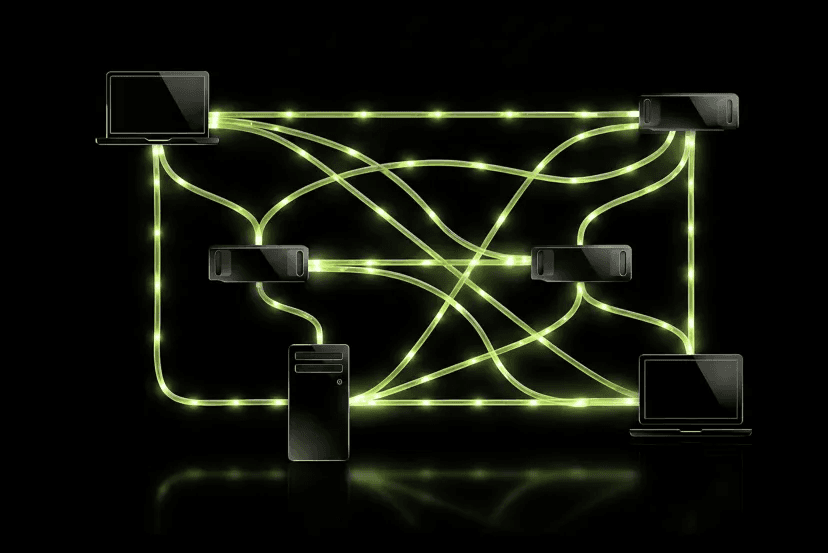

“#Nvidia’s new PAIR software turns every idle PC in your house into a shared AI cluster, free, open-source, and live in beta starting today.”

“🚨 NVIDIA just quietly changed what a “personal AI computer” can mean. Meet NVIDIA PAIR: Personal AI Router. Instead of buying one massive machine to run local AI, PAIR lets you connect the computers you already have and turn them into a personal AI inference cluster. Your RTX”
Nvidia PAIR Halves Local AI Time
The Brief
Stay curious
AI and technology: what changes and why it matters.
Your daily selection, in English or Spanish.
Free forever. Unsubscribe anytime.
More stories





Conversation
Start the conversation