
 The Specialty News
GPT Astra Generates Playable 3D Games in One Shot, Sparking a Frontier Arms Race
A leaked 34-second video proves Anthropic and OpenAI's unreleased models can build interactive voxel kingdoms—complete with functional thumbsticks—on the very first try.

In late August, a 34-second video leaked onto social media showing a fully playable 3D voxel kingdom, complete with on-screen thumbsticks and a functioning minimap. No human programmer wrote the underlying graphics engine or wired up the user interface. It was birthed entirely from a single text prompt fed into a highly restricted, unreleased AI model. The frontier of artificial intelligence is no longer being fought over logic puzzles or Python scripts—it is now being measured in real-time spatial reality.
The Race for the First Try
For years, generating software with AI meant haggling with a machine. You would prompt a model to build a basic web app, get a broken interface, and painstakingly debug the output across dozens of iterations. That era is rapidly ending.
The new metric of dominance in Silicon Valley is the one-shot. Prominent AI leakers recently dragged internal development plumbing into the public spotlight, posting raw outputs from Anthropic’s unreleased Early Access Program (EAP) models—codenamed "claude-melon" and "claude-marshmallow"—alongside OpenAI's upcoming GPT Astra. The visual outputs stunned software engineers. These models did not just write code; they natively grasped spatial architecture and physics well enough to perfectly map interactive user controls to a 3D environment on the very first attempt.
AI is effectively shifting from a reasoning engine into a spatial reality engine. Historically, large language models struggled with 3D reinforcement learning and producing coherent, bug-free graphical user interfaces. The flawless execution of interactive on-screen thumbsticks within these generated voxel worlds proves a massive leap in spatial logic. But pulling off a fluid, interactive 34-second flythrough requires a colossal amount of raw compute—a reality that is forcing both companies to radically alter their hardware strategies.
Jalapeños and Heavy Tokens

Rendering spatial physics in real time demands immense processing power. Behind the scenes, these frontier models rely on heavy "thinking tokens"—a compute-intensive background process where the AI reasons through geometry and logic before spitting out the final interactive world. Skeptics rightly point out that a viral social media clip is often the cherry-picked survivor of massive backend computation costs.
“Anthropic is really pushing 3D reinforcement learning at a frantic pace. The spatial layout of buildings is incredibly excellent, and all of this is generated in one shot!”— @Lentils80
To support this brute-force processing, OpenAI is quietly rearchitecting its physical infrastructure. In late August, the company unveiled a custom inference chip dubbed "Jalapeño," designed specifically to handle these massive graphical workloads with 1.5x to 1.9x the efficiency of Nvidia's flagship GB300. OpenAI CEO Sam Altman is betting that cheaper, specialized silicon will make GPT Astra's real-time spatial generation commercially viable.
Anthropic, meanwhile, is pushing its food-themed EAP models to a closed circle of testers, reportedly rushing a launch to front-run OpenAI. Both sides are sitting on a technological powder keg, heavily guarding their unreleased models. The question is who lights the match first, and who gets burned by the exclusivity.
What people are saying

“GPT Astra: Coming Next Week (Thursday) - GPT-Astra generated this 3D spaceship and it looks insanely good. This time, OpenAI might have actually cooked. - The biggest issue with previous GPT models, frontend generation and finally they fixed. - Astra could potentially”

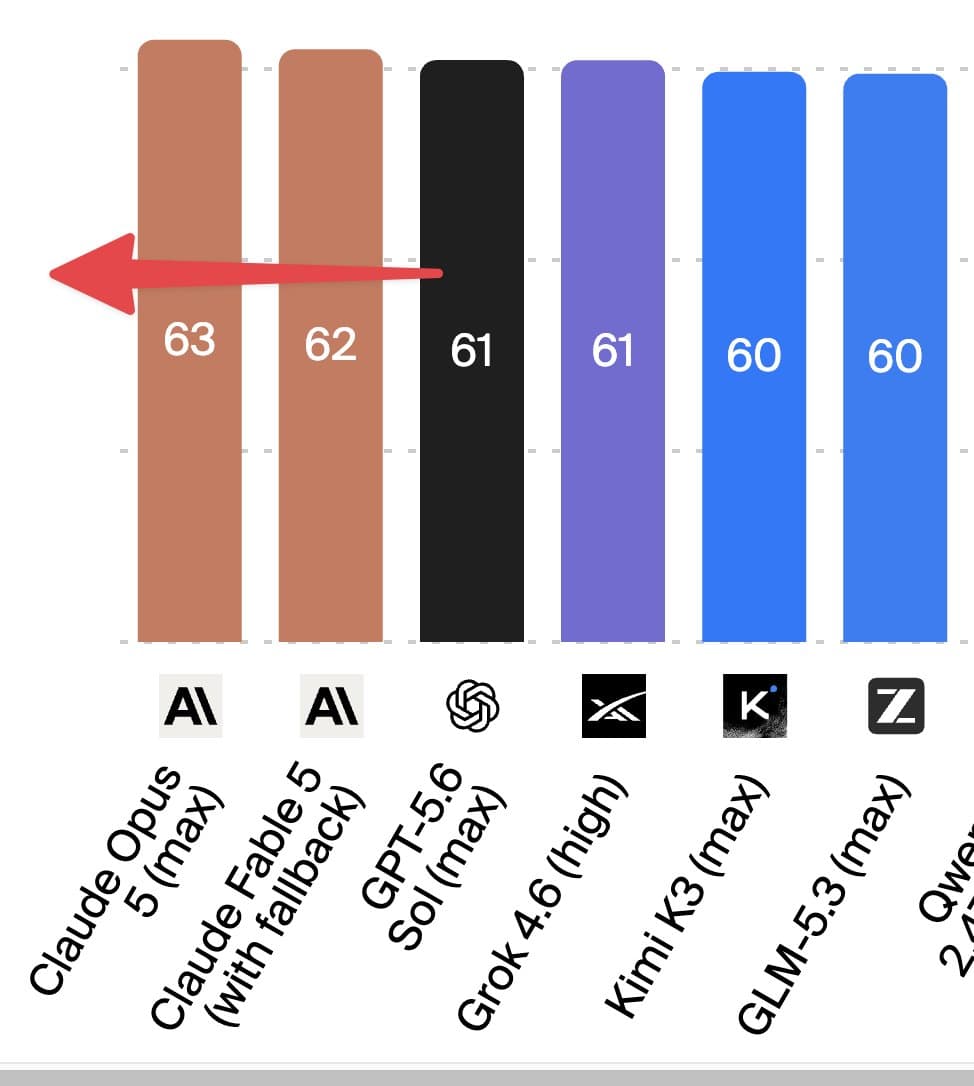
“GPT Astra is about to break the frontier. A new pretrain built for coding. The first true new foundation from OpenAI since 5.5. It is going to make GPT 5.6 Sol look like a dinosaur. And GPT Astra will beat Fable 5.1. Prepare for the fastest AI advancement you have ever seen.”

“GPT-Astra generated this 3D spaceship and it looks really good! this new astra model is apparently set to be released next week and hopefully fable 5.1 will also get launched around the same time do you think fable 5.1 can outperform astra?”
34-Second Video Ignites AI Race
The Brief
Stay curious
AI and technology: what changes and why it matters.
Your daily selection, in English or Spanish.
Free forever. Unsubscribe anytime.
More stories






Conversation
Start the conversation