
 The Specialty News
Genesis AI Raises $500M for Eno, a Robot Built Around Its Hands
The Series A values the French robot maker at $3.5 billion, 16 months after a $105 million seed, and pays to build more Enos for factories and warehouses.
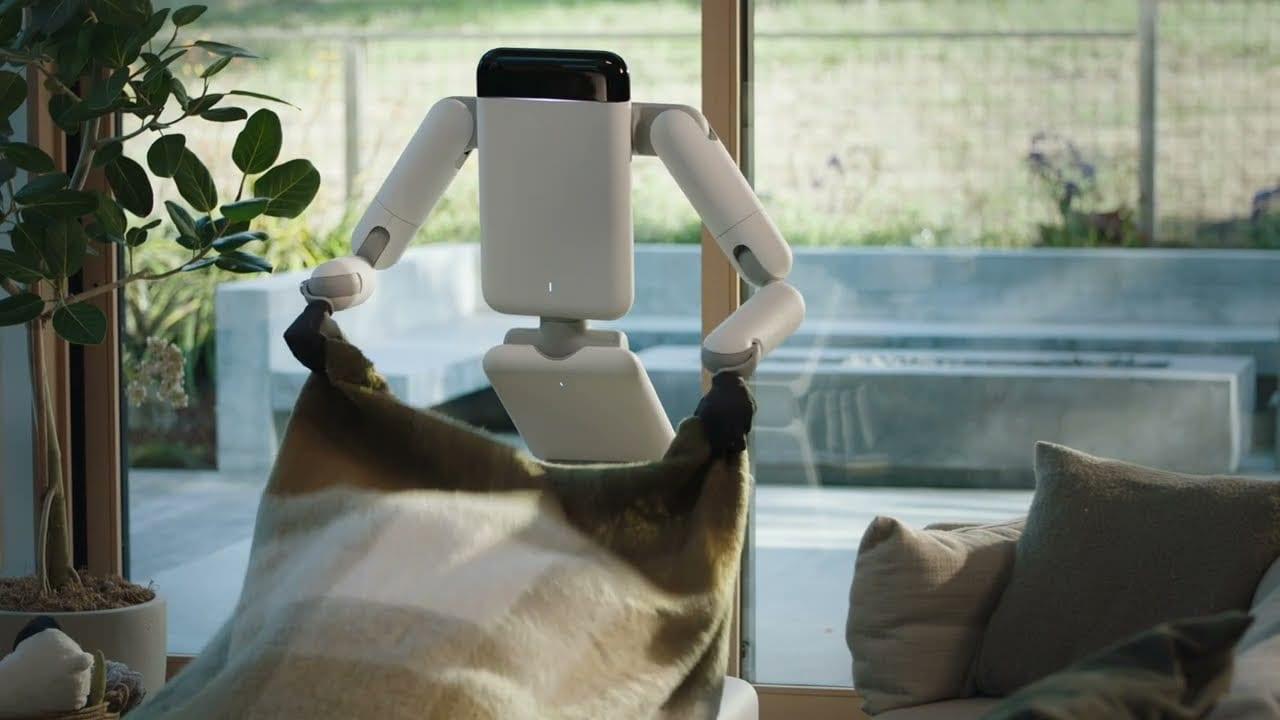
Eno has no head and no legs: three body segments shaped like oversized playing cards, on a wheeled base, that fold away and pop up to about human height when there is work to do. On November 17 its maker, Genesis AI, said it had raised $500 million at a $3.5 billion valuation, one of the largest rounds Europe's robotics industry has seen. The money goes to building more Enos, gathering more training data and making the robot's hands better at handling objects, with factories and warehouses first in line.
A Robot That Skips the Head
Most of the money in robotics has chased humanoids, machines built to look and walk like people. Genesis went the other way. Eno rides on a rotating wheeled base and folds into a compact space, then rises like a jack-in-the-box when it needs to reach a shelf or a workbench. The company put its hardest engineering into the part that does the work: a pair of dexterous hands, one of the toughest problems in the field.
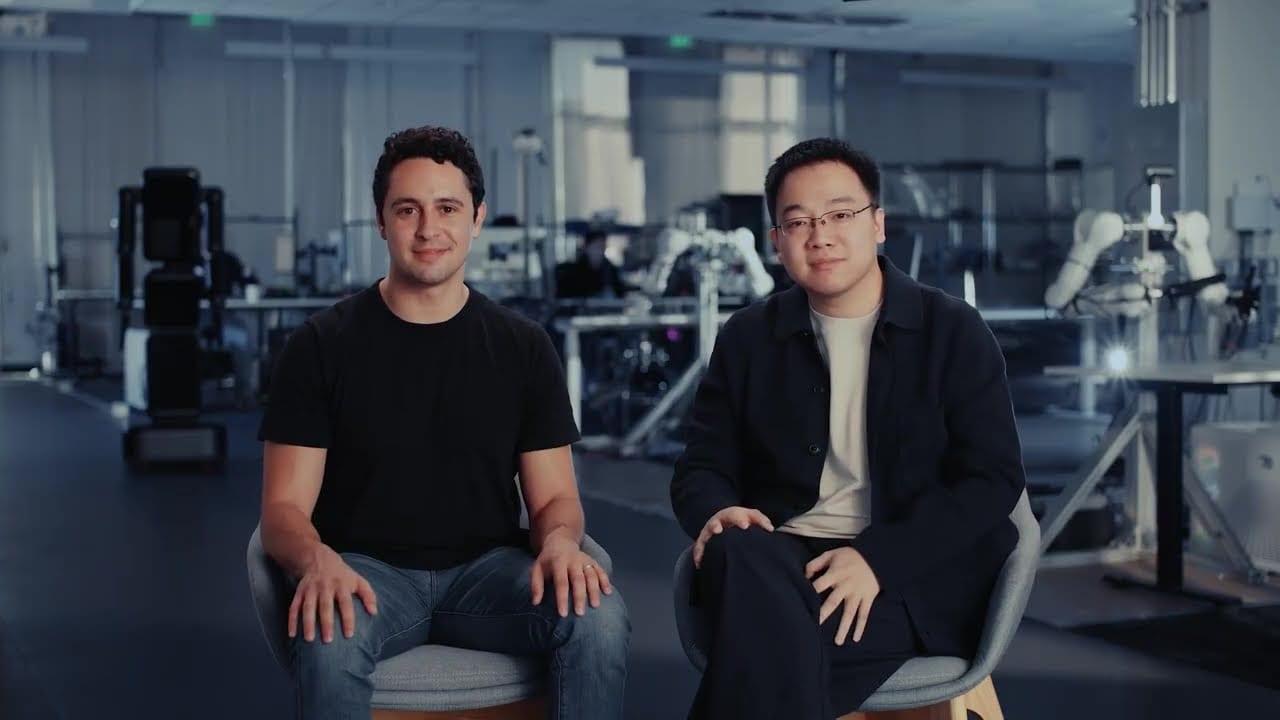
“I don't understand why robots need a head because ... it doesn't even have a brain living there.”— Zhou Xian, CEO of Genesis AI
Genesis builds almost everything itself, from the actuators, motors and gearboxes to the hands, and trains its AI on Nvidia chips alongside the hardware, so every test feeds the next design quickly. Its YouTube channel shows robots solving a Rubik's cube, pipetting in a lab and routing wire harnesses, each clip labelled autonomous and at 1x speed.
That approach has just been priced, and the price has risen fast.
From a $105 Million Seed to $3.5 Billion
Genesis came out of stealth in July 2025 with a $105 million seed round co-led by Eclipse and Khosla Ventures. Sixteen months later, the same two firms and Premji Invest co-led the Series A, joined by Nvidia, the French state-backed investor Bpifrance, former Google CEO Eric Schmidt and the French entrepreneur Xavier Niel.
The company was co-founded by Zhou Xian, its chief executive, and Théophile Gervet, a former Mistral AI researcher, and has a headquarters in San Carlos, California, as well as its French base. It joins a growing group of European robot makers valued at more than $1 billion and aimed at industrial work, alongside Britain's Humanoid and Germany's Neura Robotics, Agile Robots and RobCo. Agile Robots raised $500 million at an $8.5 billion valuation only last week.
Zhou says Genesis will start in the United States, with an American supply chain, American contract manufacturers and American customers, before expanding more broadly in Europe. So where do the first robots go to work?
Factories First, a Wider Rollout in 2027
Manufacturing and logistics are the first focus. Genesis is testing a small number of robots with customers, and LG CNS, the South Korean IT services company that signed a long-term partnership with Genesis in June, is trialling Eno on manufacturing and logistics work. The company's site says it plans targeted customer deployments by the end of 2026, and Zhou expects a wider rollout in 2027.
The pitch is aimed at the teams that need more hands than they can hire. In the film that announced the round, Genesis describes a small team building a manufacturing business that once required an industrial giant, and a scientist who can test every idea worth trying. Its goal is a robot that works reliably across entire workflows for years.
That is a high bar, and the next year of customer trials will show how close Eno gets. For now, $500 million buys the factory floor a new kind of coworker: no face, no legs, and a pair of hands built to do the job.
Genesis Reaches $3.5B in 16 Months
The Brief
Stay curious
AI and technology: what changes and why it matters.
Your daily selection, in English or Spanish.
Free forever. Unsubscribe anytime.
More stories




Conversation
Start the conversation