
 The Specialty News
Bitcoin Ignores a 162,000 Jobs Shock, and Equities Are Bleeding
Wall Street expected a weakening labor market, but a blowout August payroll print just pushed September rate hike odds to 58%.
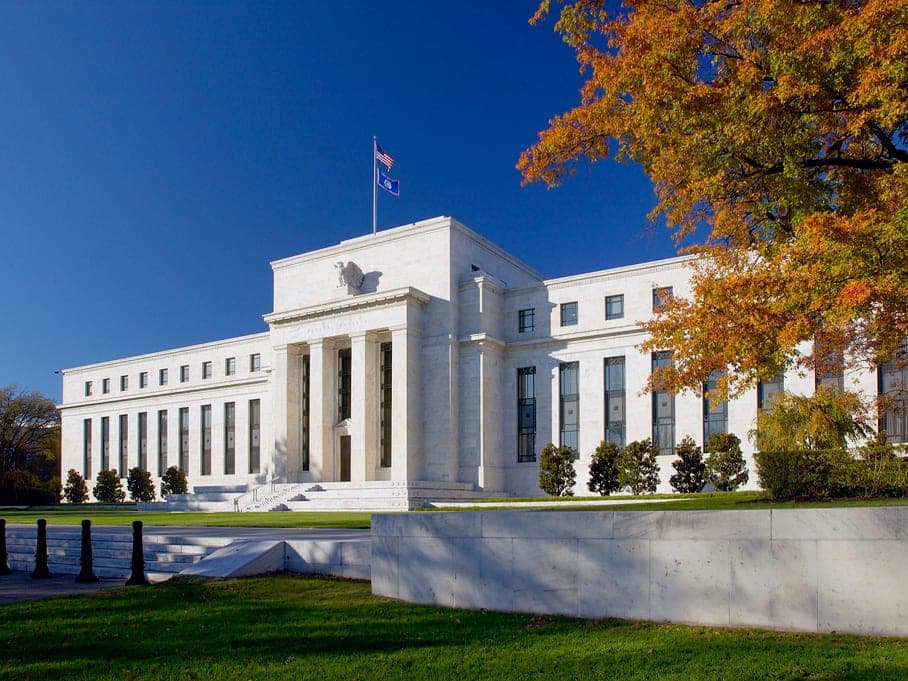
A spreadsheet revision at the Bureau of Labor Statistics just retroactively erased July's job losses, converting a 23,000 decline into a gain. When Friday's blowout August payrolls hit the wire shortly after, the dovish narrative for the U.S. economy vanished instantly. Equities immediately sold off as the reality of a hawkish Federal Reserve set in. Bitcoin simply ignored the panic, holding steady at $79,000 as Wall Street ETFs and corporate treasuries bought the dip.
The 162,000-Job Shockwave
The U.S. economy added 162,000 jobs in August, nearly triple the 56,000 forecasted by Wall Street banks. That single print violently shifted the odds of a September interest rate hike to 58%. Over the last cycle, macroeconomic surprises of this magnitude crushed crypto markets. This time, the $770 million that flowed into U.S. spot Bitcoin ETFs in the first four days of September absorbed the shock entirely.
The volatility is largely by design. Taking the helm in late May, Federal Reserve Chair Kevin Warsh deliberately killed the era of predictable forward guidance. Speaking at the Jackson Hole Economic Symposium, he refused to pre-commit to any rate paths, making every economic data release a high-stakes event. Bloomberg Chief Economist Anna Wong publicly bet the Fed wouldn't hike because modern history showed no precedent for raising rates after two negative payroll prints. She lost the wager the moment the government revised July's data upward.
Rates have sat at a 3.50% to 3.75% plateau since December 2025. The market spent the summer trying to guess how fast the central bank would ease. Now, the trading floors are panic-pricing a resumption of tightening. But while Bitcoin acted as a sponge for the liquidity shock, a much quieter corner of the crypto market was being aggressively centralized.
Cornering the Privacy Market
Zcash, a historically volatile privacy coin, is quietly ripping 45% higher this week on a massive, institutional-grade mining play. Cameron and Tyler Winklevoss just backed Cypherpunk Technologies with a $33.33 million investment, executing a sudden pivot that allows the publicly traded company to capture roughly 18% of the entire global Zcash mining hashrate. Grabbing nearly a fifth of a global network's production capacity is functionally equivalent to a single firm quietly buying up every active silver mine in Nevada.
“Up until now, investors have had limited options for Zcash mining exposure. With the acquisition of this mining fleet, Cypherpunk changes that.”— Cameron and Tyler Winklevoss
The brothers are treating the asset as the ultimate institutional privacy hedge to Bitcoin's transparent ledger. By activating 4.2 gigasolutions per second of hashrate across U.S. facilities, they are explicitly industrializing the production of an anonymous currency. Zcash cleared $1,000 for the first time since 2016, proving that serious capital is looking beyond easily traceable networks. This aggressive capitalization sets up an inevitable clash with U.S. regulators, who have historically targeted privacy protocols. The government now has to figure out how to police a public biotech-turned-crypto firm mining untraceable money on American soil.
The European Treasury Wall
While the Winklevoss twins build a privacy fortress, legacy players are accelerating the corporate treasury race abroad. Blockstream CEO Adam Back just led a €7.6 million investment into French firm Capital B. The cash directly funded the purchase of 376 Bitcoin, bringing the company's corporate stash to 3,521 coins. It represents a new wave of European "MicroStrategy-lite" entities that treat digital assets as a primary reserve, regardless of macroeconomic headwinds.
Historically, when two-year Treasury yields hit 52-week highs near 4.4%, risk assets bleed. Equities played by the old rules last week. Digital assets rewrote them. Bitcoin is no longer trading purely as a speculative beta play on cheap debt; it is being aggressively insulated by a permanent wall of corporate buyers.
The Federal Open Market Committee meets next week, and gravity usually wins these standoffs. The base case is now a rate hike, threatening to push risk-free yields toward 5%. Yet the persistent bids from institutional ETFs and corporate treasuries suggest a structural break from traditional finance. Institutional capital is no longer just betting on a new financial system; they are buying the infrastructure to hide it.
What people are saying

“Bitcoin dropped nearly 3% after stronger-than-expected US jobs data revived bets on a September Federal Reserve rate hike, abruptly reversing the cryptocurrency’s latest push above $80,000”

“🚨NEW: $BTC just crashed below $80k and $ETH below $2.5k after U.S. jobs data smashed expectations. $203M+ in longs were liquidated in just 60 minutes as markets rapidly repriced the risk of higher Fed rates. Good economic news just became bad news for crypto. 📉”


Bitcoin Defies the Macro Shock
The Brief
Stay curious
AI and technology: what changes and why it matters.
Your daily selection, in English or Spanish.
Free forever. Unsubscribe anytime.
More stories






Conversation
Start the conversation