
 The Specialty News
TP-Link Kills the Speed Race With Wi-Fi 8 — If the Pentagon Lets It Launch
The new Archer 8 Ultra caps top speeds to deliver a 33 percent performance boost through walls, ending two decades of vanity specs.
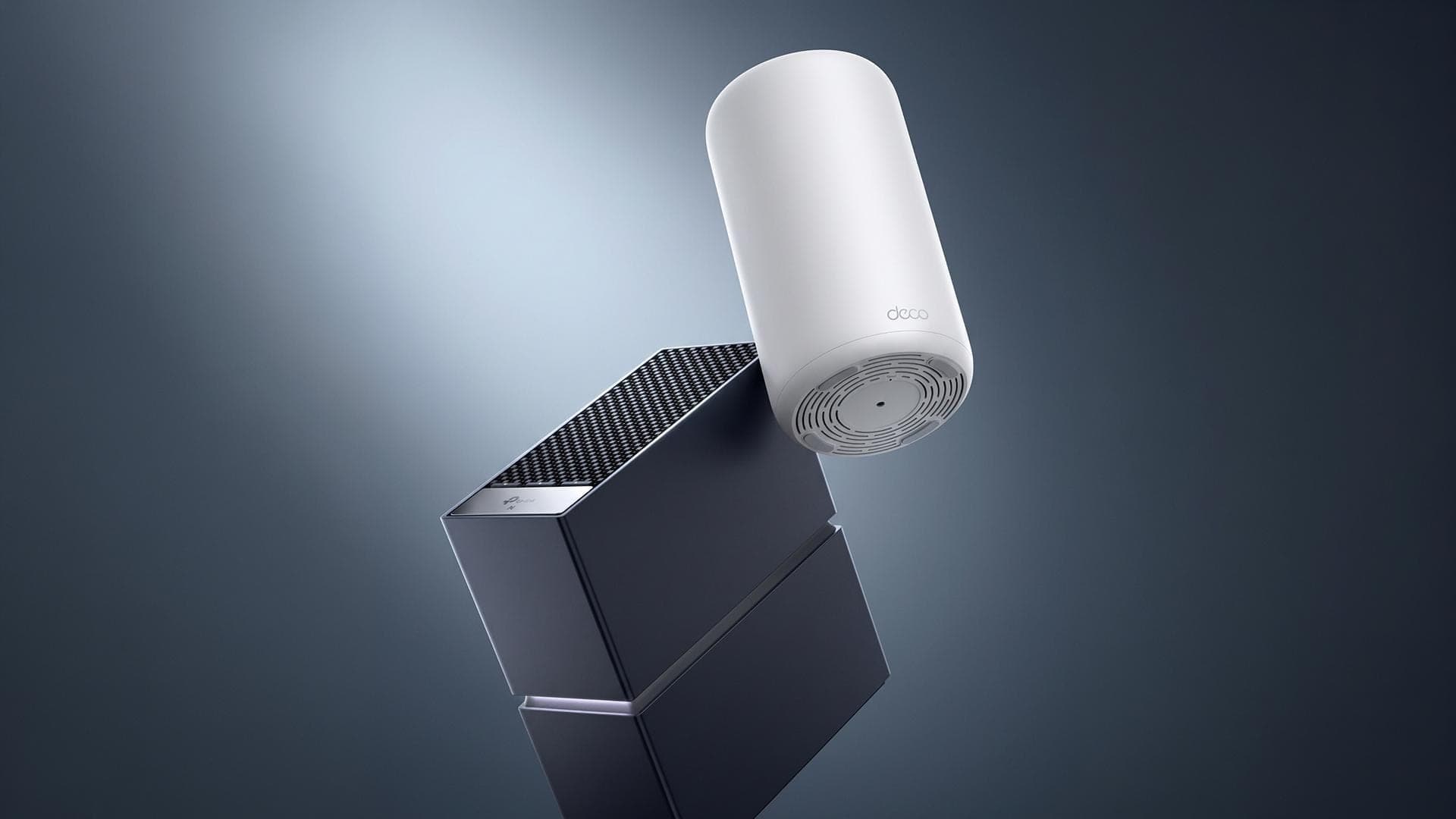
For the first time in the history of wireless networking, the next generation of Wi-Fi is actively refusing to chase a higher top speed. TP-Link’s newly announced Archer 8 Ultra router, unveiled at IFA 2026, plateaus its peak bandwidth to focus on a metric the industry has ignored for two decades: making sure your video call does not drop when you walk into the kitchen.
The End of Vanity Specs
Wi-Fi 7 marketed a staggering 400 percent increase in peak speed over its predecessor, but that bandwidth vanished the moment the signal hit drywall. Consumers quickly grew cynical, paying hundreds of dollars for routers that still dropped connections on the second floor. TP-Link’s new hardware, built on the upcoming IEEE 802.11bn standard, explicitly trades theoretical lab numbers for what engineers call Ultra-High Reliability.
By packing 18 internal antennas into its "StabilityEngine," the router is designed to squeeze performance out of low-signal scenarios and deliver a 30 percent signal gain across floors. To understand the shift, consider the math of the physical world. It is the difference between a sports car that can hit 200 miles per hour on an empty test track and a heavy-duty 4x4 that can actually drag itself through the mud.
Technologies like Distributed Resource Units will allow low-power smart home sensors to send signals back to the router without getting drowned out by interference. Buyers are clearly ready for hardware that solves real-world dead zones. But TP-Link’s biggest hurdle is not convincing consumers to care about reliability—it is convincing the United States government to let them sell the router at all.
The Pentagon Problem

In June 2026, the US Pentagon added China-based TP-Link Technologies to its list of Chinese military companies. While TP-Link Systems insists it operates entirely independently as a US corporate entity, that distinction has not shielded them from regulatory crosshairs. The company is currently fighting a high-stakes battle for a Federal Communications Commission exemption.
“For years, Wi-Fi innovation has been measured by peak theoretical speeds. But what users actually care about is consistency." — Jeff Barney, President of TP-Link Systems Inc.”
If they lose the FCC fight, the Archer 8 Ultra and its accompanying Deco 8 mesh system will be banned from American soil. This would lock US consumers out of the first wave of Wi-Fi 8 entirely. They would be forced to wait for approved rivals like Netgear or Amazon's Eero to catch up with their own hardware.
Pre-orders are scheduled to open in select regions in late September, with US availability notably absent from the initial timeline. Buying a luxury router from a company actively battling a federal ban is a steep proposition. Yet the technical promise of deterministic reliability might push early adopters to take an entirely different kind of gamble.
The Draft Specification Gamble
The networking industry is returning to a chaotic playbook last seen during the late 2000s rollout of Draft-N. The actual 802.11bn standard will not be finalized by the IEEE until 2028. Pre-ordering this hardware in late 2026 means purchasing a draft specification years before the ink dries on the rules.
While TP-Link promises to patch features via firmware updates, early buyers risk lacking hardware-level support for final configurations. Furthermore, a new router cannot fix your network on its own. To see the true benefits of Wi-Fi 8, users need smartphones and laptops with the new antennas built inside them. Those client devices are not slated to arrive on store shelves until well into 2027.
Despite the regulatory hurdles and the early-adopter risks, the focus on stability marks a mature turning point for consumer networking. Hardware makers have finally admitted that gigabit numbers printed on a cardboard box do nothing for a buffering television on the second floor. The wireless drag race is officially over, and the industry has finally traded the test track for the mud.
What people are saying

“As a D list "right wing influencer" and retired Solider, I don't know if I should be offended or glad that I wasn't approached by the Pentagon for this program... 🤨 #pentagon #InfluencersGoneWild”

Wi-Fi 8 Ends the Speed Race
The Brief
Stay curious
AI and technology: what changes and why it matters.
Your daily selection, in English or Spanish.
Free forever. Unsubscribe anytime.
More stories






Conversation
Start the conversation