
 The Specialty News
Smugglers Open 170-Mile Portsmouth Route — and Far-Right Blockades Hijack Labour's Pitch
The arrival of 140 migrants in a single dinghy proves enforcement in Dover is simply pushing longer, deadlier crossings westward.
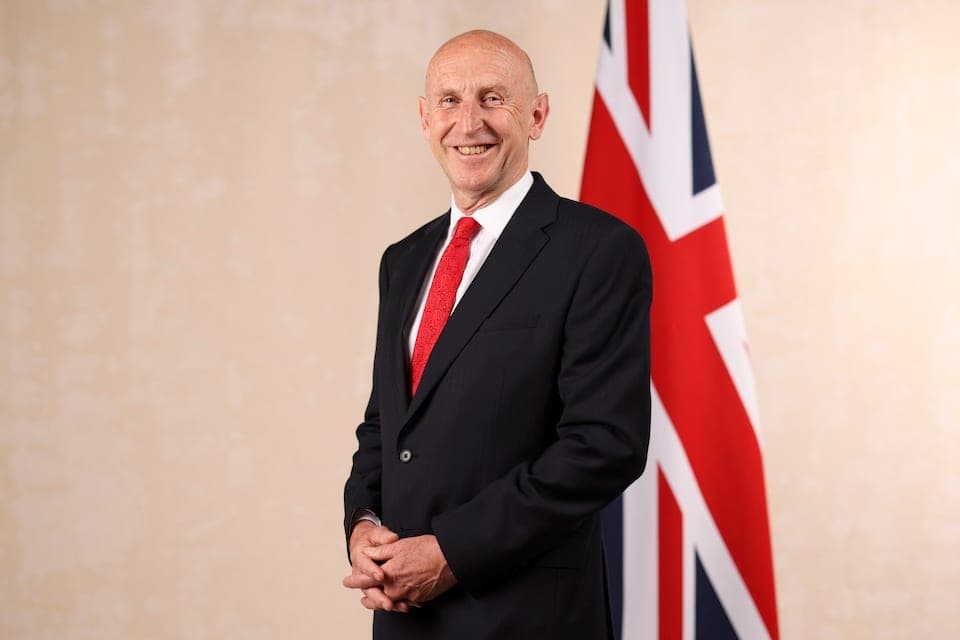
A single dinghy carrying 140 migrants bypassed the heavily enforced Strait of Dover on Sunday, navigating open ocean to land directly on the beaches of Eastney in Portsmouth. The unprecedented arrival triggered an immediate flash-mob by far-right networks, who blockaded local waterfront roads to stop transport buses. By Monday morning, a government desperate to talk about economic growth was instead performing crisis communications over a rapidly expanding border.
The 170-Mile Geographic Leap
For years, the UK’s border enforcement and public order strategies have been hyper-focused on a 21-mile stretch of water separating Kent from France. The Eastney landing signals a structural shift in how human smuggling networks operate. Facing intense policing in Dover, smugglers have charted a new path from the Baie de Seine directly to Hampshire.
That geographic leap is roughly the distance from London to Sheffield, navigated entirely across open water in an overcrowded dinghy. The resulting survival of those 140 passengers is an anomaly; the route itself is a calculated escalation by smugglers willing to put larger groups on longer, deadlier journeys. The Home Office recently celebrated a 43 percent year-over-year drop in overall migrant arrivals, bringing the total down to 17,000. But the data masks a severe tactical adaptation.
This adaptation hit British shores exactly where local authorities were least prepared. Donna Jones, the Police and Crime Commissioner, warned that southern coastal cities lack the physical infrastructure to process sudden illegal arrivals. That vacuum of state capacity was immediately filled by local agitators.
The Telegram Flash-Mob

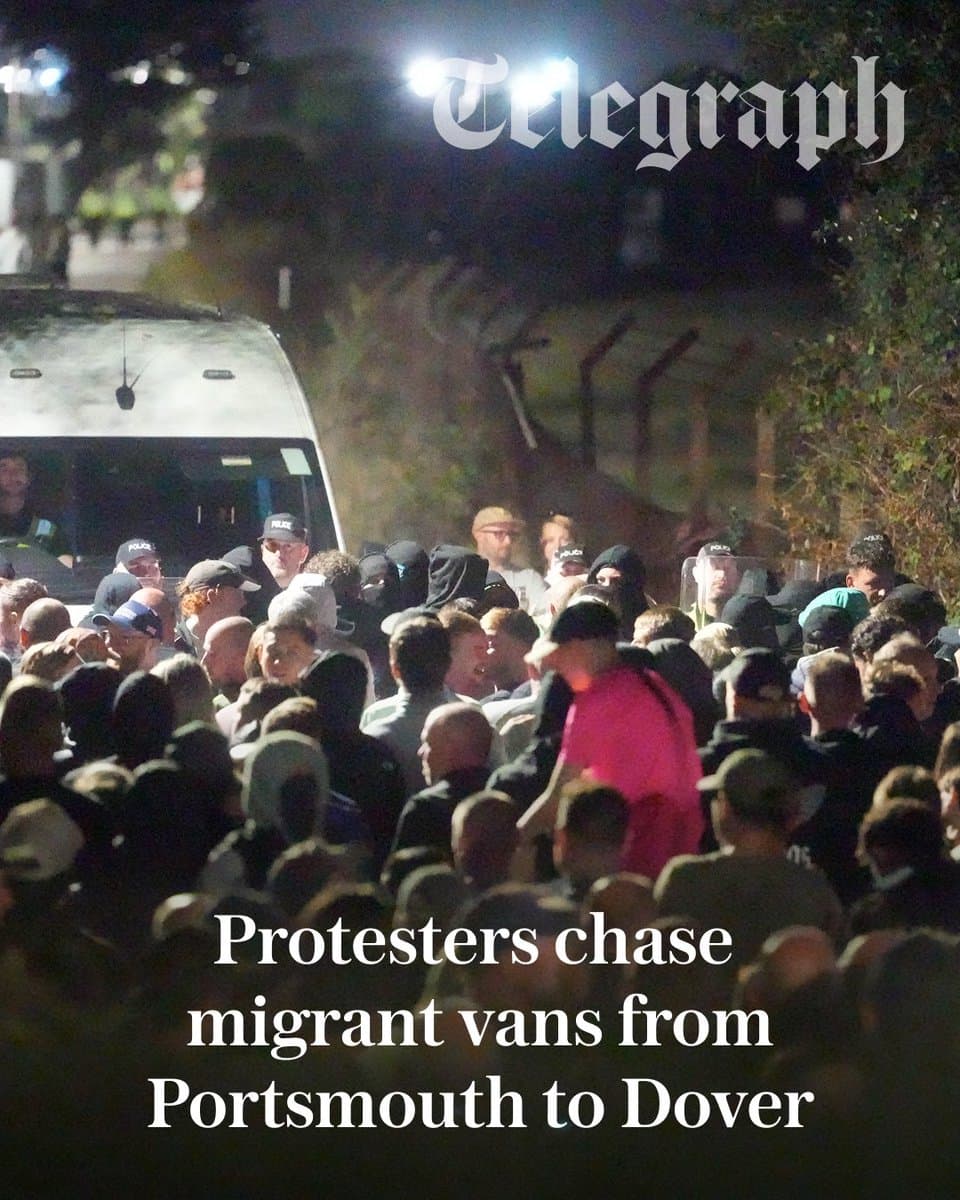
Within hours of the dinghy landing, anti-migrant networks mobilized. Daniel Thomas, an associate of Tommy Robinson, utilized encrypted messaging apps like Telegram and Signal to direct hundreds of protesters to the Eastney waterfront. Their objective was logistical rather than purely vocal: block the roads and trap the buses intended to move the migrants to the Manston processing center in Kent.
“This is thuggish and intimidating behaviour. This is not peaceful protest. Obviously, as a politician, I absolutely support people's right to peaceful protest. But this crosses a line.”— Emma Reynolds
The chief secretary to the Treasury was originally booked on Monday morning television to lay the groundwork for Chancellor John Healey’s flagship economic speech. Instead, she was forced to condemn the coastal riots. The resulting police dispersal orders and road blockades proved that these rapid-response protests are evolving into targeted infrastructural disruptions.
The government is now facing a dual front. Containment strategies built for Kent are failing in Hampshire, and the financial cost of scaling border processing across the entire southern coast threatens to derail Labour's fiscal plans.
A Collision of Crises
Chancellor John Healey took the stage in Coventry on Monday afternoon, stubbornly adhering to his script. He pitched a vision of a country turning a corner and ready to seize new technological opportunities.
The timing proved devastating. As Healey preached fiscal discipline to reassure bond markets reacting to 18-year-high global yields, local West Midlands employer Jaguar Land Rover announced 4,000 sudden job cuts. Healey currently sits on a tight £24 billion of fiscal headroom ahead of his October 28 budget. Surging borrowing costs leave him essentially paralyzed. He lacks the money to build a massive new border processing apparatus in Portsmouth, and he cannot afford to bail out industrial regions hemorrhaging thousands of manufacturing jobs.
Local authorities are already pleading with Whitehall for emergency funds to manage both the industrial collapse and the new coastal smuggling routes. The Treasury’s optimistic reliance on regional empowerment to fix these structural fractures is colliding with the physical reality of blockaded streets and fired factory workers. The government is learning quickly that macroeconomic talking points evaporate when you lose control of the local ground.
What people are saying

“Tommy Robinson-backed thugs have marched through and blockaded the Port of Dover to push their divisive and racist rhetoric. This far-right intimidation must be met with a mass resistance against the demonisation of those fleeing war, poverty and persecution.”

“Fascist Danny Tommo’s far right thugs descended on Portsmouth last night to target refugees. This is a dangerous escalation. We need to organise to stop the far right dividing our communities.”

“Protesters chased vans carrying migrants from Portsmouth to Dover overnight following demonstrations against the arrival of a mega-dinghy. It comes after hundreds of protesters clashed with police in Portsmouth on Sunday evening after a mega-dinghy carrying 140 migrants reached”
Anatomy of Labour's Coastal Crisis
The Brief
Stay curious
AI and technology: what changes and why it matters.
Your daily selection, in English or Spanish.
Free forever. Unsubscribe anytime.
More stories




Conversation
Start the conversation