
 The Specialty News
NVIDIA DLSS 5 Promises Photorealistic Graphics Through Real-Time Neural Rendering
By offloading complex lighting and physics to generative AI, NVIDIA aims to deliver cinematic-grade visuals at 4K.
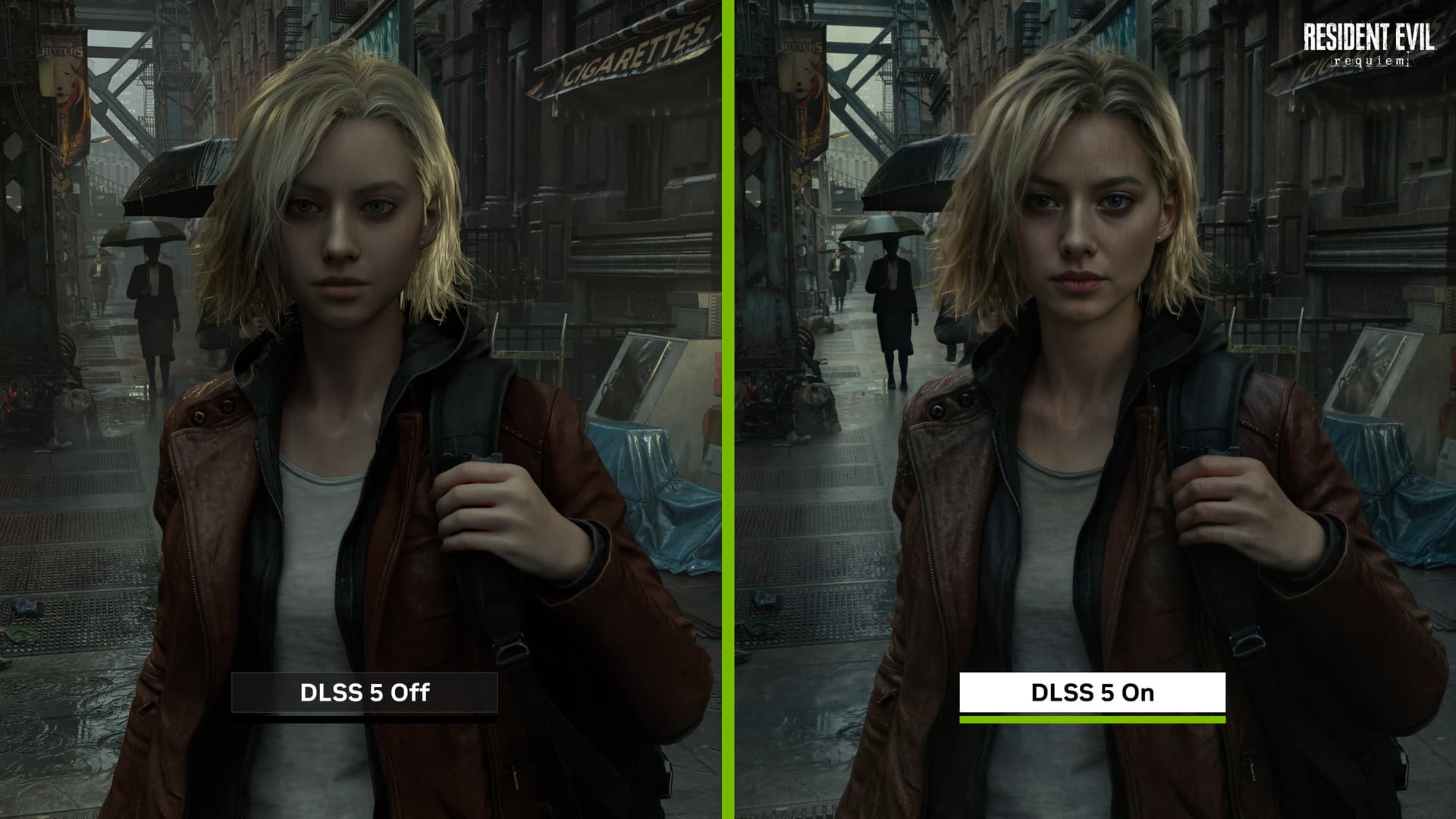
For over two decades, PC gaming has been a brutal battle against the 16-millisecond frame budget. To achieve higher fidelity, developers typically had to make painful trade-offs between beauty and performance. NVIDIA’s newly unveiled DLSS 5 promises to break that stalemate by using generative AI to handle the heavy lifting of photorealistic lighting and material physics in real-time.
The Neural Rendering Revolution
At its core, DLSS 5 acts as a sophisticated translator between traditional rendering and human-like visual perception. Instead of relying solely on brute-force calculations to simulate how light interacts with hair or fabric, the technology uses a neural model trained to understand scene semantics. This allows it to intelligently 'infuse' pixels with realistic subsurface scattering and complex environmental lighting that would normally require offline rendering.
NVIDIA CEO Jensen Huang has not shied away from the gravity of this shift, calling DLSS 5 the 'GPT moment for graphics.' By blending handcrafted artistic intent with generative AI, the system provides developers with granular control over intensity and masking. Partners like Bethesda Game Studios have already begun stress-testing the tech, with Todd Howard noting that it fundamentally changes the way digital worlds come to life in titles like Starfield.
Bridging the Gap or Uncanny Valley?

While the technical promise is immense, the road to widespread adoption faces significant hurdles. A vocal segment of the gaming community has already raised concerns about 'AI slop' and the potential for the technology to inadvertently create an 'uncanny' look that strips away the original art direction of a game. There is also the matter of hardware accessibility, as the processing power required to run DLSS 5 effectively will likely demand the newest, most expensive flagship cards, such as the rumored RTX 5090.
“We are moving toward a future where the line between a movie and a game vanishes entirely”
Ultimately, the success of DLSS 5 will hinge on developer restraint and implementation. If used as a tool to enhance rather than replace the artist’s vision, it could mark the most significant leap in gaming since the invention of real-time ray tracing in 2018. We are moving toward a future where the line between a movie and a game vanishes entirely, but the industry must ensure that this new efficiency doesn't come at the cost of the unique, human-crafted quirks that make games worth playing.
Rendering vs Perceiving
The Brief
Stay curious
AI and technology: what changes and why it matters.
Your daily selection, in English or Spanish.
Free forever. Unsubscribe anytime.
More stories






Conversation
Start the conversation