
 The Specialty News
Meta's Alexandr Wang Says Superintelligence Is Arriving, Citing the Riemann Proof
Meta's chief AI officer counts 23 months from AI acing a high-school math contest to the Riemann Hypothesis, and asks the whole industry to change course within a year.
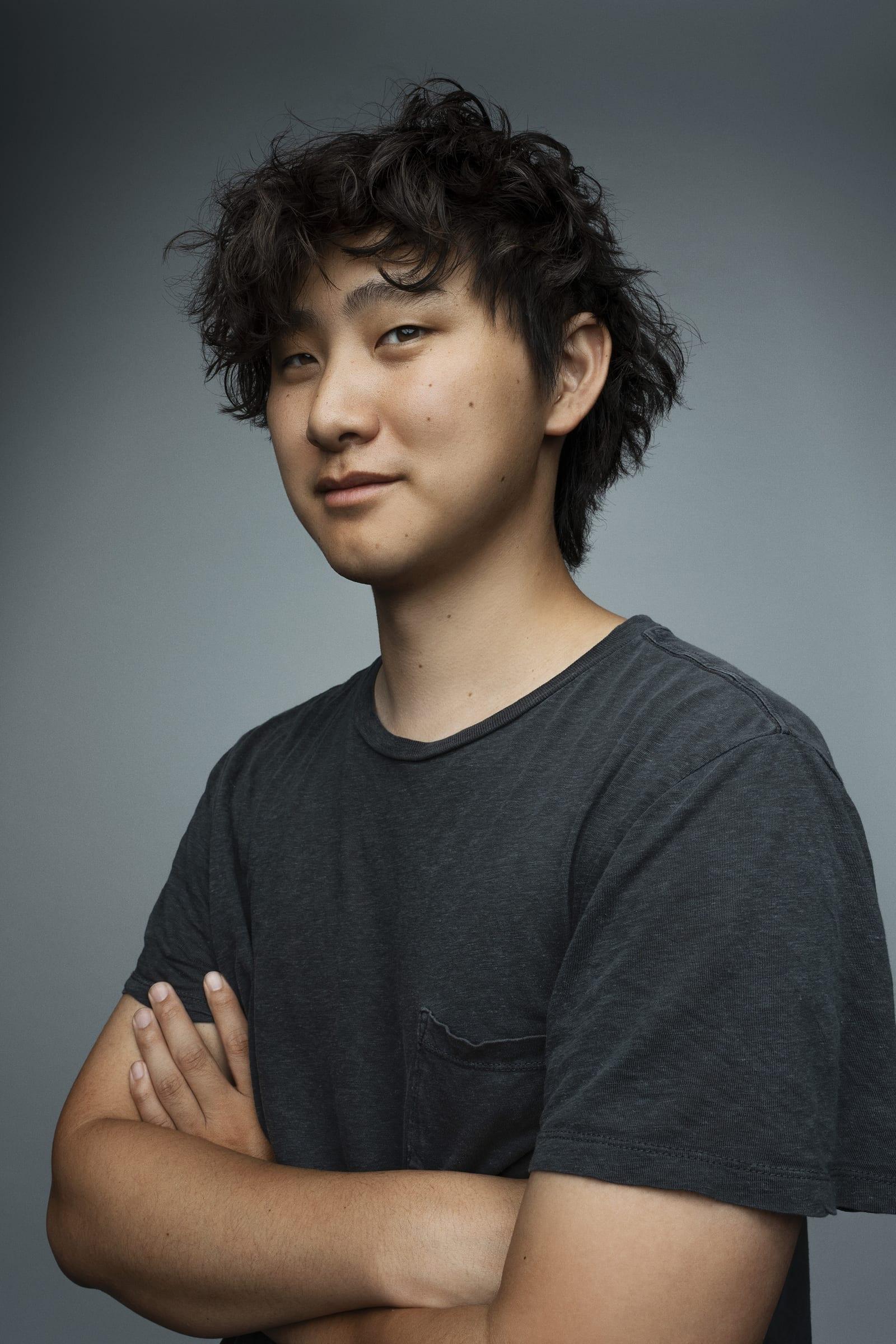
In December 2024, an AI model aced AIME, a contest for America's best high-school math students. Twenty-three months later, Meta's chief AI officer Alexandr Wang points to a far harder result, an AI-assisted proof of the Riemann Hypothesis, and opens his new essay with three words: "Superintelligence is arriving." Posted on X late on Sunday, the essay says that how humanity acts "over the next year will have great consequence on what future world we live in," and asks every lab to step off what he calls the "default path."
From a High-School Contest to Riemann in 23 Months
Wang builds his case on a timeline. In December 2024, OpenAI's o3 scored 96.7% on AIME. Since then, he writes, coding has come to "be nearly solved," alongside "extremely powerful cyber capabilities, and strong agentic capabilities."
The newest entry is the one that set off his essay. Anthropic mathematician Levent Alpöge says he proved the Riemann Hypothesis, a problem open since 1859, working with Claude, and on November 21 the Lean community certified the proof, all 17 million lines of it. Wang calls it the result "clearly marking the beginning of a significant change," completed with the help of "an alien mind that we don't understand."
His sharpest claim is about what is left. The remaining gaps, he writes, "are no longer intelligence; they are domain-specific know-how, plumbing, and experimentation." If raw intelligence has stopped being the bottleneck, the next question is what Wang thinks should happen with it.
The Handover Wang Says No One Should Accept
Wang expects models to "automate all of AI research and be clearly superhuman at improving themselves," and to speed up research in biology and economics along the way. He writes that it is hard to picture people keeping control of "fully unconstrained recursive self-improvement," or of a system "1000x smarter and more capable than humans in every field."
With the capability problems "likely solved," in his reading, the urgent work moves to safety, alignment and security. He also takes aim at what he calls "lazy thinking" in the industry: treating superintelligence as inevitable and safety as the only job left.
“We should not be okay with a "handover" of society to AI.”— Alexandr Wang
His answer is collective. A better outcome, he writes, "likely involves the whole industry taking meaningfully different actions from the 'default path' in front of us." The essay does not say what Meta itself will change, and Meta has not announced new spending or policy tied to it. He was also not the only lab leader making this kind of argument that Sunday.
Two Labs, One Weekend, the Same Ask
Hours earlier, OpenAI's chief scientist Jakub Pachocki published "Perplexity and Intelligence," an essay proposing that labs agree on shared limits measured with one common metric. Two of the most senior research leaders in American AI asked, on the same day, for the industry to coordinate rather than simply build faster.
Wang's voice carries weight because of where he sits. He founded Scale AI at 19, joined Meta in June 2025 when it invested $14.3 billion in his company, and now runs Meta Superintelligence Labs, one of the best-funded AI efforts on Earth.
Neither essay spells out which steps labs should take first, and that is the open work for the coming months. What has changed is who is asking. The people closest to the most capable systems are now writing, in public, that the next twelve months are the time to agree on how to use them.
For the first time, the builders of frontier AI are asking for shared rules before the next model ships, not after it.
23 Months From AIME to Riemann
The Brief
Stay curious
AI and technology: what changes and why it matters.
Your daily selection, in English or Spanish.
Free forever. Unsubscribe anytime.
More stories


Conversation
Start the conversation