
 The Specialty News
Belkin Launches 1,000-Cycle Power Bank, Beating Auto Giants to Next-Gen Batteries
The new $70 BoostSolid lineup lasts three times longer than standard lithium-ion, compressing 5,000mAh into a credit-card-sized frame.
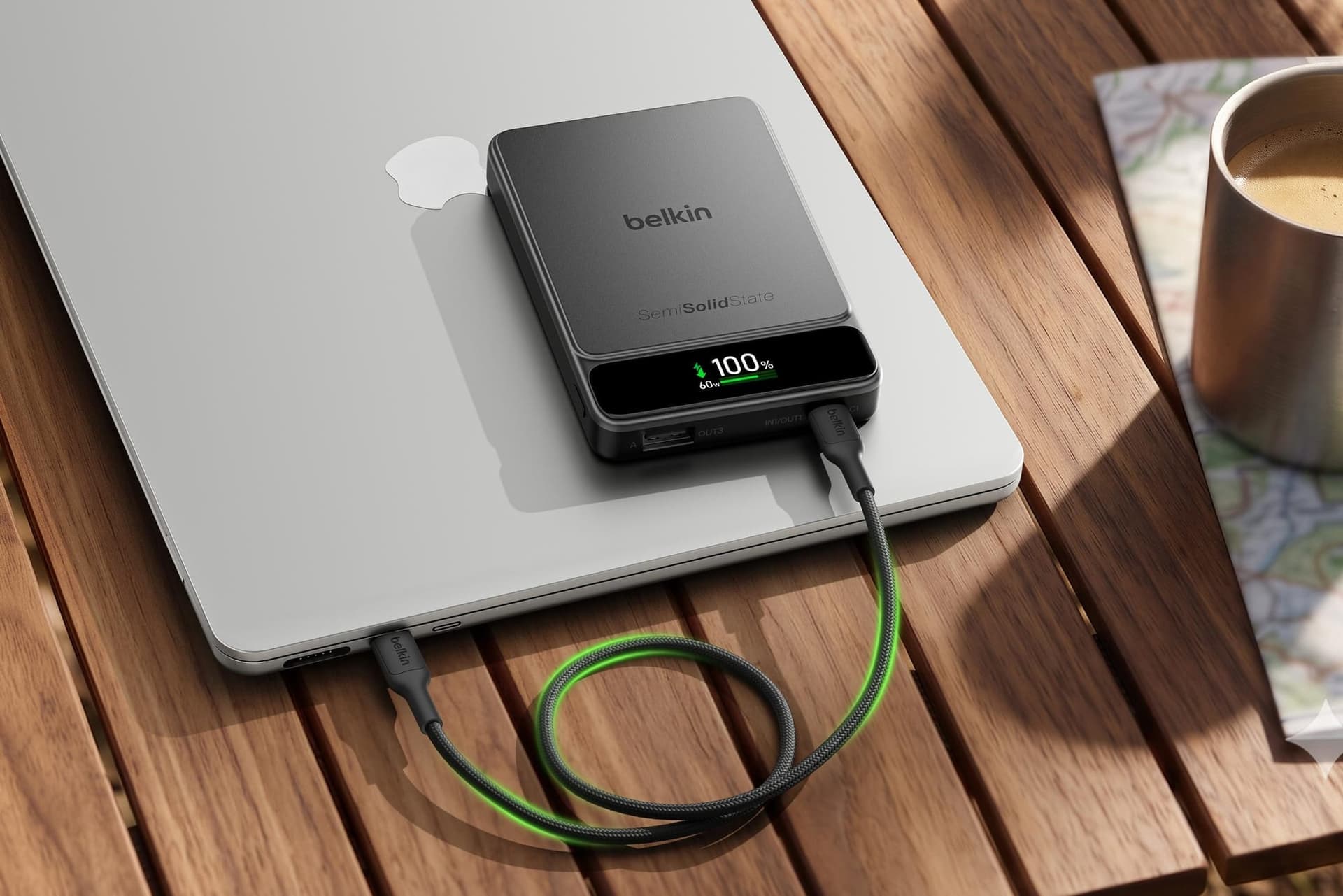
While global automakers insist that solid-state electric vehicle batteries are still a decade away, you can now buy the next-generation chemistry at a retail store for $70. Belkin's newly unveiled BoostSolid Cell lineup brings semi-solid-state energy storage out of the laboratory and into the palms of everyday consumers. By introducing a stable gel layer to replace highly volatile liquid electrolytes, the technology unlocks unprecedented energy density and safety. This shift changes the mathematics of mobile accessories, establishing a new baseline of 1,000 charge cycles that promises to outlive the very smartphones they power.
The Battery Tech Carmakers Promised is Already in Your Pocket
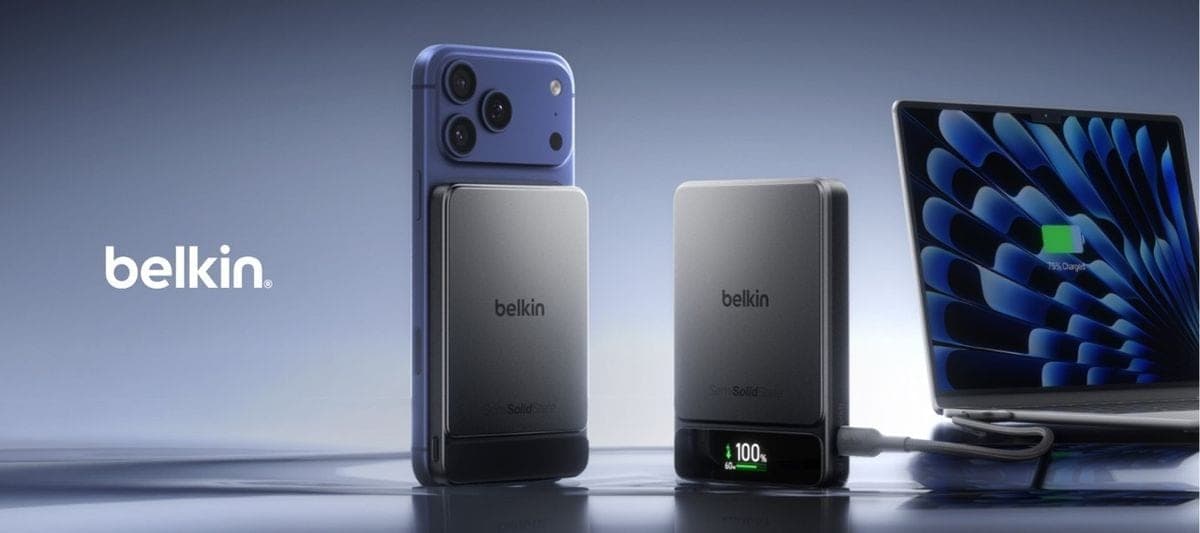
The physical geometry of portable power has remained frustratingly stubborn for a decade, requiring bulky plastic bricks to keep our devices alive. Belkin's UltraCharge Pro series breaks this mold by compressing 5,000mAh of capacity into a chassis just 8.8 millimeters thick. This is roughly the thickness of four stacked quarters, sliding effortlessly into a pocket alongside a modern smartphone.
The engineering breakthrough lies in the chemistry. Conventional lithium-ion batteries rely entirely on a liquid electrolyte, which requires robust armor to prevent punctures and leaks. Belkin's architecture suspends a gel-like layer alongside that liquid, allowing the battery to shrink. The 5,000mAh model is 40 percent slimmer than standard equivalents, while the 10,000mAh variant achieves a 27 percent size reduction.
This compact footprint does not come at the expense of longevity. The average lithium-ion power bank begins to degrade noticeably after 300 charge cycles, turning into electronic waste within two years. By reaching 1,000 full charge cycles, Belkin's cells can survive daily refills for nearly three years before showing wear. But shrinking the hardware is only half the battle; the real driver behind this transition is an invisible regulatory wall.
Solving the Fire Risk That Keeps Airlines on Edge
A rash of high-profile lithium-ion battery recalls in late 2025 has left consumer safety watchdogs and travel regulators on high alert. Liquid electrolytes are notoriously volatile when damaged, creating a distinct risk of thermal runaway—a self-heating fire that is nearly impossible to extinguish in mid-flight. This risk has turned airline cabins into a regulatory battleground, with flight crews increasingly sensitive to swelling devices.
By swapping volatile liquids for a semi-solid gel, Belkin’s design effectively neutralizes the risk of catastrophic punctures. The battery cannot leak, bubble, or catch fire in the same way traditional units do. To satisfy flight regulators, Belkin has engineered the UltraCharge to be explicitly TSA carry-on compliant, pairing the chemical stability with internal monitoring systems that scan battery temperatures every 250 milliseconds.
The shift to semi-solid tech was first pioneered by agile hardware startups like BMX, Kuxiu, and Zens. Belkin’s entry validates their early, risky bets, scaling the technology to global retail shelves.
“Belkin's new UltraCharge power banks look pretty impressive — largely due to their incredibly slim build, which makes them highly practical for juicing up your devices on the go.”— Harry Padoan
Yet, even as tech reviewers praise the hardware on the exhibition floor, the broader market faces a steep economic hurdle.
What people are saying

“Great question - we have had planes for a century. But why is it so hard to connect regional cities? I spend more time sitting in the airport than I do on the plane. And airports are sometimes hard to get to, or take time to get through security - all adding time to your trip.”

“Lyte, a robotics and AI startup from ex-members of Apple's Face ID team, has raised about $165 million in a new funding round that more than triples the company’s valuation to $1.6 billion”

“#CNBCTV18Exclusive | Sources To @latha_venkatesh 👉HDFC Bank Bd Considering Dinesh Khara Former SBI Chairman As Bank’s Next MD & CEO 👉Dinesh Khara Had Been Approached By HDFC Bk Even For Part-Time Chmn Position But Had Declined 👉HDFC Bank Also Looking At Other Current SBI”
Semi-Solid Outperforms Liquid Li-ion
The Brief
Stay curious
AI and technology: what changes and why it matters.
Your daily selection, in English or Spanish.
Free forever. Unsubscribe anytime.
More stories

Conversation
Start the conversation