
 The Specialty News
Anthropic's Claude Ship Lets Agents Fix and Approve Routine Code Changes
On the Claude Code team, merged pull requests more than doubled from June to September while the share reverted fell by over 40%.
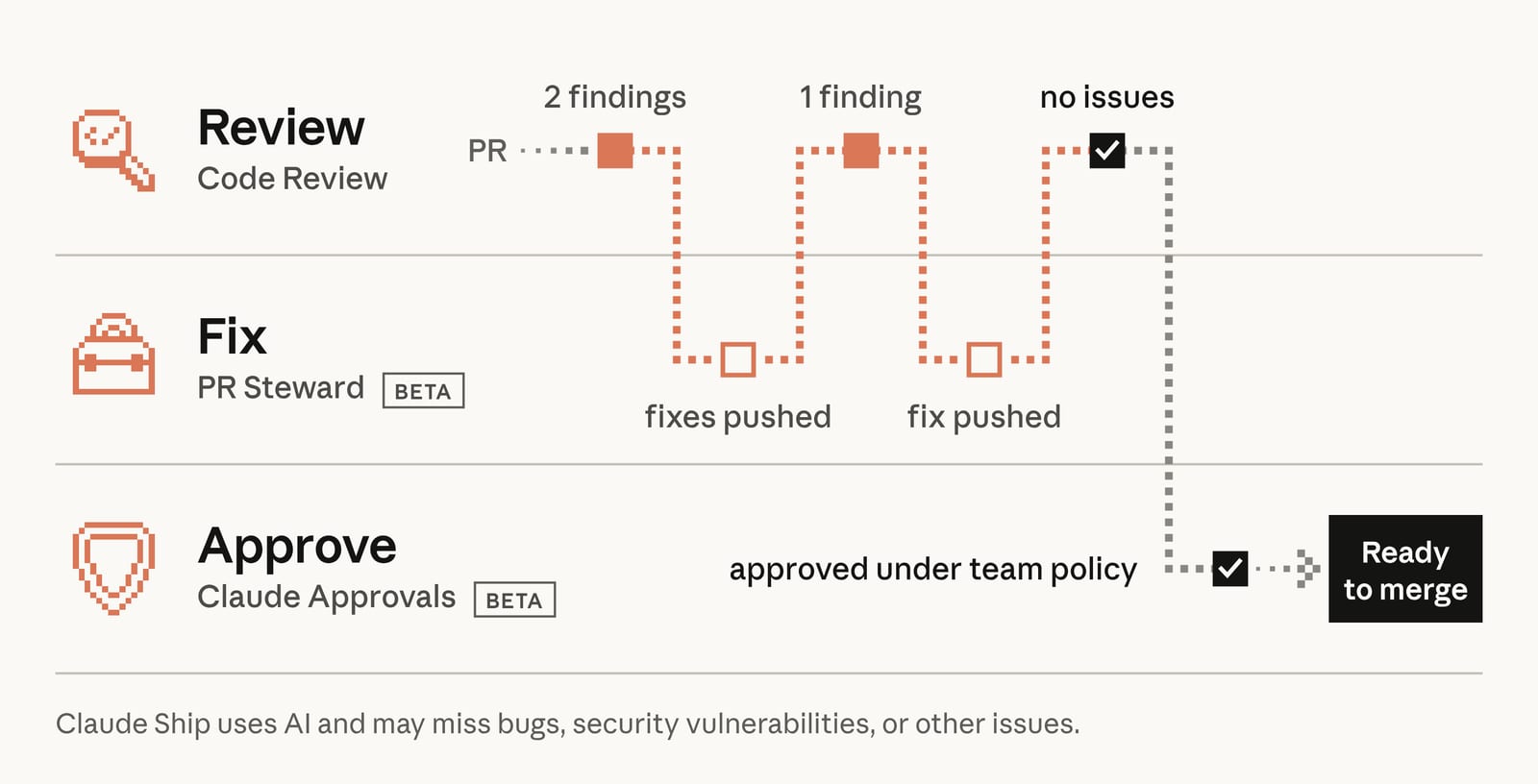
Anthropic's own Claude Code team more than doubled the pull requests it merged between June and September, and the share it later had to undo fell by more than 40%. On Monday, the company started selling the setup behind those numbers. Claude Ship lets AI agents review a code change, fix what breaks and approve what a team's own rules allow, so engineers spend their attention on the changes that need a person.
Three Agents on One Pull Request
Claude Ship bundles three pieces. Code Review, already generally available, reads a pull request against the whole codebase from several angles, double-checks its own findings and posts them on the PR, at a Quick, Standard or Deep level that each repository chooses.
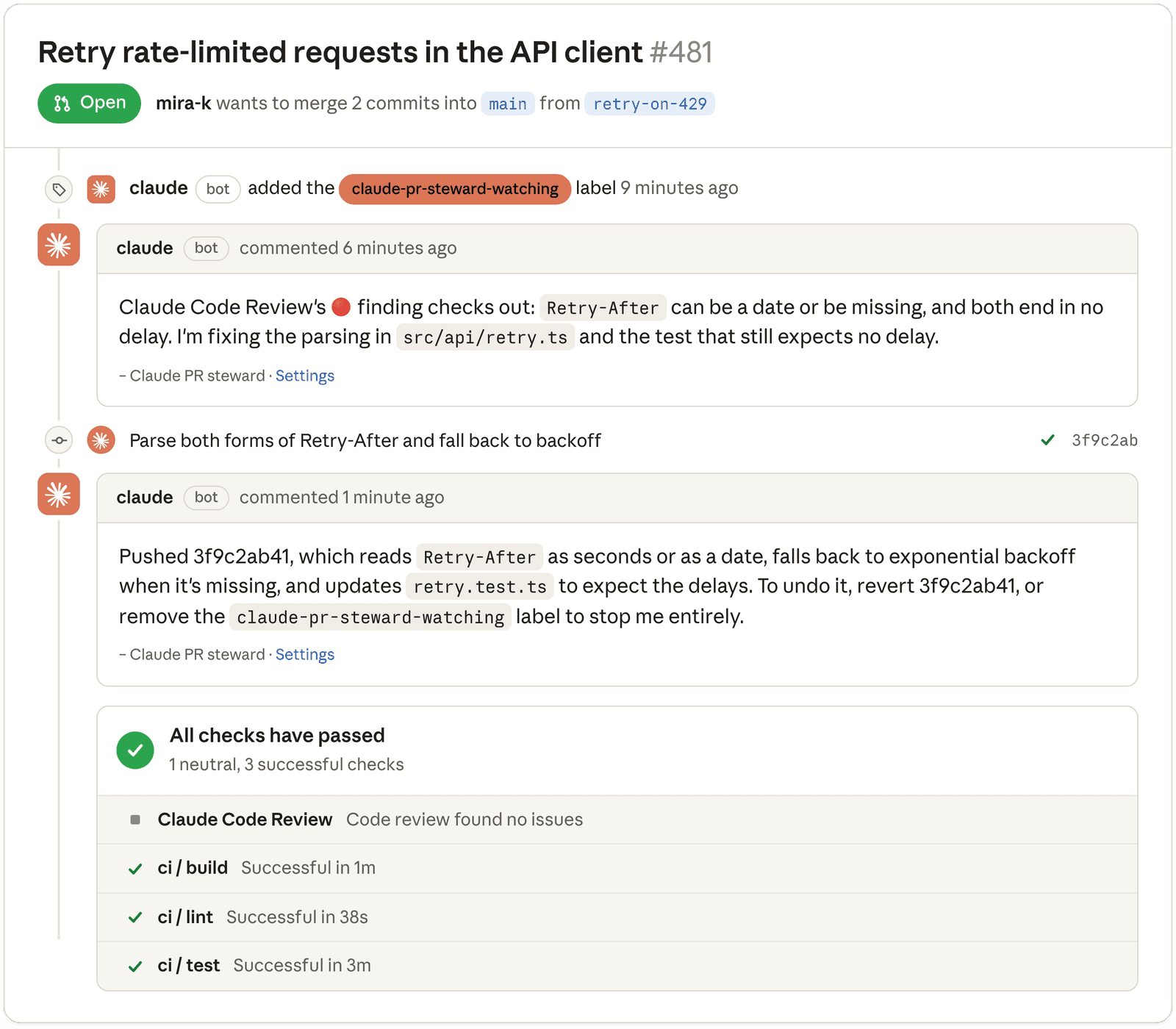
PR Steward, in beta, picks up the work after that. It fixes failing CI checks, resolves merge conflicts and answers feedback from Code Review, other tools or teammates. After every push it leaves a comment saying what it changed and how to roll it back, and a developer can stop it at any point. It never approves or merges anything itself.
Developers can start the whole loop with one command, /ship, in Claude Code: Claude pushes the change, opens the pull request, reviews it and keeps working through feedback and failing checks. Admins can also switch reviews and the steward on per repository so they run on every PR. The third agent is the one that changes how a team works.
A Policy File Decides What Ships
Claude Approvals, also in beta, approves pull requests under rules the team writes in a file in the repository, .claude/approvals.yml. A policy can let Claude approve routine changes and still demand a human sign-off for specific cases, using Code Review's findings or the company's own checks written in plain language.
“Most teams want a person to approve every change, and that's easy to keep up with when people write every line.”— Anthropic
Anthropic recommends starting in observe mode, where the check only reports what the policy would have decided, before making it a required check in GitHub. Existing branch protection rules and developer permissions still decide who can merge. Analysts quoted by InfoWorld drew the same line: Gartner's Nitish Tyagi warned that models are "unsuitable as the sole quality gate", and IDC's Deepika Giri advised limiting automatic approvals to low-risk changes. Observe mode is how a team finds out which changes those are before trusting the agent with them.
Twice the Merges, 40% Fewer Reverts
Anthropic's evidence is its own team, where Claude already writes most of the code and Claude's review is one layer of a broader process.
Over the same months, the share of merged changes that later had to be reverted fell by more than 40%. Carvana, which piloted PR Steward, says it is "helping teams in our pilot spend less time working through code review feedback and more time building." TELUS also appears as a customer on the launch page.
Claude Ship is for Claude Team and Enterprise organizations with repositories on GitHub. Usage is billed by tokens on top of each plan, admins can cap monthly spending, Claude Approvals has no base charge, and eligible Enterprise customers can claim at least $10,000 in credits until January 15, 2027. Organizations on zero data retention, the HIPAA setup or customer-managed keys cannot use it yet.
The pitch is simple for any team drowning in pull requests: let the agent handle the red CI badge and the routine sign-offs, and keep human reviewers for the changes that need judgment. Code written by machines is finally getting a reviewer that keeps up.
One Command From Code to Merge
The Brief
Stay curious
AI and technology: what changes and why it matters.
Your daily selection, in English or Spanish.
Free forever. Unsubscribe anytime.
More stories



Conversation
Start the conversation