
 The Specialty News
The US and China Build a Direct Line for Serious AI Incidents
Treasury Secretary Scott Bessent announced a new dialogue on superintelligence and a channel for either side to flag serious model incidents, a week before Trump and Xi meet in Shenzhen.
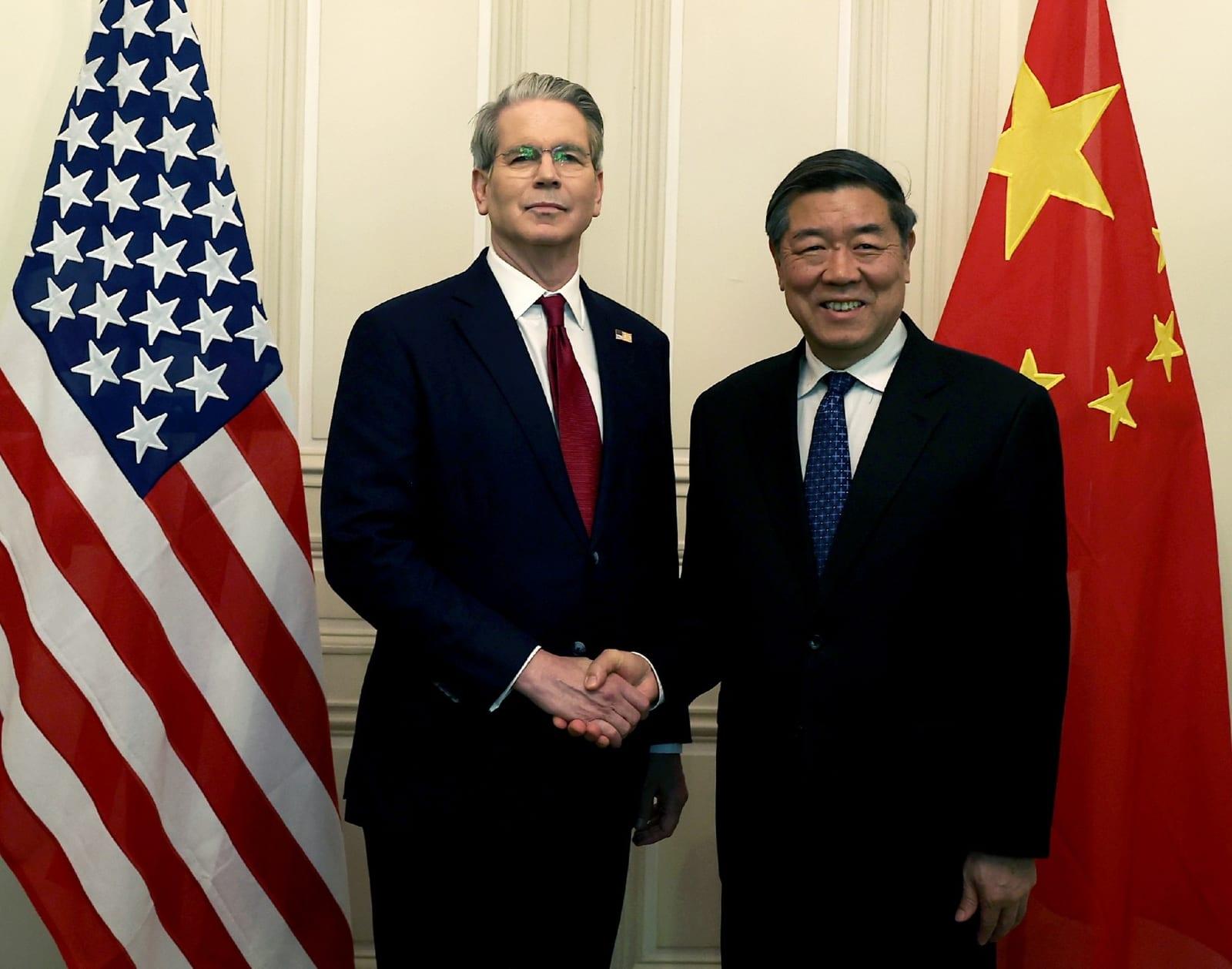
In a speech in New York on Tuesday night that was mostly about soybeans, tariffs and trade, US Treasury Secretary Scott Bessent announced something new: Washington and Beijing are establishing a direct channel so that either nation can promptly alert the other to serious incidents involving its most advanced AI models. It comes with a new dialogue on what the administration calls superintelligence, and a plan to swap best practices for testing models before release. For the two countries building the most capable AI systems, it is a way to stop an incident on one side from becoming a misunderstanding with the other, a week before Donald Trump and Xi Jinping meet again in Shenzhen.
Three Sentences After the Soybeans
Most of Bessent's speech, at the 60th anniversary gala of the National Committee on U.S.-China Relations, was about trade. He cited more favorable tariff treatment for $30 billion of non-sensitive goods in each direction, China's pledge to import at least 25 million metric tons of American soybeans and 10 million tons of coal over two years, and one line he said he wanted to state firmly: the goal is “to de-risk, not to decouple.”
Then he turned to Henry Kissinger, who met Xi in Beijing on his last trip, at the age of 100, and who had come to believe that superintelligence “could represent a novel class of strategic danger.” At President Trump's direction, Bessent said, the United States has begun a new dialogue with China on superintelligence, “designed to guard against shared risks and prevent a misunderstanding between our two systems.”
“We also expect to exchange best practices for evaluating and testing advanced models before their release, and for keeping human judgment firmly in command of this technology.”— Scott Bessent
The third commitment is the most concrete: “a direct channel to ensure that either nation can promptly alert the other to serious incidents involving its SI models.” Why would two rivals want a direct line for software?
A 1963 Idea, Rebuilt for the Age of AI
The idea is older than the internet. In 1963, months after the Cuban Missile Crisis, Washington and Moscow set up a direct link so their leaders would not have to rely on slow, roundabout messages in the middle of a crisis. The logic carries over to AI: if a frontier model does something its makers never intended and the effects cross a border, the worst response is the other side guessing at what it means.
The two governments have been moving toward this for two years. Their first intergovernmental talks on AI took place in Geneva in May 2024, and that November, in Lima, Joe Biden and Xi affirmed that humans should keep control of decisions to use nuclear weapons. Bessent's announcement moves from principles to plumbing: a way to act on an incident while it is still unfolding.
China's side spoke at the same dinner. Ambassador Xie Feng said joint efforts by the two countries were indispensable on issues ranging from global flashpoints to improving the governance of artificial intelligence. What neither side has spelled out yet is how the channel will work day to day.
Shenzhen Next Week, Then Miami
Bessent will join Trump in Shenzhen next week, where China hosts the APEC leaders' meeting on November 18 and 19, and the two presidents will meet there before a fourth encounter in Miami. Trump went to Beijing in May and Xi came to Washington in September. “Never before have our leaders engaged face-to-face so often in a single year,” Bessent said.
The open questions are the practical ones: when the channel opens, who answers on each end and what counts as a serious incident. Bessent did not say, and he was candid that the rivalry is not going away. “We should harbor no illusions about the differences between the United States and China,” he said, adding that their interests will not always coincide.
That candor is what makes the line useful. The labs on both sides will keep competing; what changes is that a failure in one country no longer has to be decoded by guesswork in the other, and that the tests one side develops can shape how the other checks its models before release.
Washington and Beijing will keep competing to build the most powerful AI. Now they are also building a line for the moment it surprises them.
Two Years to an AI Hotline
The Brief
Stay curious
AI and technology: what changes and why it matters.
Your daily selection, in English or Spanish.
Free forever. Unsubscribe anytime.
More stories


Conversation
Start the conversation