
 The Specialty News
Mistral Secures €3B to Build AI Data Centers — and Defy Silicon Valley's Cloud Monopoly
The three-year-old French startup is taking on rivals 40 times its size by pivoting from open-source software to heavy physical infrastructure.
A three-year-old French startup just closed the largest equity fundraising round in European tech history by pouring billions into physical steel and concrete. Mistral AI built its reputation on open-weight software that anyone could download, but its €3 billion Series D signals a massive, capital-intensive pivot. The company is now building its own data centers to sell "Sovereign AI"—a fully localized, highly secure infrastructure stack designed for governments and industrial giants terrified of relying on the United States or China.
The Cost of Digital Independence
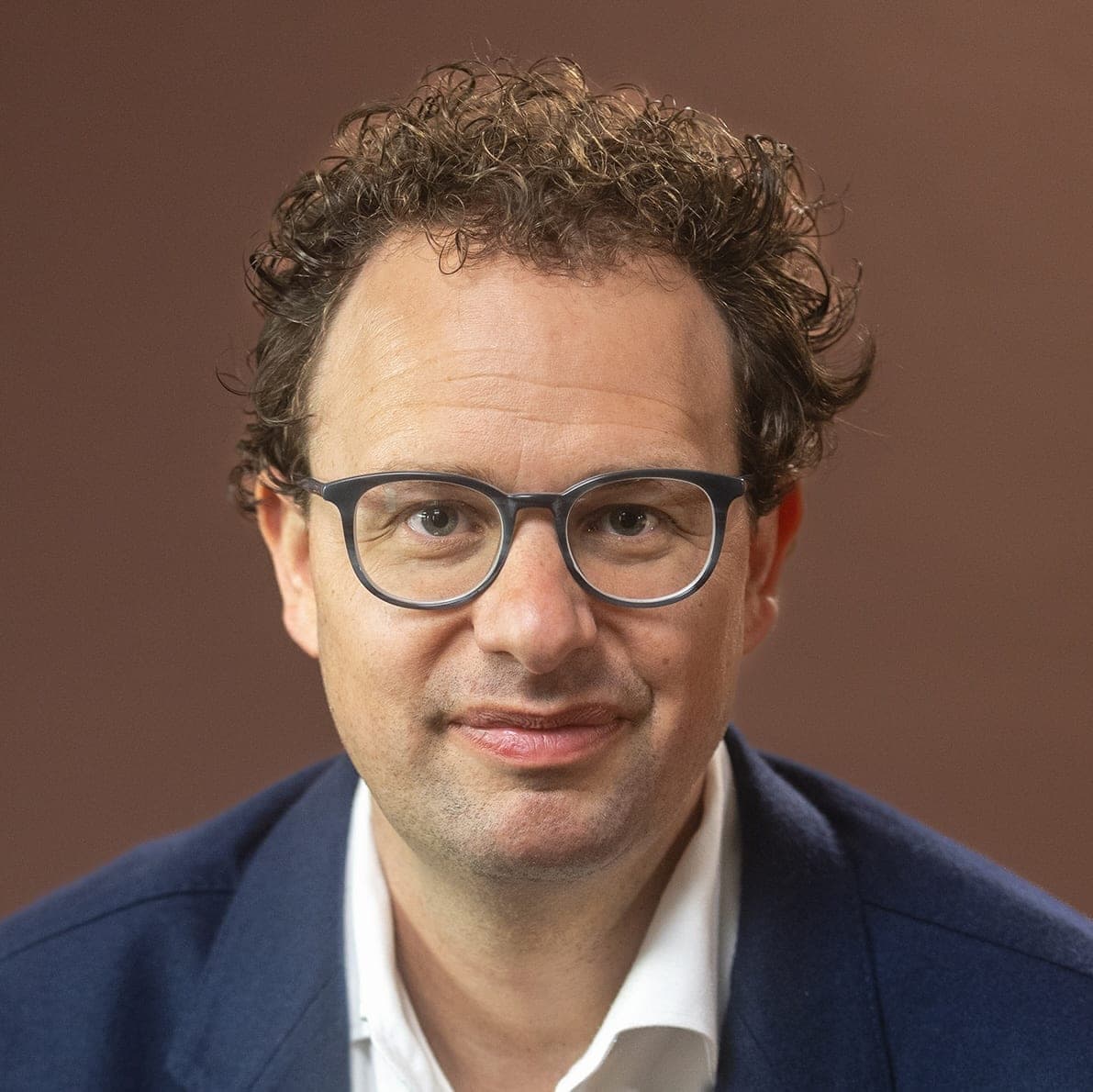
Mistral CEO Arthur Mensch realized early that software alone cannot guarantee European tech independence. To win highly regulated clients like Airbus and HSBC, the company had to guarantee that sensitive data would never cross an ocean or touch an American server. The startup built its reputation on open-weight models that anyone could download, but this funding signals a massive, capital-intensive pivot toward heavy infrastructure.<br><br>%% €21B | Mistral's valuation after its record-breaking Series D round<br><br>This war chest effectively transforms Mistral from an agile coding lab into a heavily capitalized cloud operator. Earlier this year, the company quietly secured $830 million in debt financing to build a proprietary data center near Paris. Shifting from intangible code to physical hardware marks a direct challenge to the Silicon Valley playbook.<br><br>But building a sovereign digital fortress requires a staggering amount of capital and hardware, leading to an unlikely geopolitical alliance to foot the bill.
An Unlikely Geopolitical Alliance
The most striking detail of Mistral's record-breaking round is who sat it out. Microsoft, which agreed to fund Mistral's computing needs just months prior, was notably absent from this equity raise. In its place, South Korean hardware giant Samsung Electronics stepped up to lead the round, continuing a trend of non-US hardware makers buying influence in Europe's premier AI lab.<br><br>> The fact that the EU or Europe have to have their own kind of AI provider in the game is important. We have seen in the past that there is politics involved in the access of these solutions, and it's important that you make sure that you maintain access and do not compromise your kind of supply chain. — Johan Bergqvist, CFO<br><br>Bergqvist's argument is rooted in recent history. When the US government restricted foreign access to advanced models built by Anthropic, it sent a shockwave through European corporate boardrooms. The fear of sudden export controls or single-vendor pricing power has made Mistral's fully localized pitch highly lucrative. The company is now tracking toward $1 billion in annual recurring revenue by the end of 2026.<br><br>Yet a glaring contradiction sits at the very center of Europe's new strategy for digital independence.
The Hardware Contradiction
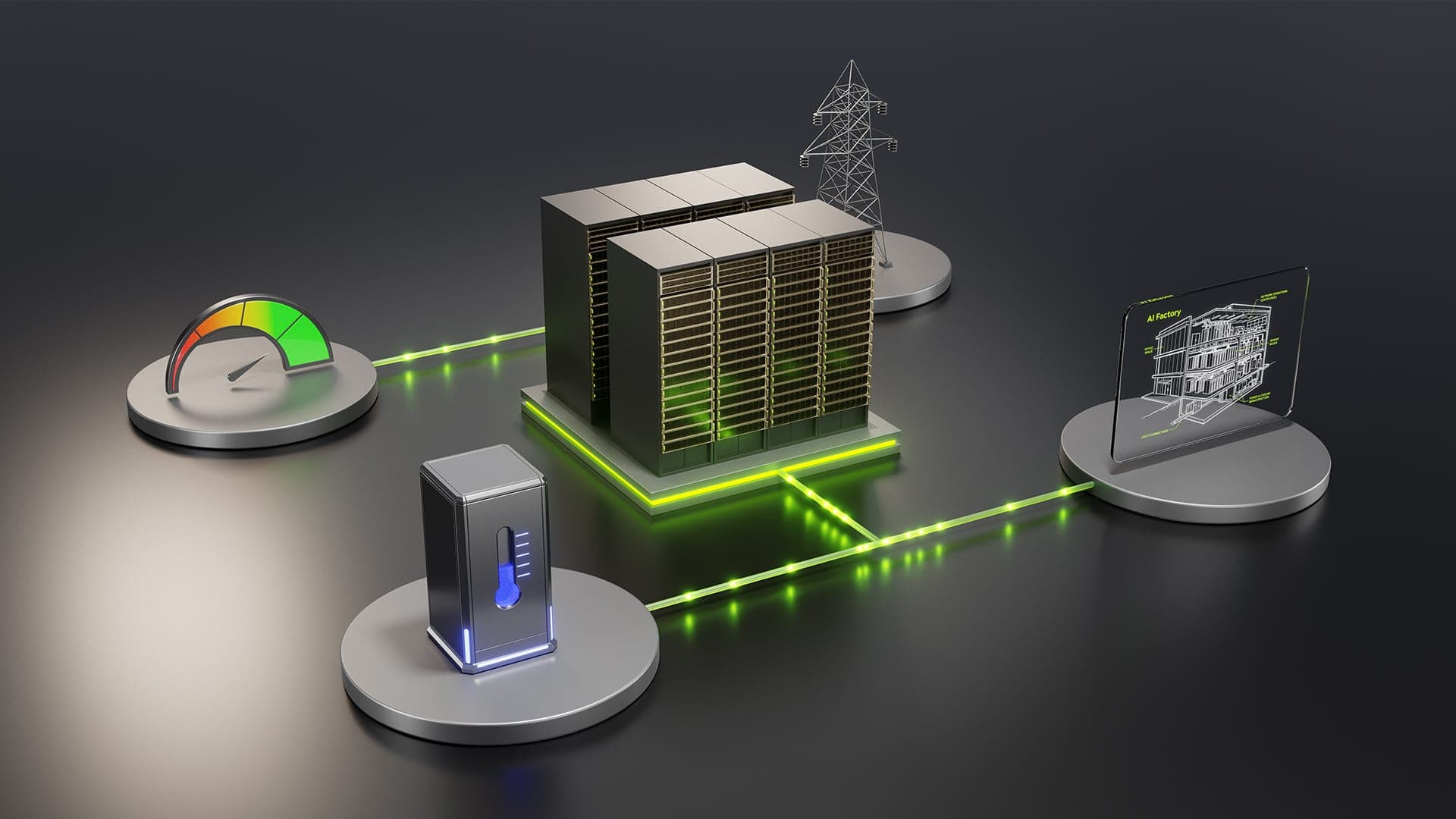
True technological sovereignty remains an illusion as long as the physical supply chain is tightly centralized. Mistral's massive new 44-megawatt data center draws enough power to light up a small European city, and it relies entirely on 13,800 cutting-edge Nvidia GB300 GPUs. They are securing European data using American chips, funded largely by South Korean capital.<br><br>The financial gravity of this market is also unforgiving. Anthropic now commands a valuation near $965 billion, making Mistral roughly 1/40th the size of its primary American rival. Mistral must prove that dominating the risk-averse, industrial niche generates enough cash to feed the unending compute costs required to train frontier models.<br><br>Mensch and his team have successfully convinced investors that the world needs a non-American AI champion. Now they have to physically build it. Sovereignty, it turns out, is no longer just a software license—it is a 44-megawatt fortress built on foreign silicon.
What people are saying

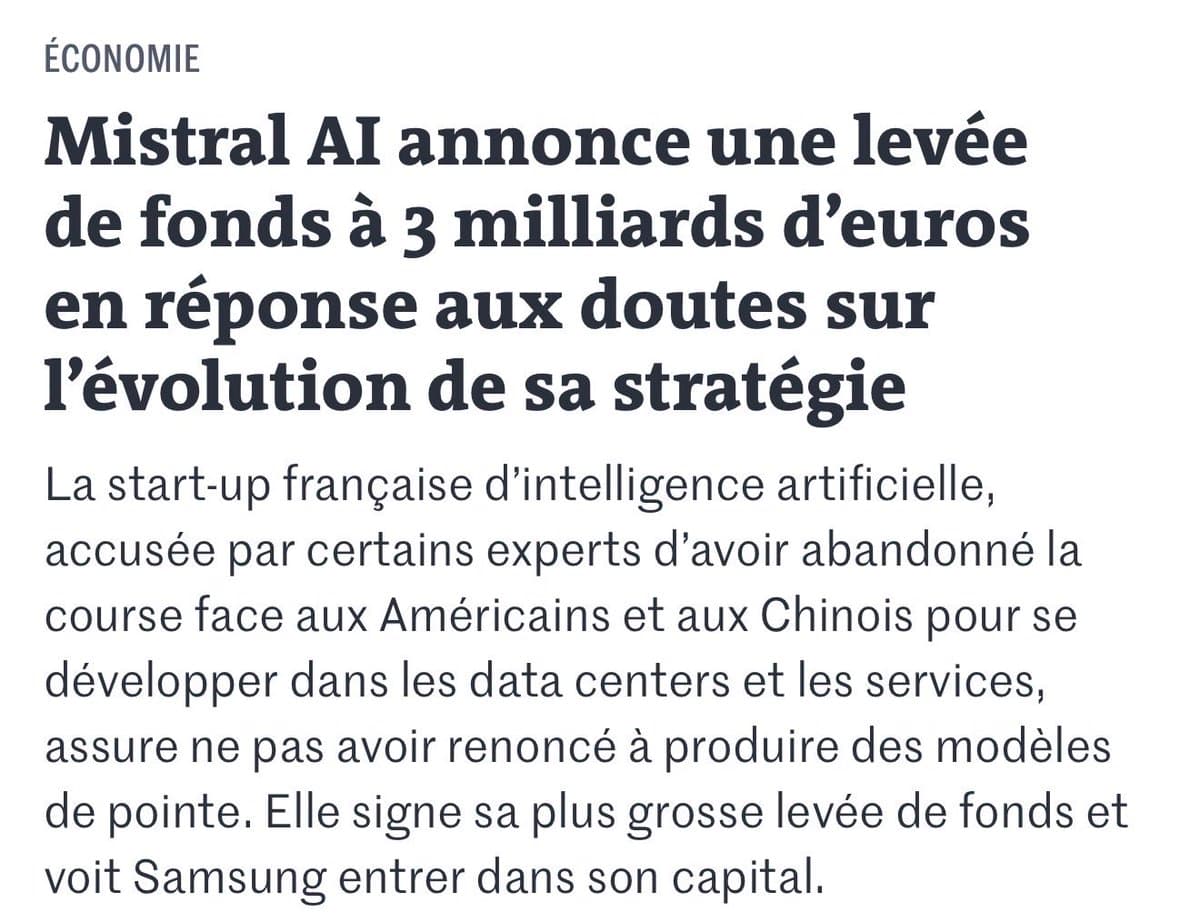
“Mistral AI annonce une levée de fonds à 3 milliards d’euros en réponse aux doutes sur l’évolution de sa stratégie Elle signe sa plus grosse levée de fonds et voit Samsung entrer dans son capital.”

“AI infrastructure conversations tend to focus on compute, power, and data centers. But the network backbone is just as critical. Join Ciena's Kevin Sheehan and @lumentechco's Kye Prigg on September 9 for an @sdxcentral AI Channel discussion on building a backbone ready for the AI”


“One real estate firm's retreat is another group's opportunity.”
Mistral's Sovereign AI Paradox
The Brief
Stay curious
AI and technology: what changes and why it matters.
Your daily selection, in English or Spanish.
Free forever. Unsubscribe anytime.
More stories

Conversation
Start the conversation