
 The Specialty News
DHH Says Gemini 4 Neon Cut Omarchy's Boot Time in Half
Three fixes merged Monday morning each remove up to a second of waiting from every boot of his Linux system, five days after Google released the model.
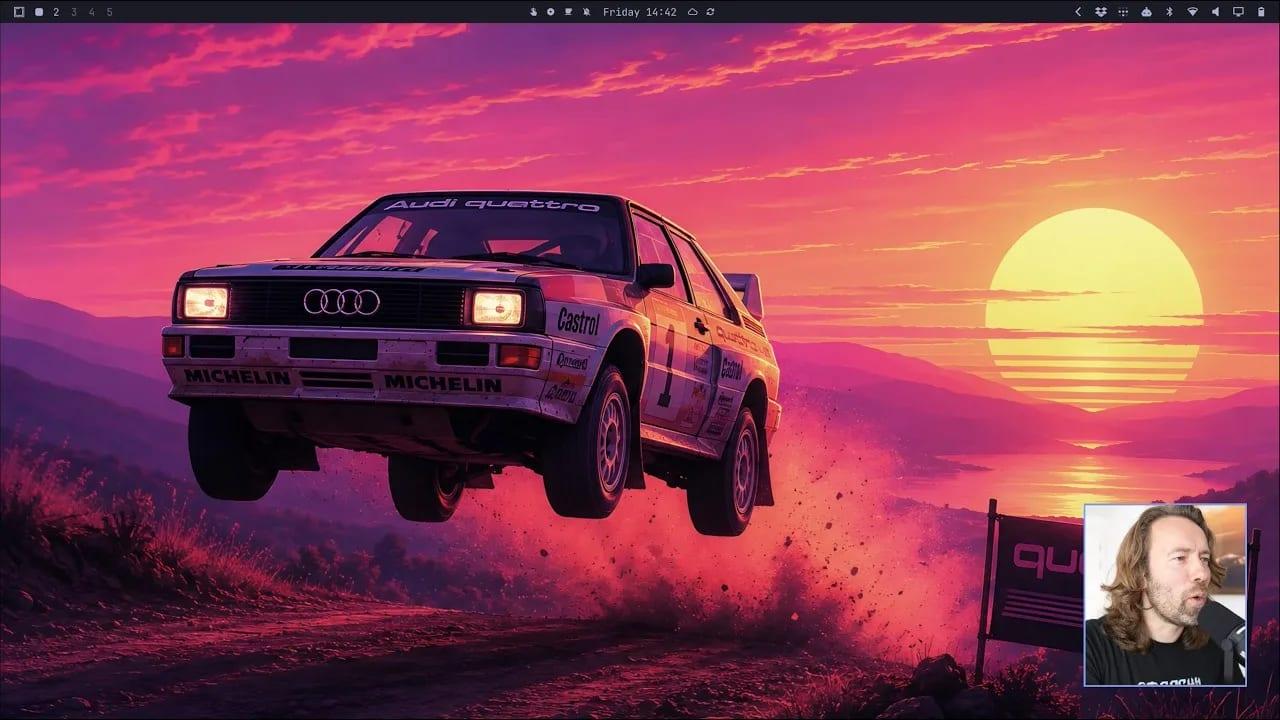
By 10:05 a.m. UTC on Monday, four pull requests had landed in Omarchy, the Linux system built by Ruby on Rails creator David Heinemeier Hansson, and three of them removed a fixed wait from every boot. A few hours later he gave the credit to a model Google released five days earlier: “Gemini 4 Neon is indeed crazy good. Cut Omarchy boot time in half!!” For Omarchy users that means shorter restarts, and the changes that produced them are public, line by line.
Where the Lost Seconds Were Hiding
None of Monday's fixes is a rewrite. Each one finds a step where the computer was waiting for something it didn't need yet. By default, systemd, the program that starts Linux services, makes the login screen wait for the network to come up. Omarchy's pull request #19888 removes that dependency, which had been costing about 660 to 720 milliseconds on every boot.
Pull request #19889 does the same for the firewall, which was holding up basic startup for 350 to 780 milliseconds. Its rules now load in parallel with the rest of the boot and still go up before any network interface comes online, so the speedup costs no protection. #19890 tackles the slow boot that follows a kernel update, when thousands of old module files were deleted during early startup, about 0.9 to 1 second of waiting. That cleanup now runs later, at idle priority.
That one came in a fourth change merged in the afternoon, #19914, which stops the system from scanning and clearing its whole compressed-memory swap device at every start. The same pull request trims shutdown, where a pre-built shutdown image now saves another 0.35 to 0.4 seconds. Fractions of a second sound small. They stop being small when the whole boot is this short.
From About 15 Seconds to Three or Four
Two days before Monday's fixes, Omarchy had to recalibrate its own boot progress bar. According to pull request #19695, merged on November 21, fast machines now go from unlocking the encrypted disk to handing over to the desktop in about 3 to 4 seconds, down from roughly 15. The bar was still timed for the old 15 seconds, so it only reached about 30% before the desktop appeared.
At that scale the arithmetic changes. When a boot takes three or four seconds, a 700-millisecond wait for the network is a fifth of it, and removing two or three such waits is how you get to “in half.” DHH did not say which lines Neon wrote or publish a before-and-after timing, but the merged changes match his description: boot waits in the morning, install work in the afternoon.
That install work is #19913, merged at 14:51 UTC across 24 files and built from profiling a fresh encrypted install. It replaces about a dozen calls to lspci, the tool that lists hardware, with direct reads, saving up to about 2.4 seconds on laptops whose devices are asleep, and it lets the firewall rules be prepared ahead of time, saving about 640 milliseconds. Which leaves the obvious question: what was Neon like to work with?
The Quiet Model That Saves Everything for the End
DHH's verdict was mostly about style. He described Neon as a model that works almost silently and then delivers all at once.
“It's a quiet cat, though. Just goes off with very little output while it's working, and then, BAM, here's everything and it's perfect.”— David Heinemeier Hansson
Google released Gemini 4 Neon on November 18 as the middle model of its Gemini 4 family, priced at $3 per million input tokens and $15 per million output tokens. It debuted third on the Artificial Analysis Intelligence Index with 61 points and first on its Coding Agent Index with 58.6, the score that matters most for this kind of job: a long agent run through a real codebase.
Omarchy's repository also shows that no single model owns the workshop. The install speedup merged Monday ends with the line “Reviewed by Claude,” and Saturday's progress-bar fix says “Verified by Claude.” For the people running Omarchy, the result is simpler than the toolchain: the next update brings faster restarts, and every change behind them is open for anyone to read.
What people are saying

“Gemini 4 Neon is indeed crazy good. Cut Omarchy boot time in half!! Big optimizations on install as well. It's a quiet cat, though. Just goes off with very little output while it's working, and then, BAM, here's everything and it's perfect. Love it.”
Omarchy's Boot Shrinks in Five Days
The Brief
Stay curious
AI and technology: what changes and why it matters.
Your daily selection, in English or Spanish.
Free forever. Unsubscribe anytime.
More stories





Conversation
Start the conversation