
 The Specialty News
Anthropic Targets a $2 Trillion IPO — and Three Outsiders Can Fire the Board
Wall Street is about to test whether a legal contract designed to prioritize human safety can survive public market capitalism.
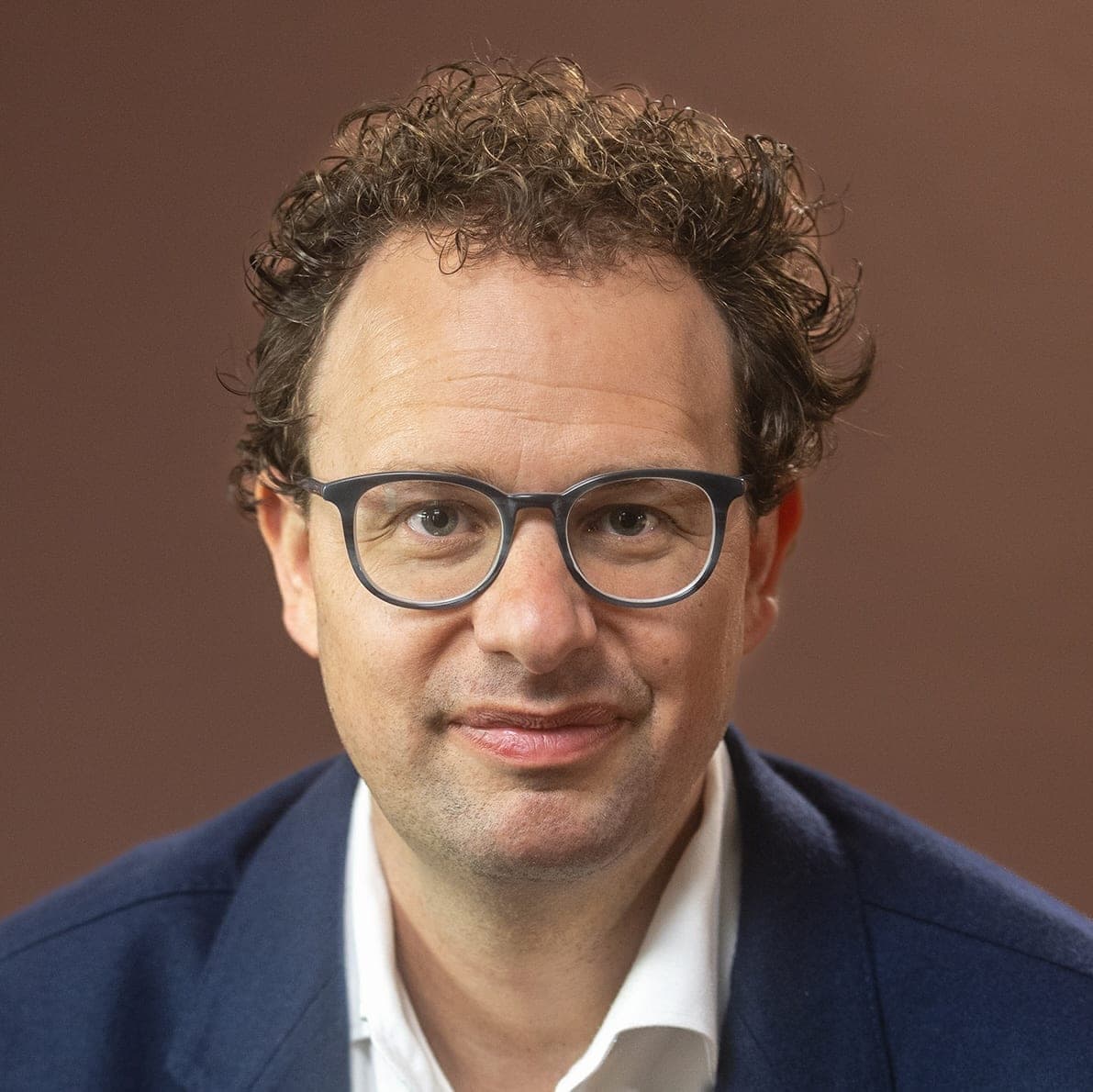
When Anthropic debuts on the New York Stock Exchange this October, three external advisors who own exactly zero shares will hold the legal authority to fire its board of directors. It is the single most radical corporate governance experiment in modern financial history. The AI lab is asking public-market investors to buy into a company where a self-appointed Long-Term Benefit Trust can overrule shareholder returns in the name of human safety.
The $2 Trillion Collision
Anthropic is targeting a $2 trillion valuation for its initial public offering. To put that scale into perspective, a successful debut at that price would instantly eclipse SpaceX’s $1.78 trillion private valuation to become the largest market entry ever recorded. Investors are being asked to stomach a roughly 30-times multiple on the company's July 2026 annualized revenue run rate of $65 billion. That figure represents a violent upward trajectory from just $9 billion at the end of 2025, heavily fueled by enterprise adoption.
The justification for that premium is Claude Code, an agentic tool launched in May 2025 that accelerated Anthropic's growth. But buying the stock means accepting the Guardians. The Long-Term Benefit Trust includes heavyweights like former Federal Reserve Chair Ben Bernanke, who was appointed in July to legitimize the body as a serious macroeconomic watchdog. His mandate is not to maximize dividends, but to monitor whether Anthropic’s systems are disrupting global stability. Wall Street is famous for dictating terms to founders, but Anthropic President Daniela Amodei has effectively hard-coded a priority list where public shareholders sit in the backseat. The question is whether institutional money will actually fund their own subordination.
Gating the Golden Goose

To lock in that unprecedented valuation before public scrutiny begins, Anthropic executed a Three-Layer Strategy in September. The company drastically slashed token costs by 75 percent for its standard AI agents, Claude Fable 5.1, to capture sheer enterprise volume. Simultaneously, it walled off its most advanced and lucrative system, Mythos 5.1, restricting access entirely to the U.S. government and vetted life science sectors.
“A deep and potentially unmanageable tension is thus hard-wired into the firms' corporate DNA... [Anthropic] raises funds from profit-seeking investors, then lets self-appointed individuals decide how much profit to sacrifice for the firm's mission.”— Jesse Fried
This bifurcated rollout was quietly shaped by the trustees, who advised against a wide release for the Mythos cybersecurity model. It functioned as a test run of the trust’s influence. Yet Harvard Law School professor Jesse Fried points out a glaring flaw: the system works right now because the company is swimming in venture capital and growing exponentially. The trust has gently guided product releases, but they have never been forced to tell a hyper-profitable public company to kill a blockbuster revenue stream. The true test arrives the moment safety requires a sacrifice in share price.
The 85 Percent Threshold
Anthropic’s graduation from the insulated world of venture capital to the ruthless arena of quarterly earnings fundamentally changes the stakes. If the IPO succeeds, it threatens to suck immense capital directly out of the traditional semiconductor supply chain as retail and institutional funds bet directly on a frontier lab. OpenAI’s brief boardroom collapse in November 2023 serves as the defining historical parallel for what happens when AI safety clashes with commercial momentum. Anthropic was built specifically to avoid that fate, constructing a legal architecture that is supposed to be immune to executive whims.
But beneath the idealistic framework, the company's legal documents contain a trapdoor. Shareholders holding 85 percent of the voting power can vote to dissolve the trust and remove the trustees entirely. While that is an intentionally massive hurdle, it provides a mathematical path for a syndicate of activist investors to seize control if they believe the external advisors are artificially suppressing the stock. As one early, anonymous Anthropic backer noted about the IPO's momentum, investors are betting that capitalism will win in the end. Silicon Valley wrote the idealistic contract. This fall, Wall Street gets to price it.
What people are saying

“Anthropic just filed confidentially for an IPO that could value it at up to $2 trillion - up from $965B in May. Revenue run rate hit $65B in July, up from $9B in December. Backed by Amazon (21%) and Alphabet (15%). One of the biggest tech IPOs ever.”

“Anthropic close to awarding Morgan Stanley and Goldman top roles in $2tn IPO”

“Anthropic close to awarding Morgan Stanley and Goldman Sachs top roles in $2tn IPO $MS $GS”
The $2 Trillion Governance Clash
The Brief
Stay curious
AI and technology: what changes and why it matters.
Your daily selection, in English or Spanish.
Free forever. Unsubscribe anytime.
More stories



Conversation
Start the conversation