
 The Specialty News
Mark Carney Triggers Dollar-for-Dollar Trade War Over Canadian Sovereignty
With $20 billion in 50% tariffs now active, Ottawa is betting that long-term cultural and economic independence is worth a short-term currency slide.
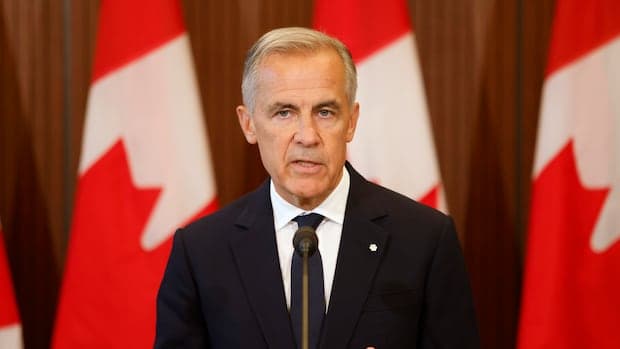
The longstanding assumption that Ottawa will always capitulate to Washington just died at the negotiating table. After eleventh-hour trade talks collapsed over absolute red lines, the United States slammed 50 percent tariffs on $20 billion of Canadian goods. Instead of backing down, Prime Minister Mark Carney is matching the blow dollar-for-dollar.
The Cost of Saying No
The trigger was pulled on Saturday, August 22, 2026. The US enacted steep 50 percent tariffs on approximately $20 billion of Canadian imports—representing roughly 5.5 percent of Canada's total exports south of the border. The hit list is surgically broad, targeting everything from cement and heavy electronics to hockey sticks and Crown Royal whisky. For months, negotiators appeared to be inching toward a truce, with Canada reportedly offering to drop retaliatory tariffs on steel and aluminum in exchange for reciprocal US action and increased dairy access.
But talks disintegrated on Friday when Washington tabled late-stage demands that crossed absolute sovereign red lines. The US didn't just want better trade math; it sought to restrict Canada's ability to sign independent trade agreements with other nations while explicitly targeting domestic protections for Canadian culture and the French language. "In short, they asked too much and they offered too little," Prime Minister Mark Carney stated unequivocally. "We were not prepared to compromise on our sovereignty, the protection of the French language, and our culture. You're at war when you get attacked. We got attacked."
President Donald Trump fired back with characteristic bluntness, framing the dispute as a long-overdue reckoning: "Canada wants the benefits of being a State, without being one!!! They have also charged our great farmers, for many years, massive amounts of Tariffs. No more!!!" Currency markets immediately punished the friction. The Canadian dollar slid against a basket of major currencies, with the US dollar hitting a five-day high of 1.3831 against the CAD. Analysts at ING warned that momentum could soon push the currency to test the 1.3910 threshold, noting that "as a smaller, more open economy, Canada has more to lose from this."
“Canada wants the benefits of being a State, without being one!!!”— Donald Trump
Breaking the American Tether
Canada's response hasn't been a scramble for renegotiation, but a cold, calculated counter-strike. Retaliatory dollar-for-dollar tariffs will take effect on September 8, taking aim at US steel, dairy, agricultural equipment, and appliances. This is a watershed moment for North American trade. A mid-power nation is openly refusing to serve as an economic vassal state to a superpower, proving that long-term sovereign integrity can outrank short-term market appeasement.
Make no mistake—the initial shock will sting both sides of the border. US consumers will face inflationary pressures on imported northern goods, while Canadian exporters will endure serious financial strain. US Transportation Secretary Sean Duffy called Canada's stance "foolish," predicting devastating consequences that would force Ottawa back to the table. But that prediction fundamentally misunderstands Ottawa's new trajectory. By cutting the umbilical cord to Washington's political pendulum, Canada is forcing its own hand to evolve and adapt.
The government is already preparing to deploy its strong G7 fiscal position to stimulate affected domestic businesses. More importantly, this crisis acts as a massive catalyst for global market diversification. Carney is actively accelerating outreach for new strategic partnerships—including controversial overtures to China—to buffer the domestic economy. The 2026 trade war is a real-time stress test of middle-power resilience. If Canada can absorb this financial hit and successfully pivot its export markets, it provides a bold new blueprint for other allied nations looking to break their dependencies on a protectionist United States.
What people are saying

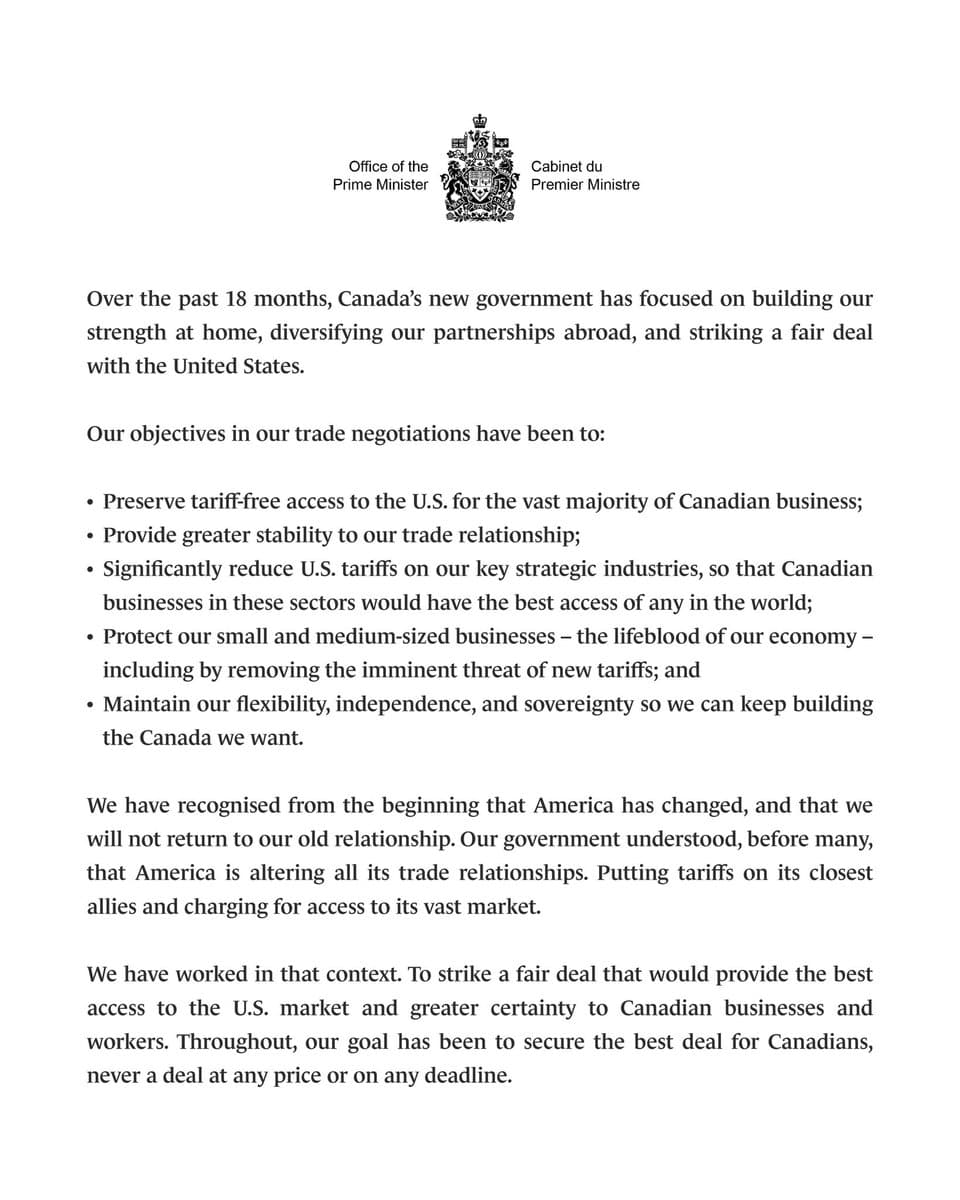
“For over a year, Canada has worked intensively and in good faith with the United States to negotiate a new comprehensive trade deal. We have been pragmatic, patient, and persistent. Our goal has always been to get the best deal for Canadians, never a deal at any price or on any”

The 2026 Trade War Escalation
The Brief
Stay curious
AI and technology: what changes and why it matters.
Your daily selection, in English or Spanish.
Free forever. Unsubscribe anytime.
More stories






Conversation
Start the conversation