
 The Specialty News
Google Maps Integrates Gemini to Become a Conversational Travel Assistant
Google's most significant update in a decade trades keyword searches for natural language planning and immersive 3D navigation.
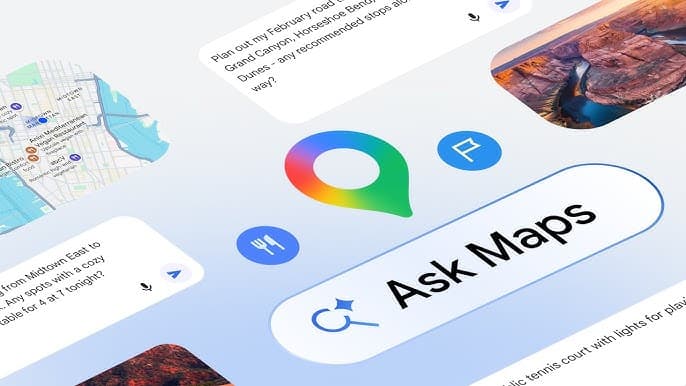
For over a decade, Google Maps has been our reliable, blue-lined guide through the physical world. But as of this week, that experience is undergoing its most radical transformation yet. By weaving Gemini—its flagship generative AI model—into the fabric of the platform, Google is turning its maps from a reactive search tool into a proactive, conversational assistant.
From Keyword Search to Natural Discovery
The centerpiece of this update is the new 'Ask Maps' feature. Gone are the days of hunting for specific categories or scrolling through lists to find a spot that meets a vague set of requirements. Now, you can simply ask the app, 'Is there a public tennis court with lights that I can play at tonight?' or 'Where can I charge my phone without waiting in a long line for coffee?'
Gemini doesn't just scan for keywords. It cross-references a massive repository of over 300 million global locations and insights from 500 million contributors to build a personalized response. The result is a custom-curated itinerary that bridges the gap between discovery and booking, allowing users to handle complex multi-stop planning within a single, seamless conversation.
Simultaneously, Google is rolling out 'Immersive Navigation.' By combining deep aerial imagery with Street View data, the app now renders a vivid 3D experience that clarifies the chaos of urban driving. It highlights specific lanes, crosswalks, and traffic signals, while shifting voice prompts from abstract distances to landmark-based cues, such as 'Turn right after the white building,' effectively reducing cognitive load in confusing intersections.
The Shift Toward Spatial Intelligence

This transition marks a pivotal moment in how we interact with technology. Much like the leap from paper maps to GPS, we are now entering the era of 'spatial modeling.' The goal here is to make the digital map behave more like a human observer, understanding not just the latitude and longitude of a destination, but the context and environment surrounding it.
“the map of the future will be less about the route we take and more about the intelligence we gather along the way.”
This shift carries significant implications for the future of digital business. As AI-powered, conversational search becomes the standard, local businesses will need to rethink how they present their data to ensure it is 'AI-readable' for platforms like Gemini. For the user, it signals the arrival of a truly proactive assistant that handles the friction of planning, freeing up mental bandwidth for the experience itself.
While the rollout is currently limited to the United States and India, the implications are global. As this technology expands to vehicle platforms like Android Auto and CarPlay, the map of the future will be less about the route we take and more about the intelligence we gather along the way.
Maps That Talk Back
The Brief
Stay curious
AI and technology: what changes and why it matters.
Your daily selection, in English or Spanish.
Free forever. Unsubscribe anytime.
More stories






Conversation
Start the conversation