
 The Specialty News
Anthropic’s Claude Opus 4.6 Rewrites the Rules on Long-Context Recall
Achieving 78.3% accuracy at a 1-million-token limit, Anthropic is pushing past the 'context rot' that plagues competitor models.
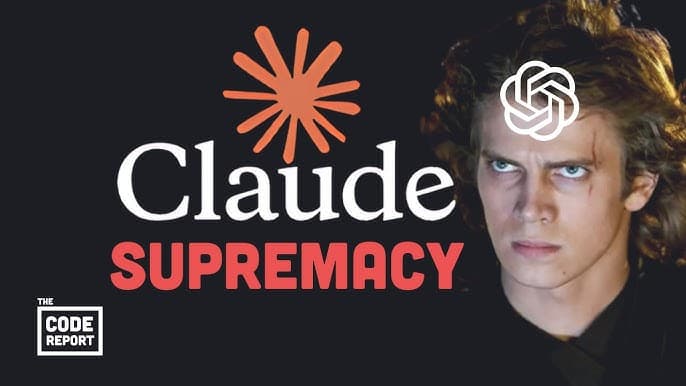
The biggest hurdle in AI has long been the 'forgetting' problem: as you feed a model more information, it starts to lose the thread of the conversation. Anthropic just effectively solved this with the release of Claude Opus 4.6, which now sustains a staggering 1-million-token context window with 78.3% retrieval accuracy. This isn't just a marginal gain; it's a fundamental shift in what developers can do with an AI model.
The End of Context Rot
For months, the industry has been battling 'context rot'—the tendency for models to hallucinate or simply lose track of data buried in massive documents. While OpenAI’s GPT-5.4 offers a 1-million-token window, users are reporting significant regressions in performance compared to the older GPT-5.2, proving that simply increasing memory isn't the same as increasing recall. Anthropic, by contrast, has prioritized the stability of that recall, allowing for deep, reliable analysis across massive datasets.
Critically, Anthropic has eliminated the 'long-context premium' that previously made massive token requests prohibitively expensive. Developers can now process 900,000 tokens at the exact same price as 9,000. This is a game changer for agentic workflows, where AI can now hold entire enterprise codebases or years of financial records in its active memory without needing fragmented summarization or costly data-shuffling workarounds.
Why This Changes the Developer Playbook

This leap forward is not just about keeping more text in the buffer; it is about enabling AI to perform complex, multi-layered reasoning on projects that were previously too large for a single model to digest. Engineers can now perform project-wide dependency tracing and automated code reviews that consider the architectural impact of a change across an entire library, rather than just a single file. By moving memory barriers, we are seeing the rise of truly autonomous agents that can navigate complex technical landscapes.
“The winners in the next year will not just be the smartest models, but the ones that can keep the most information reliable and accessible at a reasonable price point.”
Looking ahead, the competitive pressure is mounting for incumbents to match this reliability. While models like GPT-5.4 lead in specific OS-interaction benchmarks, the race is clearly shifting toward 'long-term coherent intelligence.' The winners in the next year will not just be the smartest models, but the ones that can keep the most information reliable and accessible at a reasonable price point.
Memory That Doesn't Rot
The Brief
Stay curious
AI and technology: what changes and why it matters.
Your daily selection, in English or Spanish.
Free forever. Unsubscribe anytime.
More stories




Conversation
Start the conversation